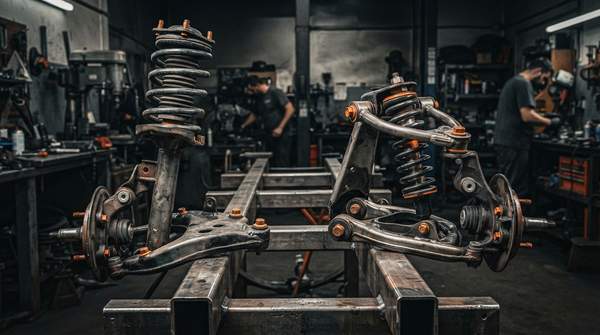
A single check engine light in a modern car can now represent one of hundreds of thousands of potential sensor-driven fault codes, each requiring specific software and expertise to diagnose accurately. This diagnostic complexity arises because vehicles contain over 100 electronic control units (ECUs) managing diverse systems, as reported by Automotive Tech Review, expanding diagnostic trouble codes (DTCs) from dozens in early OBD-II systems to thousands in current models, according to SAE International.
Vehicles are designed to be self-diagnosing, but this transparency often leads to greater dependence on proprietary systems and expert technicians. While basic OBD2 scanners retrieve error codes, as stated by EdTech Innovation Hub, the sheer volume of fault codes means such retrieval offers only superficial insight. This pushes owners towards expensive, specialized diagnostic services, creating an illusion of transparency that masks deeper layers of required expertise and specialized tools.
As sensor technology advances, vehicle ownership will likely shift further towards a service-based model, where routine maintenance and complex repairs are almost exclusively handled by authorized professionals, potentially increasing long-term ownership costs. Car manufacturers effectively use diagnostic precision as a Trojan horse, creating an illusion of transparency while solidifying their control over the aftermarket repair industry.
Modern vehicles generate terabytes of sensor data annually, far exceeding manual processing capabilities, according to Deloitte Insights. This extensive data collection means even minor issues can trigger complex diagnostic sequences. The sheer volume of information creates a growing gap between a vehicle's self-awareness and an owner's ability to comprehend or act on it. This paradoxically disempowers the average car owner, transforming readily available information into a barrier for independent repair.
The Silent Sentinels: How Sensors Monitor Your Car's Health
Diagnostic tools, particularly OBD2 scanners, connect to a vehicle's onboard computer system to retrieve error codes, as explained by EdTech Innovation Hub. While fundamental for basic issue identification, these only scratch the surface. Automotive sensors monitor everything from engine temperature and exhaust emissions to tire pressure and driver assistance systems, according to the Bosch Automotive Handbook. The Engine Control Unit (ECU) acts as the 'brain,' processing data from various sensors to optimize performance and detect malfunctions, as detailed by Car & Driver. This continuous self-monitoring has evolved significantly beyond simple mechanical checks.
Beyond the Code: Decoding Advanced Sensor Networks
Modern vehicles utilize a Controller Area Network (CAN bus) for rapid, reliable communication between dozens of ECUs and sensors, a system described by IEEE Transactions on Vehicular Technology. This enables complex interactions across vehicle systems. Advanced Driver-Assistance Systems (ADAS) rely on intricate arrays of radar, lidar, ultrasonic, and camera sensors working in concert, as noted by NHTSA. Diagnosing intermittent faults requires real-time data logging and analysis across multiple sensor inputs, not just static error codes, a significant challenge highlighted by the Automotive Service Association. These advanced sensor systems demand specialized diagnostic software and deep technical expertise to accurately pinpoint issues.
The Repair Shop Revolution: Impact on Mechanics and Aftermarket
Access to manufacturer-specific diagnostic software and proprietary tools is often required for advanced repairs, creating a significant barrier for independent shops, according to Consumer Reports. Technicians now require extensive training in electronics, software, and network communication protocols, in addition to traditional mechanical skills, as emphasized by ASE Certification. The cost of keeping diagnostic equipment updated for all vehicle makes and models can be prohibitive for smaller repair businesses, reports the Independent Garage Association. This technological shift centralizes expertise and resources within dealerships or highly specialized centers, challenging the traditional independent repair model.
What It Means for You: Costs, Safety, and Ownership
Increased complexity in sensor-driven systems translates to higher labor costs for diagnostics and repairs, even for minor issues, according to AAA Automotive Research, directly impacting vehicle owners' wallets. Safety-critical systems like ADAS require precise calibration after minor bodywork, performable only with specialized tools, a critical point made by the Insurance Institute for Highway Safety. Vehicle owners may face 'right to repair' challenges as manufacturers increasingly restrict access to diagnostic information and parts, as observed by Repair. Consumers face a trade-off: advanced vehicle performance versus potentially higher, more specialized repair costs and a diminishing ability to perform DIY maintenance.
Your Diagnostic Questions Answered
What are the latest advancements in automotive sensor technology?
Latest advancements include miniaturized solid-state lidar for superior environmental sensing, advanced radar systems offering higher resolution for object detection, and in-cabin sensors that monitor driver attentiveness. These technologies enhance vehicle safety and enable more sophisticated autonomous driving features, moving beyond traditional mechanical measurements.
How do advanced sensors improve vehicle diagnostics?
Advanced sensors provide a continuous stream of detailed data, allowing for predictive maintenance and the early detection of subtle anomalies. For example, regular vehicle maintenance, including software updates, can prevent many sensor-related issues before they become critical, according to J.D. Power.
Can generic OBD2 scanners diagnose all sensor-related issues?
No, while generic OBD2 scanners can read basic codes, they often cannot access manufacturer-specific codes or perform advanced system tests, as reported by Motor Trend. This limitation means professional-grade, proprietary diagnostic tools are frequently necessary for a comprehensive analysis of complex sensor networks.
The Future of Automotive Health: Specialized and Connected
As vehicles integrate more sensors for autonomous driving and predictive maintenance, a trend outlined by McKinsey & Company, and over-the-air (OTA) updates become standard, as demonstrated by Tesla Investor Relations, the automotive landscape appears poised for a highly integrated, connected service network, according to Gartner, meaning that by Q3 2026, independent repair shops without proprietary diagnostic tool access will likely face significant challenges in servicing advanced vehicle systems.