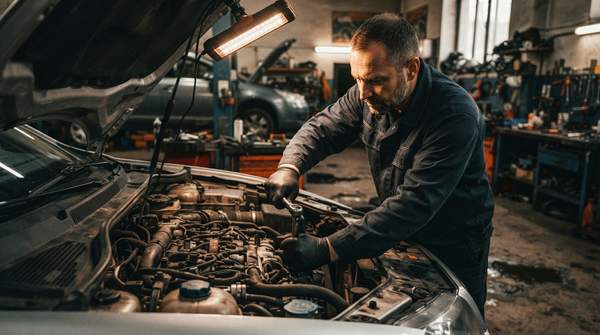
The average vehicle on American roads reached 12.6 years, the highest age ever recorded. High new-vehicle interest rates, around 7.6%, and even higher used-vehicle rates, near 11.4%, reported by Specialty Equipment Market Association (SEMA), make new purchases unaffordable for many. Consumers are thus forced to extend their current cars' lifespans.
This financial pressure creates a tension in the automotive sector. While high interest rates and economic uncertainty suppress new car sales, they simultaneously fuel significant growth in the automotive service and aftermarket industry. The market is poised for sustained expansion, benefiting businesses focused on vehicle longevity and maintenance, as consumers prioritize repair over replacement.
The total number of vehicles operating in the US exceeded 295 million in 2023, according to SEMA. This expanding fleet, combined with the record average age, means Americans must invest heavily in maintaining their current vehicles. Adding to this dynamic, light trucks and CUVs constituted over 80% of new vehicle sales in the US in 2023, also reported by SEMA. This trend implies a future wave of demand for different aftermarket parts and services as these larger vehicles age into the maintenance cycle.
The Global and US Aftermarket Boom: Quantifying the Shift
- USD 443.12 billion — The global automotive aftermarket size in 2025, projected to grow to USD 604.57 billion by 2034, according to Fortune Business Insights.
- 3.56% — The Compound Annual Growth Rate (CAGR) projected for the automotive aftermarket during the forecast period of 2026-2034, according to Fortune Business Insights.
- USD 773.93 billion — The estimated value of the Automotive Service Market in 2024, according to marketresearchfuture.
- USD 52.65 billion — Automotive aftermarket industry sales, with expected annual growth settling into a 3%-4% pace, according to Specialty Equipment Market Association (SEMA).
- 31.04% — North America's market share in the automotive aftermarket in 2025, according to Fortune Business Insights.
These figures, despite varying definitional scopes among sources, confirm a robust and growing industry. Consistent expansion across global and North American aftermarket segments confirms the economic importance of maintaining existing vehicles, a direct consequence of the shift towards vehicle longevity and increased service demand.

Deep Dive: US Repair and Maintenance Market Segments and Future Growth
| Metric | 2023 Value (USD) | 2025 Value (USD) | 2026 Value (USD) | Segment Share |
|---|---|---|---|---|
| U.S. Automotive Repair & Maintenance Market | 183.4 billion | 199.38 billion | 211.14 billion | N/A |
| Maintenance Segment | 65.8 billion | N/A | N/A | Largest share |
| Passenger Cars Segment | N/A | N/A | N/A | 34.4% of total market share |
Sources: gminsights, mordorintelligence
The U.S. automotive repair and maintenance service market, valued at USD 175.3 billion in 2024, is projected to reach USD 211.14 billion by 2026, according to gminsights and Mordorintelligence. The maintenance segment alone accounted for approximately USD 63.1 billion in 2024, confirming active consumer investment in vehicle longevity. While light trucks and CUVs dominate new vehicle sales, passenger cars still hold the largest share (34.4%) in the current repair market. This counterintuitive distribution suggests a significant future shift in aftermarket demand towards parts and services for light trucks and CUVs as the newer fleet ages.
Impact on Automotive Businesses and Consumers
New car dealerships are losing market share to general repair shops, according to a Cox Automotive study. The loss of market share to general repair shops is a structural challenge for dealerships, as the long-term trend favors independent mechanics and specialized aftermarket providers. Conversely, automotive aftermarket and repair service providers, along with parts manufacturers, are positioned as beneficiaries. Consumers, however, face a dual burden: the inability to afford new vehicles and the increasing costs of maintaining older, less fuel-efficient cars. This financial imperative solidifies the aftermarket's role as a critical support system for drivers.
Adapting to Future Aftermarket Demands
The aging vehicle fleet and sustained economic pressures will fundamentally reshape the automotive aftermarket, creating new demands and opportunities, especially for specialized maintenance and evolving vehicle technologies.
- Passenger cars held 34.4% of the US repair market in 2023, according to gminsights.
- Light trucks and CUVs constituted over 80% of new vehicle sales in the US in 2023, according to SEMA.
As the newer fleet of light trucks and CUVs ages, the aftermarket must adapt to different parts, service requirements, and potentially higher repair costs associated with these larger, more complex vehicles. This creates a predictable wave of demand for specialized services and parts suppliers that can cater to these vehicle types, marking a shift from current passenger car dominance in the repair sector. Businesses that proactively invest in technician training and relevant parts for these vehicles will be better positioned for future growth.
What are the biggest trends in the automotive repair industry?
The automotive repair industry sees a major trend towards vehicle longevity, driven by high new and used car prices. This means increased demand for routine maintenance, part replacements, and complex repairs on older vehicles. Additionally, the growing complexity of vehicle systems, including advanced driver-assistance systems (ADAS) and electric vehicle (EV) components, requires continuous technician training and specialized diagnostic tools. The shift also highlights the resilience of independent repair shops capturing market share from dealerships.
How is technology changing the automotive service sector?
Technology transforms the automotive service sector through advanced diagnostics, remote vehicle monitoring, and the increasing need for software updates. Shops must invest in equipment for ADAS recalibration after minor collisions and acquire specialized tools for servicing electric vehicles, which have different maintenance requirements than internal combustion engine cars. This technological evolution demands a workforce skilled in both mechanical and software-related repairs, pushing training and equipment upgrades.
What are the key challenges facing automotive service businesses in 2026?
Automotive service businesses in 2026 face significant challenges, including a persistent shortage of skilled technicians capable of working on increasingly complex and varied vehicle types, such as EVs and hybrids. Keeping pace with rapid technological advancements in vehicle systems requires substantial investment in new diagnostic equipment and specialized tools. Furthermore, managing supply chain disruptions for parts, especially for older or specialized vehicles, continues to be an operational hurdle that impacts service delivery and costs.
By Q3 2026, independent service providers are likely to capture a larger share of the US automotive service market, as consumers continue to prioritize extending vehicle lifespans over new purchases.