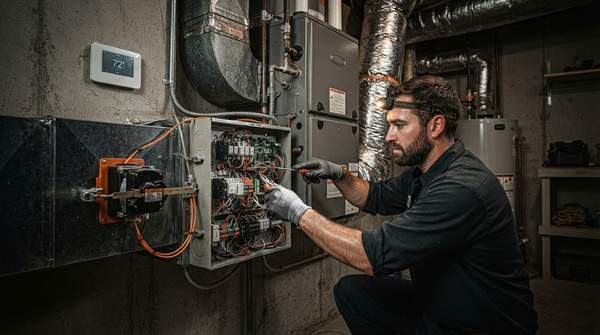
A recent study found 60% of DIY enthusiasts using AI for home repairs reported completing tasks faster. However, the same study revealed 40% felt less confident in their understanding of the repair process afterward. This dichotomy suggests AI tools offer immediate solutions but may not foster genuine comprehension or self-efficacy in practical skills.
AI tools provide immediate, step-by-step instructions for complex tasks. This convenience often bypasses the deep learning and problem-solving required to truly understand and adapt trade skills. The tension arises between efficient task completion and the cultivation of foundational expertise.
While AI will accelerate initial learning and task completion for many, it appears likely to create a growing divide. Those who master a craft through traditional methods may diverge from those who merely execute AI-guided instructions, potentially leading to a decline in robust, adaptable trade expertise.
How AI is Changing Hands-On Learning
Vocational students are rapidly adopting AI. A 2026 survey showed 75% use AI tools like ChatGPT for research or troubleshooting, according to Vocational Tech Review. Online DIY forums also report a 150% increase in posts referencing AI-generated solutions over the past year, according to Home Improvement Forum Analytics. This widespread reliance on AI as a primary information source streamlines initial learning but fundamentally alters how new skills are acquired, potentially shifting focus from understanding to execution.
AI-powered apps now generate step-by-step guides for complex plumbing or electrical work, complete with diagrams, according to AI Trades Assistant Report. Some trade schools even experiment with AI tutors for personalized feedback on simulated tasks, according to SkillsFuture Institute. This integration means learners can access expert guidance instantly, but it also means they might bypass the critical thinking traditionally developed through trial and error.
Accessibility and Efficiency: The AI Advantage
AI tools translate complex technical manuals into simpler language, making specialized knowledge accessible to novices, according to Linguistic AI Journal. This significantly lowers the barrier to entry for aspiring tradespeople. Personalized learning paths generated by AI adapt to individual student progress, potentially accelerating skill development by 30%, as reported by EdTech Research Group.
For remote learners or those in underserved areas, AI provides an immediate, free resource for skills that might otherwise require expensive courses, according to Global Learning Initiative. AI-powered diagnostic tools also identify specific repair issues faster than traditional troubleshooting, notes Tech Repair Quarterly. While AI democratizes access and offers tailored learning, this efficiency might inadvertently bypass the deeper cognitive processes crucial for true mastery.
Eroding Critical Thinking and Tacit Knowledge
Over-reliance on external aids for problem-solving can reduce internal cognitive effort and retention, according to Cognitive Science Journal. This is a significant drawback of immediate AI solutions. Experienced tradespeople rely on 'tacit knowledge'—intuition gained from years of hands-on experience—which AI cannot replicate or teach, according to Journal of Experiential Learning. This suggests a fundamental limitation in AI's ability to foster true expertise.
Simulations show students who only follow AI-generated instructions are less adaptable when faced with unexpected variables, according to Vocational Training Simulation Lab. Diagnosing a novel problem requires synthesizing disparate information and creative thinking, skills not directly trained by prescriptive AI steps, notes Problem Solving Institute. The convenience of AI-generated solutions risks short-circuiting the cognitive processes that build resilience and adaptability. The 40% of DIY users feeling less confident post-AI assistance confirms this: companies developing AI tools for skilled trades risk trading user independence for task completion, creating a dependency that limits growth and adaptability.
Future of Craftsmanship and Labor
Industry experts predict a future labor market with 'AI-augmented' workers, but demand for truly autonomous, highly skilled tradespeople remains high, according to Future of Work Report, signaling a growing divide in the workforce. Apprenticeship programs are exploring how to integrate AI tools without undermining mentorship and hands-on learning, as noted by National Apprenticeship Council.
Employers express concern about the 'AI-gap': new hires can follow instructions but lack diagnostic and adaptive skills for complex, non-routine tasks, according to Skilled Labor Shortage Survey. The perceived ease of DIY with AI could devalue professional trade services, even as AI-guided work quality varies widely, according to Consumer Protection Agency. Educational institutions and vocational programs must rethink curricula, focusing on critical thinking and adaptive problem-solving, not just rote task execution. The future of skilled labor will likely see a bifurcation: highly adaptable, deeply knowledgeable professionals alongside a larger group of AI-dependent task executors, impacting wages and job security. By Q3 2026, businesses relying solely on AI for complex internal processes may cultivate a workforce capable of following instructions but incapable of innovating, creating brittle operational structures when AI fails.
FAQs About AI and Trade Skills
Will AI tools make learning trades easier in 2026?
AI tools can simplify initial learning by providing accessible, step-by-step instructions and personalized feedback. However, this ease might come at a cost to deeper comprehension. Dr. Anya Sharma, an AI ethics researcher, warns this could lead to 'jagged intelligence,' where users gain narrow task expertise but lack broader understanding, as reported by The New York Times.
Can AI replace skilled tradespeople by 2026?
While AI assists with routine tasks, it cannot fully replace skilled tradespeople by 2026, especially those requiring complex manual dexterity or creative problem-solving. The Wall Street Journal highlighted that master electricians or bespoke carpenters exemplify roles largely untouched by AI automation. A report by the Federal Reserve also notes challenges for AI in sectors demanding nuanced human judgment.