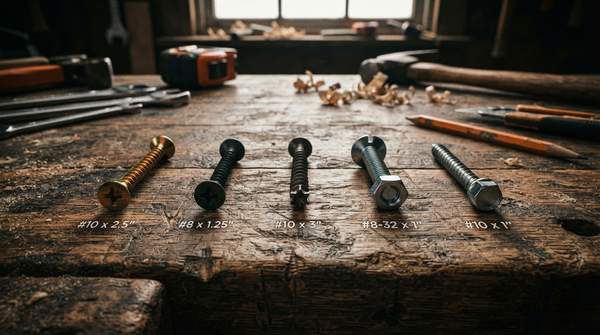
Selecting the correct screw for a home improvement project is a critical step that ensures a strong, durable, and professional-looking result. Using the wrong fastener can lead to split wood, damaged drywall, or connections that weaken over time. This guide simplifies the decision-making process by comparing five of the most common screw types you'll encounter in any hardware store: wood, drywall, deck, machine, and sheet metal screws. By understanding their distinct designs and intended applications, you can choose the right fastener for your specific task with confidence.
Understanding Screw Head Styles and Their Function
A screw's head is more than just a contact point for a screwdriver; its shape is engineered for a specific purpose, influencing both the strength of the connection and the final appearance of your project. Knowing the function of each head style is the first step in making an informed choice.
- Flat Head: This common head has a flat top and a cone-shaped underside, designed to be driven into a countersunk hole. This allows the screw to sit perfectly flush with or slightly below the material's surface, creating a smooth finish that can be easily concealed with wood filler or paint.
- Pan and Round Heads: With flat undersides and slightly domed tops, these heads sit proud on the surface of the material. They are often used in applications where a flush finish is not required and provide good clamping force without needing to be countersunk. They are frequently found on machine and sheet metal screws.
- Bugle Head: Unique to drywall screws, this head has a curved, bugle-like shape. According to fastener supplier AmeriFast Supply, this design allows the screw to sink into the gypsum board without tearing the outer paper layer, creating an ideal depression for joint compound and a seamless finish.
- Hex Head: As the name suggests, this head has a hexagonal shape and is driven with a wrench or socket rather than a screwdriver. This design allows for the application of much higher torque, making hex-head screws ideal for heavy-duty fastening in framing and machinery assembly.
Screw Selection Guide for DIY Projects
To select the best fastener, you must match your material and task to the screw specifically designed for that job. The following table breaks down the key characteristics and ideal uses for five common screw types, providing a quick reference for your next project.
| Screw Type | Primary Material | Key Features (Head/Thread) | Common DIY Projects |
|---|---|---|---|
| Wood Screws | Wood | Coarse threads for a strong grip; a smooth upper shank helps pull wood pieces together tightly. | General woodworking, cabinetry, and building furniture. |
| Drywall Screws | Gypsum board to wood or metal studs | Bugle-shaped head prevents tearing drywall paper. Coarse threads for wood studs; fine threads for metal. | Hanging drywall panels for walls and ceilings. |
| Deck Screws | Treated wood, composite decking | Corrosion-resistant coating for outdoor use. Often feature a star drive to prevent stripping and a self-countersinking head. | Building outdoor decks, fences, and exterior framing. |
| Machine Screws | Metal | Uniform threads along the entire shaft; used with a pre-threaded hole or a nut. Flat or pan heads are common. | Assembling machinery, electronics, and fastening metal components. |
| Sheet Metal Screws | Thin-gauge metal | Sharp point and threads that tap their own mating threads into the material. | HVAC systems, securing metal sheeting, and electrical panels. |