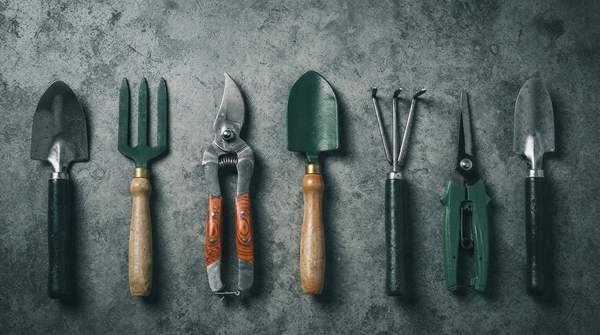
Most basic landscaping jobs can be handled with just three non-powered hand tools: a shovel for digging and moving material, a rake for clearing and leveling, and a pruning saw for cutting woody growth. That is a deliberately small kit. Rather than a long list of gadgets, this guide focuses on the tools that do the most work for a beginner, what to look for when buying each one, and how to keep them in working order. It covers hand tools only — no lawnmowers, leaf blowers, or hedge trimmers — and offers general buying criteria rather than brand or model recommendations.
Your Essential Landscaping Hand Tool Starter Kit
Start with the shovel. According to Crystal Landscape Supplies, a shovel is used not only for digging and moving soil but also for removing weeds and plants from an area that needs to be cleared before something new is planted. That dual role — building and clearing — is what makes it the first tool most beginners should own. The retailer's guidance emphasizes one buying point above all: choose a shovel with an ergonomic handle so your hands don't tire during extended use.
The rake is the second essential. Crystal Landscape Supplies describes rakes as essential because they make it easy to spread soil evenly across an area before planting seeds or laying fertilizer, and to remove debris such as leaves, twigs, and rocks from a garden bed. In other words, the rake is your finishing and cleanup tool: it prepares a clean surface for planting and tidies the site afterward. Because rakes come in many sizes and styles, the same source advises choosing one that fits your needs — a wider head for open lawn areas, a narrower one for working between beds.
The third tool, a pruning saw, comes with a different kind of endorsement. It appears on a personal favorites list from Joe Lamp'l, an experienced gardener who publishes the joegardener site and podcast, where he names his top tools for making gardening easier. His recommendation is a personal one from years of practice rather than a lab-tested specification, but it reflects a common pattern among experienced growers: once you move beyond digging and raking, cutting woody branches is the next task a beginner regularly faces, and a hand pruning saw handles it without any power equipment.
Essential Hand Tools for Common Landscaping Tasks
Use this table to match a task to the right tool and to keep the key buying feature in mind at the store. Each row pairs the tool's primary function with the selection criterion the evidence highlights.
| Tool | Primary Landscaping Task | Key Selection Feature |
|---|---|---|
| Shovel | Digging, lifting, and moving soil; clearing weeds and plants before replanting | An ergonomic handle that keeps hands from tiring during extended digging |
| Rake | Spreading soil evenly before planting; clearing leaves, twigs, and rocks | A size and style that fits your garden beds and working areas |
| Pruning saw | Cutting woody branches and stems too thick for other hand tools | Recommended by experienced gardener Joe Lamp'l as a personal favorite; choose one suited to the branch sizes you actually cut |
The reasoning behind the table is simple: each tool owns one category of work — digging, clearing and leveling, or cutting — and each category has one feature that matters most when buying. A shovel with a poor handle fails at the task you will do longest; a rake in the wrong size fails at the task you will do most often; and a pruning saw should be judged by the branch thickness in your own yard, since the endorsement here is a practitioner's preference rather than a universal specification.