AllTradesJournal
TradesServicesTools & EquipmentHow-ToProjects
AllTradesJournal

The definitive source for trades, services, and DIY.

DiyOshaSkilled TradesWorker SafetySafetyAuto RepairHome ImprovementConstruction

Sections

  • Trades
  • Services
  • Tools & Equipment
  • How-To
  • Projects

More

  • Industry
  • Safety
  • Materials
  • Automotive Services
  • Writers

About AllTradesJournal

AllTradesJournal.com delivers the latest news, how-to guides, and industry insights for professionals and enthusiasts in the trades, services, and DIY sectors. We cover everything from tools and techniques to safety and automotive services.

  • Contact
  • Privacy Policy
  • Terms of Service

© 2026 AllTradesJournal. All rights reserved.

  1. Home
  2. /Automotive Services
  3. /Top 7 Essential Diagnostic Tools for Auto Repair Shops in 2026
Automotive Services

Top 7 Essential Diagnostic Tools for Auto Repair Shops in 2026

An astonishing 88% of required Advanced Driver-Assistance Systems (ADAS) calibrations after collision repairs are currently being skipped by repair shops, according to Bestbuyautoequipment .

LO
Luis Ortega

August 22, 2026 · 7 min read

Technicians in a modern auto repair shop using advanced diagnostic tools on a vehicle, highlighting the essential equipment for 2026.

An astonishing 88% of required Advanced Driver-Assistance Systems (ADAS) calibrations after collision repairs are currently being skipped by repair shops, according to Bestbuyautoequipment. This widespread oversight leaves customers with unsafe vehicles and exposes independent businesses to significant liability risks.

Basic OBD2 scanners are more accessible and affordable than ever, yet the essential diagnostic capabilities for modern vehicles are becoming exponentially more complex and expensive. This creates a growing chasm where consumer-grade tools offer a false sense of diagnostic capability, masking the true complexity and necessity of professional-grade equipment.

Independent shops that do not prioritize significant investment in advanced diagnostic and calibration equipment risk being left behind by technological advancements and regulatory changes, potentially losing substantial revenue opportunities. As Motor states, diagnosing newer vehicles without a proper scan tool is "extremely difficult and often futile," rendering inadequate tools obsolete.

From Basic Scanners to Advanced Systems

Navigating modern automotive technology demands a clear understanding of diagnostic tools. Simple code readers offer an entry point, but contemporary vehicles require specialized systems. These systems address complex features like ADAS, moving beyond basic fault code retrieval to comprehensive vehicle health management.

1. Electric-System Analyzers

Best for: Specialized EV service centers and forward-thinking independent shops.

Electric-system analyzers are now essential as electric vehicle (EV) adoption accelerates. California's 2026 mandate for a unified EV diagnostic interface makes these tools critical for future compliance. Top-tier systems, costing over USD 50,000 per bay, provide in-depth battery health assessments, motor diagnostics, and high-voltage system analysis. This capability is crucial for maintaining EV performance and safety, especially as the EV segment grows at a 5.88% CAGR, according to Researchandmarkets. Shops without this investment risk being locked out of the fastest-growing market.
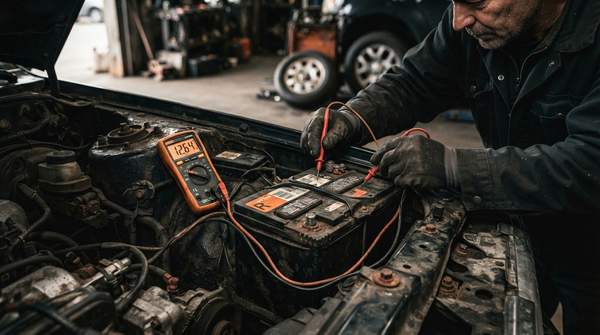
Strengths: Future-proof for EVs; enables compliance with upcoming mandates; addresses fastest growing segment at 5.88% CAGR, according to Researchandmarkets. | Limitations: High initial investment; requires specialized training. | Price: Over USD 50,000 per bay.

2. Professional OBD II Scan Tools

Best for: All general automotive repair shops servicing modern vehicles.

Professional OBD II scan tools remain foundational for diagnosing vehicles from 1996 onward. These tools use a single connector and standardized data across manufacturers. They held the largest market share at 44.12% in 2025, according to Researchandmarkets, confirming their universal necessity. Market dominance exists because, as Motor states, diagnosing newer vehicles without such a tool is "extremely difficult and often futile." These professional units provide access to diagnostic trouble codes (DTCs), live sensor data, and readiness monitors, making them indispensable for engine light diagnosis, emissions testing, and general powertrain troubleshooting. Their absence means critical diagnostic capabilities are simply unavailable.

Strengths: Universal compatibility for post-1996 vehicles; standardized data; essential for general diagnostics. | Limitations: May lack advanced bidirectional control or specific OEM functionality. | Price: Varies widely, professional units typically $500 - $5,000+.

3. Carly Universal Scanner

Best for: Enthusiasts and small independent shops seeking enhanced diagnostic and customization options.

The Carly Universal Scanner offers more than basic code reading. Its SEAT Premium Package, costing £59.89, provides OBD reading, code clearing, and the ability to change car features like automatic locking, according to Autoexpress. This tool allows users to perform basic diagnostics, clear fault codes, and customize vehicle features such as automatic locking, lighting settings, or service interval resets. While not a full professional system, it represents an affordable entry point for shops looking to offer enhanced customization services, potentially attracting a niche clientele interested in personalized vehicle settings.

Strengths: Affordable feature customization; code clearing; enhanced diagnostics beyond basic readers. | Limitations: Brand-specific packages can add cost; not a full professional diagnostic system. | Price: Around £59.89 for specific packages.

4. Motopower MP69033 OBD-II Scanner

Best for: Shops prioritizing quick code retrieval for common issues.

Efficiency in a busy shop environment often depends on speed. The Motopower MP69033 OBD-II scanner reads codes in 17.3 seconds, according to Caranddriver. This rapid performance allows technicians to quickly identify basic issues and triage vehicles, minimizing wait times and maintaining workflow. While limited in advanced features, its speed makes it an ideal tool for initial fault identification, freeing up more sophisticated equipment for complex diagnostics.

Strengths: Fast code reading; efficient for basic diagnostic tasks. | Limitations: Limited advanced features compared to professional systems. | Price: Typically under $100.

5. Ancel BD310 OBD-II Scanner

Best for: Cost-conscious independent shops needing comprehensive data without bidirectional control.

The Ancel BD310 OBD-II Scanner connects via Bluetooth and displays codes in 18.6 seconds, Caranddriver reports. It offers 18 active Live Data PIDs, 13 Freeze Frame Data PIDs, and 6 I/M Monitors, providing many perks of more expensive scanners. These PIDs include critical parameters like engine RPM, coolant temperature, and fuel system status, allowing real-time monitoring to identify intermittent faults. However, its lack of bidirectional control means it serves best as a robust monitoring tool, complementing systems with full command capabilities rather than replacing them.

Strengths: Affordable; quick Bluetooth connection; comprehensive live and freeze frame data. | Limitations: No bidirectional control. | Price: Typically under $100.

6. Autel MaxiCOM Mk808Z-BT OBD-II Scanner

Best for: Technicians requiring extensive live data for complex troubleshooting.

While the Autel MaxiCOM Mk808Z-BT OBD-II Scanner takes 51.5 seconds to connect via Bluetooth and display codes, Caranddriver notes its strength lies in data depth. It provides 20 active Live Data PIDs, 13 Freeze Frame Data PIDs, and 11 I/M Monitors. Extensive data offers a comprehensive view of vehicle systems, providing granular detail on sensors and actuators. Precision is crucial for diagnosing intricate, multi-system problems, making the slower connection a worthwhile trade-off for complex troubleshooting scenarios.

Strengths: Highest number of active Live Data PIDs; in-depth diagnostic capabilities. | Limitations: Slower connection time. | Price: Typically $500 - $800.

7. OBD I Scanners

Best for: Shops servicing a diverse clientele including classic or older pre-1996 vehicles.

OBD I scanners are necessary for diagnosing vehicles manufactured before 1996. These older systems require manufacturer-specific connectors and parameters, unlike the standardized OBD II interface. Shops servicing a broad range of vehicle ages must retain these capabilities, as these tools read proprietary codes and offer limited data streams. Maintaining this specialized capability allows independent shops to capture a segment of the market that larger, more modern facilities often overlook, ensuring a diverse customer base.

The ROI of Advanced Diagnostics

Investing in ADAS calibration equipment presents a significant financial opportunity for independent repair shops. Yet, this investment comes with substantial ongoing operational demands and a specific equipment lifecycle that shops must factor into their long-term business strategy. Ignoring these costs and demands can quickly erode the potential profit margins, turning an opportunity into a financial burden.

MetricADAS CalibrationBasic OBD2 Diagnostics
Average Service Price Per System$250 - $500, according to BestbuyautoequipmentTypically $50 - $150 (for code reading/clearing)
Annual Gross Profit Potential (5 calibrations/week)Over $71,000 (at $400 average per calibration), Bestbuyautoequipment reportsSignificantly lower, as basic diagnostics are often bundled or lower-priced services
Equipment Obsolescence/Upgrade CycleAround year 5, due to rapid technology evolution, states ProtechautomotivesolutionsLonger lifespan, but basic functionality becomes increasingly inadequate for modern vehicles
Required Operational OverheadDedicated, climate-controlled space for targets; ongoing training; frequent software updatesMinimal, typically a simple scan tool and basic software

The Future is Unified and Electric

Forthcoming regulatory mandates will soon transform diagnostic requirements for all repair shops. California will require a unified electric vehicle (EV) diagnostic interface by 2026, according to Researchandmarkets. This mandate forces shops to invest in specialized tools for the rapidly expanding EV market, or face exclusion.

Beyond EVs, the Society of Automotive Engineers (SAE) J1979-2 standard mandates that combustion-engine vehicles sold from 2027 must support unified diagnostic services. This regulatory shift means shops relying solely on sub-$100 OBD2 scanners will be unable to service even basic vehicle needs. Such shops will effectively be regulated out of business as compliant vehicles become the norm, creating an unavoidable industry consolidation.

Common Questions & Hidden Costs

What are the physical limitations of budget OBD2 scanners?

Budget OBD2 scanners, such as the Temu Professional OBD2 Diagnostic Scanner Tool, often have a fragile feel to their cases. These units may also come with relatively short cables, like the 52cm cable on the Temu scanner, which can limit maneuverability in a shop setting, according to Autoexpress.

What operational considerations are critical for ADAS calibration equipment?

Beyond the initial purchase, ADAS calibration equipment requires specific operational considerations. Proper storage for ADAS targets and fixtures is critical and necessitates climate-controlled space to prevent damage and maintain accuracy, as highlighted by Protechautomotivesolutions. This ensures the precision needed for accurate calibrations.

What are the most important diagnostic tools for a mechanic?

A mechanic primarily needs a professional OBD II scan tool for modern vehicles, capable of reading and clearing codes, along with accessing live data. For older models, an OBD I scanner is necessary. Furthermore, as EV technology advances, an electric-system analyzer becomes increasingly vital for comprehensive service capabilities.

If independent shops do not proactively invest in advanced diagnostic and calibration equipment, they will likely face significant revenue loss and eventual obsolescence as regulatory mandates and vehicle technology continue to evolve.

Tags

Auto RepairDiagnostic ToolsAutomotive TechnologyAdas CalibrationShop EquipmentMechanic ToolsFuture Of Auto Repair
LO

Luis Ortega

Automotive Services Writer

Luis Ortega is the Automotive Services Writer for AllTradesJournal, covering automotive services, repair techniques, and materials science. He focuses on delivering practical insights, tool reviews, and safety protocols to help professionals and DIY enthusiasts optimize their repair workflows.

More from Automotive Services

UC Berkeley's Sather Tower with students observing a holographic projection of increasing housing and meal plan costs for the 2026-27 academic year.

UC Berkeley reveals 2026-27 housing costs

By 2026-27, a standard double room at UC Berkeley, including a meal plan, is projected to cost $23,885, setting a new financial benchmark for attending a top public university.

Luis Ortega· Aug 22
Close-up cinematic view of a transparent hybrid vehicle battery pack showing glowing internal components and energy flow from braking wheels in a workshop.

How Do Hybrid Vehicle Batteries Regenerate? A Maintenance Guide

Unlike fully electric vehicles, a hybrid's battery never needs to be plugged in, instead charging itself through clever engineering while you drive.

Luis Ortega· Aug 22
Independent auto mechanic facing corporate dominance, symbolizing the threat to small businesses from automaker control over vehicle repair.

Automaker Control Threatens Independent Auto Shops by 2026

Ford CEO Jim Farley recently warned that modern vehicle repairs are too complex for consumers, citing safety risks.

Luis Ortega· Aug 21
Mechanic diagnosing car noises, highlighting squealing and grinding sounds indicating potential mechanical issues.

Top 3 Common Car Noises and What They Mean for Your Car

A faint squeal from under the hood, dismissed as 'just an old car thing,' can quickly escalate into a complete engine failure, stranding you on the highway.

Luis Ortega· Aug 21

Trending Now

1
A modern DIY workshop showcasing a variety of eco-friendly and refurbished power tools alongside green plants, emphasizing sustainability in home improvement.

Eco-Friendly Tools Fuel Sustainable DIY Culture's Market Shift

Industry· 28 views
2
A futuristic, eco-friendly building constructed with sustainable materials, surrounded by lush greenery and bathed in natural sunlight.

Top 5 Sustainable Building Materials for Greener Construction

Materials· 6 views
3
Advanced tray stand support frameworks being manufactured with innovative materials on a futuristic factory floor, highlighting market value shift.

Tray Stand Support Frameworks Market Growth Forecast Sees Value Shift

Industry· 4 views
4
Workers on a construction site wearing smart PPE hard hats and vests, demonstrating advanced real-time workplace safety technology.

Smart PPE Wearables Promise Real-time Workplace Safety Beyond 2026 Trends

Safety· 4 views
5
Collision repair shop with technicians working on an advanced vehicle featuring ADAS sensors, highlighting technological evolution in the industry.

Collision Repair Faces Evolving Global Trends by 2026

Automotive Services· 4 views
6
Close-up of skilled hands creating a precise mortise and tenon joint in a piece of wood, showcasing traditional woodworking craftsmanship.

What Are Mortise and Tenon Joints and Why Are They So Strong?

How To· 3 views