Unlike fully electric vehicles, a hybrid's battery never needs to be plugged in, instead charging itself through clever engineering while you drive. This self-sustaining design simplifies ownership, eliminating the need for charging stations. Hybrid vehicle batteries are central to the car's advanced technology, but they are designed for self-charging and often allow for component-level repair, making them more accessible and less daunting to maintain. This positions hybrid vehicles as a practical and sustainable choice, with battery systems more robust and economically maintainable than commonly perceived.
Hybrid operation hinges on battery self-sufficiency. Unlike electric vehicles, a hybrid's battery charges without external power, relying on regenerative braking and the internal combustion engine according to the Alternative Fuels Data Center. This capability means drivers avoid charging stations, as the vehicle continuously manages its power levels for optimal performance.
How Regenerative Braking Powers Your Hybrid
Regenerative braking is a primary method for hybrid battery regeneration. This system enables the electric motor to function as a generator, capturing kinetic energy from the moving vehicle and redirecting it back to the battery when the driver decelerates or applies the brakes according to 1000 Islands Toyota. This process converts energy typically lost as heat into usable electricity. The electric motor also provides supplementary power, allowing for a smaller internal combustion engine the Alternative Fuels Data Center reports. This dual function—propulsion and energy regeneration—significantly boosts fuel efficiency, extending range and reducing gasoline reliance. The implication is a system that actively reclaims energy, making every deceleration a charging opportunity.
The Hidden Generator: Capturing Energy from the Wheels
During braking, a specific electric generator within the hybrid system activates. This generator captures electricity directly from the rotating wheels, then transfers this regenerated energy back to the traction battery pack according to the Alternative Fuels Data Center. This continuous energy capture is fundamental to the hybrid's operational efficiency. This dedicated generator ensures constant battery replenishment without external input, making the hybrid system remarkably self-sufficient and reducing driver intervention.
Beyond Full Replacement: The Repairable Hybrid Battery
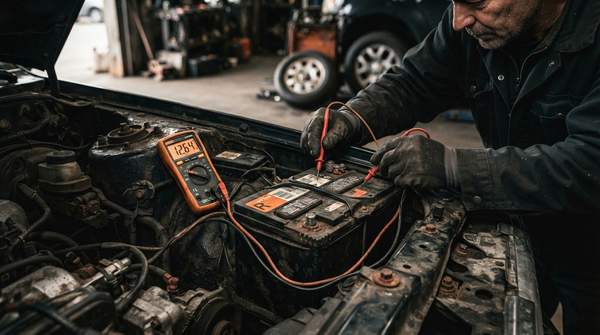
Many consumers fear exorbitant hybrid battery replacement costs. However, individual hybrid battery cells can often be replaced or refurbished at a significantly lower cost than a full battery replacement 1000 Islands Toyota data reveals. This modular approach to battery repair makes maintenance more manageable and less expensive. This directly counters the widespread perception of prohibitively expensive overhauls, positioning hybrid vehicles as a more economically sound long-term investment.
Maximizing Your Hybrid Battery's Lifespan
Owners can actively contribute to battery longevity. Regular driving, maintaining favorable climate conditions, and strictly adhering to the factory service schedule all extend a hybrid battery's operational life according to 1000 Islands Toyota. Consistent use prevents idle degradation, while avoiding extreme temperatures preserves battery health. Following manufacturer maintenance schedules ensures necessary checks and updates, protecting the investment. These simple practices significantly prolong battery life, delaying costly replacements.
Does the Hybrid Battery Power Anything Else?
Beyond propulsion, the hybrid battery powers auxiliary loads. It can reduce engine idling when stopped, running the air conditioning or infotainment system according to the Alternative Fuels Data Center. This enhances comfort and boosts fuel efficiency by allowing the internal combustion engine to shut off more frequently. Hybrid batteries are engineered for longevity, often lasting 8 to 10 years or more, frequently exceeding 100,000 to 150,000 miles. Their lifespan is extended by self-charging systems and regular maintenance. Common issues involve gradual capacity reduction, leading to slightly decreased fuel efficiency. However, these often stem from individual cell degradation, meaning component-level repairs are typically sufficient and more economical than full pack replacement.
The Smart Power Manager: DC/DC Converter Explained
The DC/DC converter is essential for seamless power delivery. This device converts higher-voltage DC power from the traction battery pack into lower-voltage DC power. This lower voltage then powers vehicle accessories and recharges the auxiliary 12-volt battery according to the Alternative Fuels Data Center. This sophisticated converter ensures standard electrical systems receive appropriate power without drawing directly from the high-voltage traction battery. The DC/DC converter integrates the high-voltage battery with the vehicle's standard electrical system, allowing the hybrid's advanced power system to support all conventional vehicle functions efficiently. This integration is critical for the vehicle's overall electrical stability and functionality.
The continued integration of such efficient power management systems, exemplified by the DC/DC converter, will likely further solidify hybrid vehicles as a sustainable and economically sound choice for drivers across the market.