Brunt, a workwear company founded in 2020, has achieved over $300 million in annual sales. Rapid growth confirms a massive demand for professional-grade gear among tradespeople and DIY enthusiasts.
Yet, this booming market coexists with a critical knowledge gap. Many tradespeople and DIYers lack full understanding of essential safety regulations and the specific Personal Protective Equipment (PPE) their tasks require. Individuals often invest in general workwear without grasping task-specific safety standards, creating a false sense of security and contributing to preventable injuries.
OSHA mandates employers provide PPE and ensure its proper use when other controls are insufficient. OSHA also requires training workers on PPE necessity, type, usage, limitations, and care. Employer responsibility highlights the complex requirements often overlooked by individual buyers.
Essential Safety Regulations and Practices for Every Task
1. Personal Protective Equipment (PPE)
Best for: All tradespeople and DIYers facing workplace hazards.
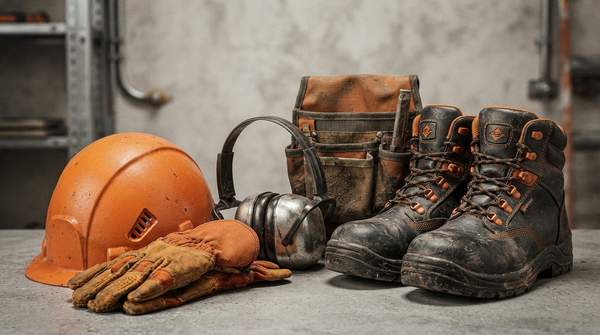
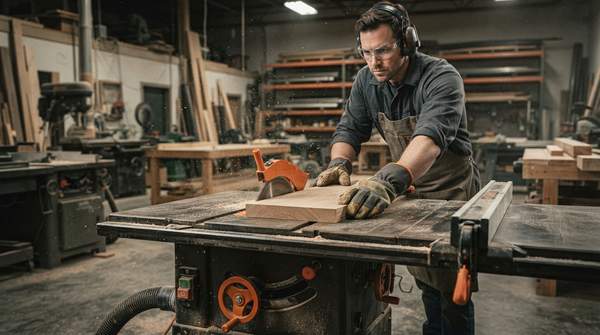
PPE serves as a direct barrier against hazards when other controls are insufficient. Many categories of PPE, from gloves and safety glasses to hard hats and respirators, must meet or be equivalent to standards developed by the American National Standards Institute (ANSI). Employers are required to provide PPE and train workers on its necessity, type, usage, limitations, and care. Failure to select and use ANSI-compliant PPE correctly negates its protective purpose.
Strengths: Direct hazard barrier | Limitations: Requires correct selection and training | Price: Varies by item
2. OSHA-Mandated Safety Training
Best for: All workers in regulated environments, self-employed tradespeople, and serious DIYers.
OSHA regulation 1926.21 mandates safety training and education. This includes instruction on hazard recognition, avoidance, and applicable regulations. Such training is crucial; without it, individuals risk misapplying protective measures and increasing human error.
Strengths: Reduces human error, ensures compliance | Limitations: Requires consistent reinforcement | Price: Varies by provider
3. Fall Protection Systems
Best for: Workers at elevated heights, including roofers, construction workers, and scaffold erectors.
OSHA requires fall protection for workers at heights of six feet or more above a lower level, according to Axelent. This encompasses guardrail systems, safety net systems, and personal fall arrest systems. Correct installation and consistent inspection are paramount; improper setup renders these systems ineffective against severe fall injuries.
Strengths: Prevents critical injuries | Limitations: Requires proper setup and inspection | Price: Varies by system complexity
4. Safe Scaffolding Practices
Best for: Construction workers, painters, and anyone working on temporary elevated platforms.
Scaffolds must support their own weight plus at least four times the maximum intended load, Axelent states. This ensures structural integrity. Without rigorous construction, regular inspections, and adherence to assembly guidelines, scaffolds pose a severe collapse and fall risk.
Strengths: Provides stable elevated workspace | Limitations: Requires rigorous construction and load calculation | Price: Varies by scaffold type and rental
5. Adherence to ANSI Standards for PPE
Best for: All individuals purchasing or using PPE in the United States.
OSHA mandates that many PPE categories meet or be equivalent to American National Standards Institute (ANSI) standards, such as ANSI/ISEA Z87.1 for eye protection or ANSI Z89.1 for head protection. Compliance ensures tested protection levels. Using non-compliant gear offers a false sense of security, as its protective capacity is unverified.
Strengths: Ensures certified protection levels | Limitations: Standards can be complex to interpret | Price: Included in product cost
6. Adherence to EN Safety Standards for PPE
Best for: Tradespeople and DIYers sourcing PPE from or working in regions adopting European standards.
EN products undergo testing by an independent verifier. These standards, adopted and legally enforceable in EU member countries, provide a robust, internationally recognized framework for PPE quality and performance. For those operating within or sourcing from Europe, EN compliance is as critical as ANSI in the US.
Strengths: Internationally recognized, rigorous testing | Limitations: Primarily for European markets | Price: Included in product cost