Climate change is predicted to reduce the lifetime of electric vehicle batteries manufactured between 2010 and 2018 by 8% on average, a stark contrast to the mere 3% reduction projected for newer models, according to Nature. A 62.5% improvement in climate resilience for post-2019 EVs highlights a significant advancement in engineering. Owners seeking to maximize their electric vehicle battery lifespan benefit directly from these technological leaps, experiencing less environmental degradation than previous generations. A critical evolution in automotive design, prioritizing long-term durability against changing global conditions.
Electric vehicle batteries are susceptible to degradation from both environmental factors and improper use, presenting a dual challenge for longevity. However, significant technological advancements and informed owner practices are creating a surprising buffer against these challenges. Newer EV batteries (2019-2023) are predicted to have longer and less spatially variable lifetimes, with substantially smaller reductions due to projected warming, compared to older batteries (2010-2018), according to Nature. Innovation is building essential resilience into the core components of electric vehicles.
While external stressors and user habits present ongoing challenges, the future of EV battery longevity appears increasingly robust due to continuous innovation and the growing adoption of best practices. This resilience is largely a result of engineering improvements, fundamentally shifting the burden of climate change resilience from individual owner practices to the vehicle's design. The technological advances in EV battery manufacturing inherently carry climate adaptation co-benefits, reducing the relative burden on individual users for climate change adaptation.
Understanding Your EV Battery's Health
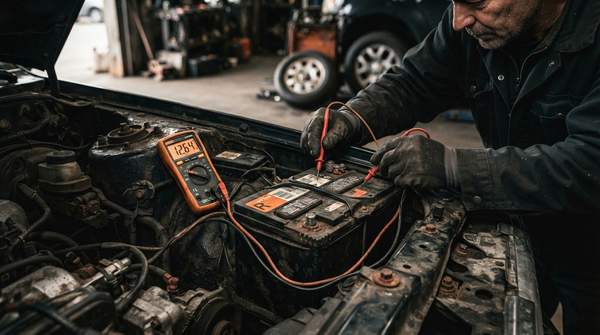
State of Health, or SoH, indicates the remaining capacity of an electric vehicle's battery compared to its original capacity when new, expressed as a percentage, according to Powerbattery Nl. Monitoring this metric provides a direct, quantifiable assessment of battery degradation over time. Declining SoH signals reduced range and performance, making its understanding crucial for proactive battery care. SoH is not just a number but a reflection of the battery's operational integrity.
Researchers developed a comprehensive study that combined electric vehicle simulation and battery degradation models with high-resolution downscaled climate data for 300 global cities, according to Nature. A sophisticated modeling approach reveals how various environmental factors, such as ambient temperature fluctuations, contribute to battery wear. Even with advanced modeling, optimal charging practices can help maintain EV battery health, a factor still relevant despite the robust technological advancements. Drivers who understand these underlying principles are better positioned to make informed decisions about vehicle usage and maintenance.
The data reveals that while owner actions like optimal charging retain some importance, the inherent resilience of newer EV batteries provides a substantial baseline buffer. The shift in responsibility from individual user vigilance to engineering solutions. The technological improvements mean that the marginal impact of hyper-vigilant owner practices on overall longevity is less significant than it once was, as technological advancements provide a substantial baseline buffer. A fundamental change in how battery degradation is being managed, with more emphasis on the vehicle's built-in capabilities.
Proactive Strategies for Maximizing Lifespan
Most electric vehicle batteries charge safely at 0.5C to 1C rates, according to Powerbattery Nl. This means a 100 kWh battery can safely charge at 50 kW to 100 kW without undue stress. Adhering to these recommended charging rates minimizes thermal strain and chemical degradation on the battery cells. Consistent charging within these parameters contributes significantly to long-term battery stability and preserves its original capacity. Avoid routinely pushing charging beyond these rates for daily use.
Maintaining battery temperature is important for EV battery health, according to KBB. Extreme heat or cold can accelerate degradation processes within the battery, impacting its lifespan. Owners should utilize preconditioning features when available, preparing the battery for optimal charging or driving temperatures. Parking in shaded areas during summer or using a garage in winter also helps regulate internal battery temperatures, mitigating environmental stress. Proactive thermal management is a key component of battery longevity.
Keeping EV software up-to-date is a pro tip for battery health, according to KBB. These updates often include critical optimizations for charging algorithms, thermal management systems, and overall battery performance. Modern software plays a critical role in managing battery performance and extending its operational life by intelligently adjusting parameters. Sophisticated software, including regular updates and precise, context-specific range estimation, is becoming a critical, often underestimated, factor in extending battery life by optimizing charging behavior and minimizing unnecessary stress. Constant refinement through software ensures the battery operates at peak efficiency.
Common Mistakes That Accelerate Degradation
Regularly dropping below 10% charge can put a significant strain on the battery management system, according to Greencars. The practice of deep discharge cycles increases the risk of irreversible cell damage and consequently reduces overall battery longevity. Maintaining a charge level between 20% and 80% is generally recommended for daily use, as it keeps the battery in its most stable chemical state. Avoiding these extreme low thresholds safeguards the battery's chemical integrity and prolongs its effective life.
Using DC Fast Charging too often can generate excess heat and accelerate battery wear, also reported by Greencars. While the convenience of rapid charging is undeniable for long journeys, frequent use subjects the battery to higher thermal stress and potentially faster degradation. Reserve DC Fast Charging for longer trips or urgent situations when time is critical. Prioritize Level 2 AC charging whenever possible for routine charging, as it is gentler on the battery cells and promotes long-term health.
Accurate, personal, and context-specific range estimation is crucial for promoting risk perception, improving charging efficiency, reducing unnecessary charging cycles, and simplifying fleet operations, according to Nature. Misjudging available range can lead to suboptimal charging behaviors, such as overcharging when not needed or running the battery too low out of necessity. Companies still marketing 'optimal charging practices' as the primary defense against battery degradation are missing the bigger picture: Nature's research clearly shows that technological advancements in newer EVs (post-2019) have already provided a 62.5% reduction in climate change's impact on battery life, making engineering the dominant factor in mitigating environmental stressors. The growing importance of sophisticated software in guiding user behavior.
Advanced Battery Care for EV Longevity
Owners of newer electric vehicles benefit significantly from the inherent resilience built into modern battery packs. Newer EV battery technology has nearly tripled resilience against climate change-induced degradation, reducing projected lifetime reductions from 8% for older models (2010-2018) to just 3% for those manufactured after 2019. Engineering advancement means that newer vehicles are inherently better equipped to handle environmental stressors, offering a more robust and enduring power source. A substantial improvement in durability shifts the focus from individual behavioral adjustments to the foundational capabilities of the battery itself.
Beyond hardware improvements, sophisticated software, including regular updates and precise, context-specific range estimation, is becoming a critical, often underestimated, factor in extending battery life. Software optimizes charging behavior, manages thermal loads more efficiently, and minimizes unnecessary stress on the battery's chemistry. The crucial role of 'accurate, personal, and context-specific range estimation' (Nature) suggests that future EV battery health strategies will rely less on generic owner advice and more on sophisticated, AI-driven software that proactively optimizes charging and usage patterns. Integration of intelligent software provides a dynamic layer of protection for the battery.
While good charging habits remain beneficial, the inherent resilience of newer EV batteries means that the marginal impact of hyper-vigilant owner practices on overall longevity is less significant than it once was. Technological advancements provide a substantial baseline buffer against degradation. The stark contrast in climate resilience between older and newer EV batteries, highlighted by Nature, means that the true 'green premium' for electric vehicles now lies less in their zero-emission operation and more in their inherent durability.heir long-term, climate-adapted durability. This durability translates into greater retained value and fewer concerns about battery replacement over the vehicle's lifespan.
What affects EV battery life?
Several factors affect EV battery life, including temperature extremes, frequent deep discharges below 10%, and excessive use of DC Fast Charging. However, technological advancements in newer batteries, particularly those manufactured after 2019, have significantly improved their resilience against climate-induced degradation, reducing projected lifetime reductions to just 3%.
How can I improve my EV battery performance?
You can improve EV battery performance by maintaining charge levels between 20% and 80% for daily driving and minimizing frequent DC Fast Charging. Regular software updates also play a crucial role, as they often include optimized charging algorithms and thermal management. These updates help the battery management system operate more efficiently.
When should I replace my EV battery?
Most EV batteries come with warranties typically covering 8 years or 100,000 miles, guaranteeing a certain State of Health (SoH) percentage, often around 70%. Replacement becomes a consideration when the battery's capacity significantly drops below this threshold, impacting usable range and vehicle performance. Consult your vehicle manufacturer for specific warranty terms and recommended replacement guidelines.
Are EV batteries covered by warranty?
Yes, most electric vehicle batteries are covered by substantial warranties. For example, federal regulations require manufacturers to offer an 8-year/100,000-mile warranty on battery components. This coverage protects against premature degradation or failure, ensuring that battery capacity remains above a certain percentage, typically 70% to 80% of its original capacity.
The conversation around extending electric vehicle battery lifespan has fundamentally shifted. While optimal charging and temperature management remain crucial, recent technological advancements in EV batteries have fundamentally shifted the burden of climate change resilience from individual owner practices to engineering, making newer EVs significantly more robust against environmental degradation. This means that the primary defense against battery degradation is increasingly built into the vehicle itself, reducing the reliance on constant owner intervention.
Owners of older EV models (2010-2018) face a projected 8% reduction in battery lifetime due to climate change, while those with post-2019 models see only a 3% reduction, according to Nature. This 62.5% reduction in climate impact for newer batteries showcases the effectiveness of engineering solutions. It highlights how companies like Tesla, with their continuous software updates and advanced thermal management systems, are leading this charge in developing more resilient battery technologies. The winner in this scenario is clearly the owner of newer EVs, benefiting from extended battery life and performance with less personal effort.
Manufacturers investing heavily in advanced battery chemistry and sophisticated, AI-driven battery management systems will solidify their market position. The ongoing development of these integrated solutions ensures that an EV purchased today offers greater long-term durability and performance resilience than its predecessors, further reducing the perceived risks associated with battery degradation for consumers.