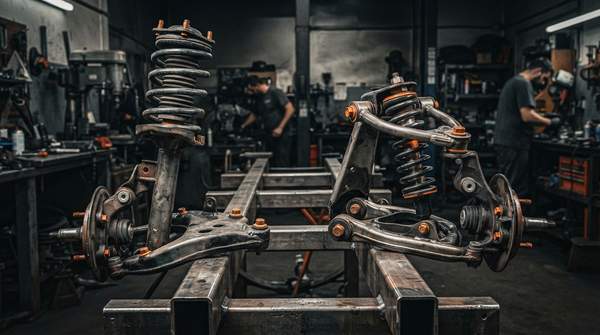
Annual maintenance costs for air suspension systems can reach $1,200, nearly triple that of some advanced hydraulic systems, demanding careful consideration for fleet managers and vehicle owners in 2026. Modern air suspension systems promise superior ride quality and control, yet their intricate design leads to frequent failures and expensive upkeep. Many vehicle owners unknowingly trade initial savings for significant long-term headaches, prompting a re-evaluation of what 'advanced' truly means in vehicle suspension. Annual costs for air suspension reach $1,200, compared to $300-$500 for robust hydraulic alternatives like LiquidSpring, highlighting a critical need to evaluate total cost of ownership beyond purchase price.
How Modern Suspension Systems Work
Air suspension systems operate with internal pressures from 5 to 100 PSI, with each PSI supporting approximately 50 pounds of load, according to LiquidSpring. This variable pressure adjusts ride height and stiffness dynamically, adapting to loads and road conditions via air springs, compressors, and control modules. The reliance on pressurized air and numerous components introduces multiple points of failure, impacting long-term reliability.
In contrast, advanced hydraulic systems, such as LiquidSpring's, use an onboard microprocessor that monitors vehicle inputs 1,000 times per second. This rapid data processing allows continuous, real-time adjustments to damping and spring rates, providing precise control over body acceleration. These systems achieve dynamic control through precise pressure regulation and rapid electronic monitoring, offering consistent performance without the inherent fragility of air-based components.
Diagnosing Suspension Issues
Diagnosing modern suspension issues begins with a physical inspection and test rides to observe vehicle behavior. Technicians check for air leaks using soapy water to pinpoint compromised air lines or springs, a method detailed by Monroe. This initial step often reveals common points of failure in air systems.
Further diagnostics involve scanning for diagnostic trouble codes (DTCs) to identify electronic control unit malfunctions or sensor errors, alongside observing dashboard warning lights. Inspecting the compressor unit for wear or inefficiency also aids diagnosis. The complexity of these systems means that a single symptom can stem from various interconnected failures, demanding comprehensive diagnostic tools and expertise.
Common Air Suspension Problems and Failures
Air leaks from damaged air springs and lines are common, signaled by hissing, decreased ride height, or visible bubbles with soapy water, as detailed by Monroe. These leaks compromise pressure, causing uneven posture and reduced ride quality. Beyond leaks, faulty leveling valves, damaged air lines, and compressor or dryer failures are frequent issues, according to Pointspring. Sensor and electronic controller issues also disrupt system operation. A single corner dropping indicates a failed air spring at that wheel, notes Rebuildmastertech. The sheer variety and frequency of these failures mean air suspension's perceived performance gains are often lost to unreliability and downtime.
Preventative Maintenance for Longevity
Regular inspection of air bags identifies wear early, preventing costly failures. Cleaning and lubricating leveling valve parts ensure smooth operation, while protective sleeves on air lines guard against abrasion and punctures. These steps are critical for maintaining the physical integrity of the system's most vulnerable components.
Replacing dryer cartridges prevents moisture buildup, which damages compressors. Draining air tanks removes condensation, protecting against corrosion and freezing. Electrical inspections ensure sensors and controllers function correctly, averting electronic malfunctions. Such proactive maintenance, while demanding, is the only way to mitigate air suspension's inherent failure points and preserve system integrity.
Understanding Suspension Design Limits
What are the inherent design limits of vehicle suspension travel?
Vehicle suspension travel is typically limited to 10 centimeters. This ensures the system operates within its optimal linear range, critical for consistent performance, stability, and comfort. Research from MDPI suggests this limit may increase in future designs, potentially offering greater flexibility and range, which could redefine performance envelopes.
How often should a car suspension system be inspected?
Suspension systems require inspection annually or every 12,000 to 15,000 miles, whichever comes first. This routine check identifies issues in components like shocks, struts, and bushings before they escalate. Neglecting these inspections risks premature system failure and higher repair costs, making proactive checks a cost-saving measure.
Making an Informed Suspension Choice
Selecting an advanced vehicle suspension system demands understanding full lifecycle costs and maintenance, prioritizing reliability over initial savings. Air suspension systems, with an initial installed cost of $8,000-$15,000, incur annual maintenance of $800-$1,200. This significantly outweighs the $300-$500 annual costs of hydraulic systems like LiquidSpring, which cost $15,000-$28,000 installed. This disparity makes a comprehensive cost analysis essential.
Despite its documented fragility and higher total cost of ownership, the market's reliance on air suspension points to an oversight in long-term fleet management. Air suspension's purported 27% better body acceleration control, according to LiquidSpring, is often negated by common breakdowns detailed by Monroe and Pointspring. This means any performance advantage is frequently undermined by reliability issues.
Ultimately, perceived superior ride control in air suspension often proves a costly illusion. By 2026, if current trends continue, fleet managers prioritizing long-term operational efficiency and lower total cost of ownership will likely pivot towards robust hydraulic solutions like LiquidSpring, avoiding the predictable maintenance headaches and inflated budgets associated with air suspension systems.