Choosing the correct wall anchor comes down to two questions: what is your wall made of, and how heavy is the item you want to hang? Answer both, and the right fastener almost picks itself. Plastic expansion anchors suit light items in drywall or plaster; molly bolts handle medium to heavy loads in hollow walls; toggle bolts carry heavy items in hollow surfaces; and masonry anchors are built for solid concrete or brick. This guide walks you through identifying your wall, categorizing your load, and understanding why each anchor works the way it does.
Understanding Your Wall: Hollow vs. Solid
Every anchor decision starts with wall construction, because the wall type determines which mechanical principle can work. Residential walls fall into three broad families: drywall, plaster, and masonry. Drywall, also called plasterboard, consists of two paperboards sandwiching gypsum, a powdery sulfate mineral. Plaster walls are built over wooden laths covered with layers of plaster to create a smooth surface, as Arthur Harrison of Picture Hang Solutions explains.
Masonry walls are made of concrete, brick, or stone — materials bound together with mortar. The critical distinction for anchor selection is not the surface you see, but what lies behind it. Drywall and plaster are typically hollow behind the surface, which means an anchor must somehow grip a thin panel or reach through it. Masonry is solid, which allows an anchor to expand inside a dense material instead.
Identifying your wall takes a little care. A knock test can offer a clue, but it does not identify wall material on its own, so confirm the wall construction before choosing hardware. The materials also differ in strength and temperament: OneMonroe's fastener guidance notes that drywall is inexpensive but relatively weak and brittle, plaster is harder than drywall but susceptible to cracking, and brick is the strongest material but more difficult to penetrate.
Categorizing Item Weight: Light, Medium, Heavy
The second factor is the weight of the object you intend to mount. It is crucial to consider this weight and choose an anchor that can safely support it, as Vadania's hollow-wall anchor guide emphasizes. Check the specifications provided by the manufacturer and opt for anchors with appropriate weight ratings to prevent failure or damage.
For practical purposes, sort your item into three categories:
- Light: small framed pictures, lightweight décor, and similar items that place minimal stress on the wall.
- Medium: larger frames, mirrors, towel bars, and shelving brackets with moderate loads.
- Heavy: shelves loaded with books, wall-mounted cabinets, heavy mirrors, and ceiling-hung loads.
Two cautions apply. First, weight capacities vary by anchor model and size, so treat these categories as a starting point rather than a rating. Second, using the wrong anchor type for your wall and load can result in poor stability and a compromised mount, so the weight category and the wall material must be answered together before you buy hardware.
Wall Anchor Selection Framework
Cross-reference your two answers in the table below. Find your wall material, then your weight category, and read across to the recommended anchor type and the reason it suits that combination.
| Wall Material | Item Weight | Recommended Anchor | Why It Works |
|---|---|---|---|
| Drywall or plaster (hollow) | Light | Plastic expansion anchor | Expands inside the wall cavity as the screw is driven in, gripping the panel |
| Drywall or plaster (hollow) | Medium | Molly bolt | Expands on the backside of the wall to create a strong, stable hold |
| Drywall, plaster, or hollow block | Heavy | Toggle bolt | Spreading wings bear against the back side of the surface, distributing the load |
| Concrete or brick (solid) | Light to very heavy | Masonry anchor (wedge or sleeve type) | Designed specifically for solid concrete or brick, expanding inside the dense material |
The framework follows a simple logic. Hollow walls cannot hold a screw on their own, so anchors must either expand against the panel itself or reach through to grip the far side — the heavier the item, the deeper the grip needs to be. Solid masonry walls present the opposite problem: the material is strong but difficult to penetrate, so the anchor is designed to expand within it rather than behind it.
Plastic drywall anchors are suitable for hanging lightweight items such as pictures, while metal and toggle anchors are better for heavier items such as shelves, according to Picture Hang Solutions. Toggle bolts are the standard fastener for mounting brackets, shelves, towel bars, ceiling-hung loads, and electrical fixtures into hollow surfaces, as Eugene Fastener's installation guide describes.
How Wall Anchors Work: Mechanisms Explained
Plastic Expansion Anchors
Plastic expansion anchors are the most common style and the simplest to understand. You drill a hole, gently hammer the plastic anchor into it, and then drive a screw into the anchor. As the screw enters, the plastic expands in the wall cavity, creating a tight grip against the surrounding material. This mechanism is what makes them suitable for light to medium-weight items — the hold depends entirely on friction against a relatively soft panel.
Molly Bolts
Molly bolts are specialized anchors well-suited to hollow walls. They create a strong hold by expanding on the backside of the wall, providing stability for medium to heavy loads. Because the expansion happens behind the panel rather than inside the hole, the wall material itself is held in compression between the anchor's flange and its expanded portion — a stronger arrangement than surface friction alone.
Toggle Bolts
Toggle bolts hold heavy loads in hollow walls — drywall, plaster, ceiling tile, and hollow concrete block — by spreading anchor force against the back side of the surface. Their spring-loaded wings fold flat for insertion through the drilled hole, then open inside the wall cavity. When the screw is tightened, the wings press against the back of the panel, distributing the load across a wider area than any single-point anchor could. This is why they excel at heavy items where other hollow-wall anchors would pull out.
Masonry Anchors
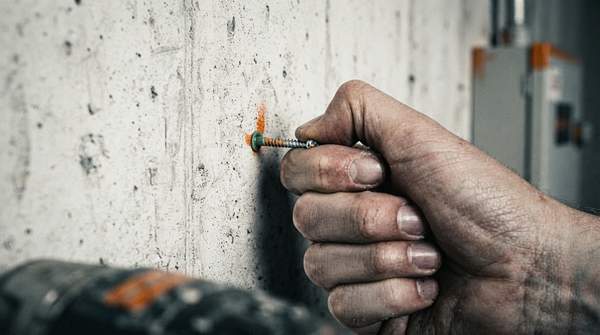
Wedge and sleeve anchors are designed specifically for solid concrete or brick walls. Instead of reaching through to a hollow cavity, they expand within the drilled hole as the bolt is tightened, locking the fastener into the dense material itself. Because masonry is the strongest wall material available, these anchors are intended for very heavy objects — provided the hole is drilled correctly into sound material.
Installation Best Practices
Whatever anchor you choose, a few general principles apply. Drill the hole size specified for your anchor — an oversized hole prevents expansion anchors from gripping, while an undersized one can crack the wall or deform the anchor. Insert the anchor flush with the surface, then drive the screw without overtightening, which can strip the anchor or crush drywall. Finally, test the installation: apply gentle pressure to the mounted hardware and confirm the anchor does not move or rotate before hanging the item. Specific anchor models may have unique requirements, so follow the instructions on the packaging for the product you buy.
Ensuring a Secure Hold: Your Next Steps
Always verify the specific manufacturer's weight ratings on the anchor packaging before final installation, especially for critical or heavy items. The general categories in this guide point you to the right anchor family, but only the packaging tells you what that exact model can carry. This guide does not provide certified engineering advice for structural loads, and it does not cover specialized anchors for steel studs or other less-common residential wall systems.
The success check is simple and measurable: the installed anchor feels secure and does not move when gently tested, and the manufacturer's stated weight capacity for the specific anchor model is confirmed to exceed the item's weight. If either condition fails, pull the hardware and step up to the next anchor class in the framework before you hang anything.
Sources
- How to Choose a Wall Anchor | Fasteners — OneMonroe
- The Ultimate Guide to Choosing the Right Hollow Wall Anchors for Your Drywall - Vadania — Vadania | Home Upgrader
- 6 Types of Wall Anchors and How to Use Them: A Beginner's Guide — Picture Hang Solutions
- Eugene Fastener — Eugenefast