The global precast concrete market, valued at USD 175.14 billion in 2025 according to Precedence Research, is now forecast to expand by over 67% to nearly USD 293.47 billion by 2035. The expansion of the global precast concrete market to nearly USD 293.47 billion by 2035 signals a fundamental shift in construction methodologies. While Future Market Insights projects a slightly lower 2025 valuation of USD 150.2 billion, growing to USD 261.5 billion by 2035 at a 5.7% Compound Annual Growth Rate (CAGR), both forecasts confirm a robust expansion.
The forecast expansion of the precast concrete market points to a fundamental embrace of industrialized building methods, impacting numerous infrastructure and building projects globally. It also presents new challenges and opportunities for manufacturers to adapt and innovate.
While residential projects are identified as the largest end-use segment for precast concrete, the non-residential sector is projected to account for a larger overall market share from 2024 to 2035, according to Precedence Research. The projection that the non-residential sector will account for a larger overall market share from 2024 to 2035, despite residential projects being the largest end-use segment, creates a critical tension: high-volume residential applications contrast with the larger economic impact of non-residential projects. Therefore, companies in the construction and manufacturing sectors should strategically invest in precast concrete solutions, particularly those catering to both residential and non-residential infrastructure, to leverage the significant and sustained market expansion.
Current Market Structure: Key Products and End-Uses
Wall systems dominate the precast concrete market, according to Future Market Insights. The dominance of wall systems in the precast concrete market stems from the inherent efficiency and versatility of precast panels in modern construction. Manufacturers should therefore prioritize innovation in wall system design and production to maintain competitive advantage.
Residential projects remain the largest end-use segment for precast concrete, as Future Market Insights confirms. The demand for precast concrete in residential projects is fueled by rapid urbanization and the urgent need for scalable housing solutions. Companies must scale production capabilities to meet these high-volume residential requirements efficiently.
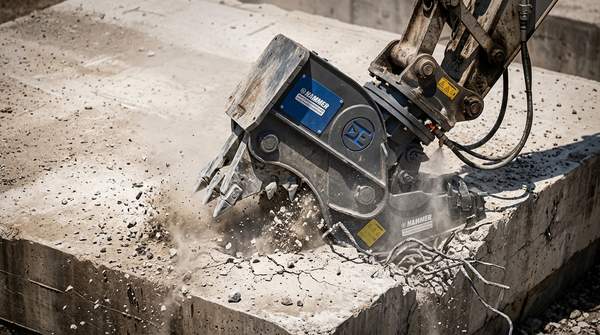
The combined dominance of precast wall systems and residential applications establishes a foundational volume for the industry. However, this focus also implies a need for manufacturers to balance high-volume production with the specialized demands of other segments.
Regional Powerhouses: Asia Pacific Leads Global Expansion
Asia Pacific commanded the highest market share, 35.14% in 2025, Precedence Research reports. Asia Pacific's command of the highest market share, 35.14% in 2025, is driven by robust infrastructure development and rapid urbanization. For global players, understanding and adapting to Asia Pacific's diverse construction needs is paramount for market penetration.
The European precast concrete market, valued at USD 25.5 billion in 2023 by Grand View Research, represents a significant, established sector with mature construction practices. While offering stability, Europe's market growth may be slower, necessitating a focus on specialized, high-value precast applications.
Asia Pacific's dominant market share underscores its critical role as the primary engine of global precast concrete adoption. The stark contrast between Asia Pacific's scale and Europe's comparatively slower growth suggests innovation and adoption are increasingly concentrated in emerging economies.
Beyond Housing: The Expanding Role of Non-Residential Projects
The non-residential segment will account for 59% of the market from 2024 to 2035, Precedence Research indicates. The non-residential segment's projected 59% market share from 2024 to 2035 implies non-residential applications command higher price points or larger project scales than residential volume. Companies focusing solely on high-volume residential precast concrete applications risk missing these higher-value opportunities.
The Europe precast concrete market is projected to grow at a 4.0% Compound Annual Growth Rate (CAGR) from 2024 to 2030, Grand View Research states. The projected 4.0% Compound Annual Growth Rate (CAGR) of the Europe precast concrete market from 2024 to 2030 contributes to the overall market's resilience. from 2024 to 2030, Grand View Research states. This steady regional expansion contributes to the overall market's resilience. This consistent, albeit moderate, growth in Europe suggests a reliable market for specialized precast solutions, particularly in infrastructure and commercial developments.
The increasing dominance of the non-residential sector signals a broader application of precast concrete beyond housing. This shift necessitates diversified product portfolios and specialized engineering capabilities from manufacturers to capture these high-value projects.
Future Trajectory: Consistent Growth Across Forecasts
The global precast concrete market, valued at USD 175.14 billion in 2025 by Precedence Research, is predicted to reach approximately USD 293.47 billion by 2035. The prediction that the global precast concrete market will reach approximately USD 293.47 billion by 2035 represents a robust, anticipated growth trajectory. Such consistent expansion justifies long-term investment in precast technology and infrastructure.
Future Market Insights, however, projects a 2025 market of USD 150.2 billion with a 5.7% CAGR, reaching USD 261.5 billion by 2035. The differing figures from Precedence Research and Future Market Insights underscore varied methodologies among research firms. For stakeholders, this variance necessitates careful due diligence when assessing market potential and making strategic plans.
The significant discrepancies in market size and CAGR projections across leading research firms pose a challenge for investors and strategic planners seeking precise valuations. Nevertheless, the convergence of multiple research forecasts confirms a robust and widely anticipated growth phase for the precast concrete industry.
Key Market Projections and Growth Rates
What are the key drivers of the precast concrete market?
Urban transit projects are a significant driver, with the precast concrete lining segments market expected to reach an index of 158 by 2035 due to metro rail expansion, according to IndexBox. Increased demand for modular construction methods also contributes to market expansion. Manufacturers should develop specialized components for these high-growth infrastructure sectors and invest in modular design capabilities.
What is the future outlook for precast concrete construction?
The market is expected to expand at a 5.30% Compound Annual Growth Rate (CAGR) from 2026 to 2035, Precedence Research states. The expected 5.30% Compound Annual Growth Rate (CAGR) of the market from 2026 to 2035 confirms a sustained shift towards efficient, factory-controlled construction processes and industrialized building methods. Investment in factory automation, quality control, and advanced logistics will be paramount for competitive advantage.
How is sustainability impacting the precast concrete industry?
Precast concrete offers environmental benefits through reduced on-site waste and optimized material use in controlled factory environments. Innovations in concrete mixes, including recycled aggregates, further enhance its sustainability profile for future construction projects, addressing environmental concerns. Companies that prioritize and innovate in sustainable precast solutions will gain a significant competitive edge and meet evolving regulatory and client demands.
Given the confirmed market expansion and evolving project demands, precast concrete manufacturers who strategically diversify their offerings and embrace sustainable practices will likely secure a dominant position in the coming decade.