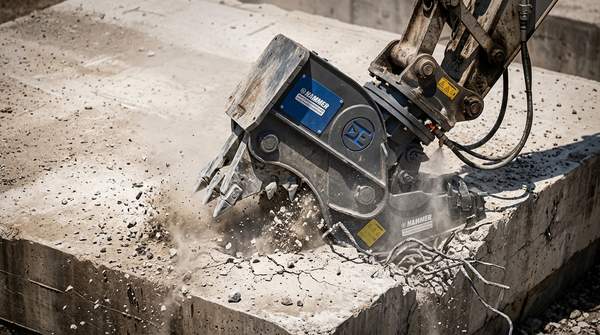
Demolition work depends on equipment that can keep pace with the job. The right attachment needs to match the excavator, material, and application before it reaches the worksite. EFI Demolition Equipment offers a range of demolition attachments, including hydraulic hammers, concrete pulverizers, steel shears, grapples, and screening or crushing buckets. This guide covers five key attachment types that can help contractors keep demolition projects moving.
1. Hydraulic Hammers for Concrete and Rock Demolition
Hydraulic hammers are a key attachment for breaking concrete, rock, and other hard materials. The right hammer can help crews handle demolition work without relying on multiple pieces of equipment for basic material breakdown.
EFI Demolition Equipment carries hydraulic hammers in different sizes and offers attachments designed for different excavator requirements. Its inventory includes products such as the STRIKER TNB 151, a hydraulic hammer listed for 30,000 to 60,000-pound excavators with the mount, pins, and hoses included.
Proper sizing remains important when selecting a hydraulic hammer. Carrier weight, hydraulic flow, pressure, mounting dimensions, and the material being broken all affect how an attachment performs. A hammer that is too large for the carrier can create equipment and handling issues. A hammer that is too small can slow production on demanding demolition work.
For contractors handling concrete slabs, foundations, rock, or other hard materials, a properly matched hydraulic hammer can provide an effective starting point for material reduction.
2. Concrete Pulverizers for Material Reduction
Once concrete has been broken, reducing the material and separating it from reinforcing steel becomes another important part of demolition. Concrete pulverizers are designed for this type of work.
EFI carries concrete pulverizers in different sizes, including rotating models. The HAMMER RH20, for example, is a rotating concrete and rock pulverizer designed for 30,000 to 85,000-pound excavators. It can crush concrete and rock and cut rebar and wire.
The SEC Twin Crusher is another concrete pulverizer available from EFI. It is designed for excavators ranging from 30,000 to 90,000 pounds, with mount modifications available when needed.
Pulverizers can be particularly useful when a project involves reinforced concrete. Crushing the concrete and separating rebar can make the resulting material easier to handle and process.
The attachment still needs to match the carrier. Hydraulic flow, pressure, operating weight, pin dimensions, and coupler configuration all deserve attention before purchase or delivery.
3. Steel Shears for Structural Demolition
Steel shears serve a different role from concrete pulverizers. They are designed for cutting steel, making them useful for structural demolition and projects where steel processing is a major part of the work.
EFI offers steel shears from several manufacturers and carries both new and used options. Its current inventory includes models such as the LABOUNTY MSD1500R, SEC RT4100, and several JISAN steel shears.
The SEC RT4100, for example, is a rotating steel shear. EFI can install a new mount to fit excavators ranging from 70,000 to 110,000 pounds.
A properly matched shear can help crews process structural steel directly with an excavator. The right attachment also reduces the need to force a concrete-focused tool into a steel-processing application.
For contractors handling beams, structural steel, scrap, or other metal components during demolition, a steel shear provides a specialized option for cutting and processing material.
4. Grapples for Demolition Debris and Material Handling
Demolition does not end when a structure comes down. Crews still need to move, sort, and load the resulting debris. Grapples can help with that part of the workflow.
EFI works with grapple and sorting bucket solutions through brands such as Rotostar. These attachments are suited to handling and sorting demolition materials.
A grapple can handle mixed debris that may include concrete, steel, wood, block, and other materials. The attachment needs to be properly matched to the excavator and the type of material being handled.
Fitment also matters when moving between attachments during a project. Pin dimensions, stick width, coupler compatibility, hydraulic requirements, and the auxiliary setup all need to work together.
For demolition contractors, a suitable grapple can support cleanup, sorting, and loading after primary demolition work. It gives the excavator another role once the main structure has been brought down.
5. Screening and Crushing Buckets for On-Site Material Processing
Screening and crushing buckets can add another step to the demolition workflow by allowing contractors to process material with an excavator.
EFI offers screening and crushing buckets from brands including ALLU, Remu, and SEC. Its equipment categories include both screening and crushing solutions.
One example is the Magnum MM154 screening bucket, which is listed for excavators from 25 to 60 tons. The attachment can screen materials including topsoil, gravel, mulch, rubble, and salt. EFI can also set up the mount and pins to fit the excavator.
Screening buckets can be useful when material separation is part of the project. They can help contractors process material at the worksite instead of treating every material pile as waste that immediately needs to leave the site.
The right bucket depends on the material, desired output, and carrier. Wet or sticky materials, for example, can affect screening performance, so application should remain part of the selection process.
Match the Attachment to the Excavator and Job
Attachment selection should start with the work itself. The same excavator may handle different tools throughout a demolition project, but each attachment still needs the right fit and configuration.
EFI Demolition Equipment offers custom mounts and pins for different machines. Its inventory includes attachments for different excavator sizes, while its fabrication capabilities allow attachments to be modified for specific equipment.
Before choosing an attachment, contractors should consider:
- The excavator's operating weight and hydraulic requirements
- The material being processed
- The attachment's weight and mounting configuration
- The primary task the attachment needs to perform
- Whether new, used, or rental equipment makes the most sense
EFI also offers new and used equipment, rentals, financing, and custom fabrication. Its equipment undergoes inspections, with the business promoting 100% operational readiness as part of its service approach.
Keep Demolition Projects Moving With EFI
EFI Demolition Equipment serves contractors from its location in DeRuyter, New York, with demolition equipment available across the United States and beyond. Its product range covers several major attachment categories, while its custom fabrication and equipment support services help contractors address fitment and project requirements.
The right attachment can make each stage of demolition more manageable. More importantly, proper sizing, mounting, and equipment preparation can help reduce avoidable delays once the attachment reaches the jobsite.
Ready to find the right demolition attachment for your excavator? Contact EFI Demolition Equipment today to discuss your project and equipment needs.