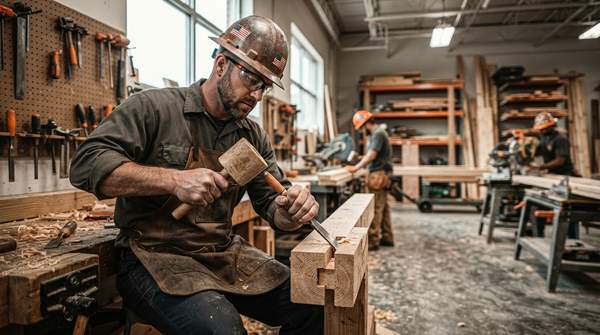
The vast hardware store aisle of screws, nails, bolts, and anchors—each with a different head, thread, material, and coating—makes choosing the right fastener for construction and DIY projects overwhelming. Yet, this small metal bit is a critical decision: different project materials require specific fasteners for structural integrity. Picking the wrong one can, at best, make the job harder, and at worst, lead to catastrophic failure. This guide breaks down how to select the perfect fastener every time.
Who Needs This Guide?
For projects involving structural loads, exposure to elements, or specific material challenges—from framing new additions to building custom cabinets or tackling a new deck—fastener selection is paramount. While a small nail might suffice for a lightweight picture frame, choosing the right fasteners is crucial for stability, durability, and safety in complex construction and even simple home repairs, as noted by home improvement experts. This guide is for anyone joining two materials where these factors apply.
Best Fasteners for Specific Construction Applications
The materials you are fastening together—wood, metal, or concrete—dictate the required fastener type. Using a wood screw in concrete, for example, leads to frustration and failure. Examining these primary material categories is crucial for selection.
Working with Wood
Wood is the most common material in residential construction and DIY. Screws are often preferred over nails in woodworking because their threads provide superior holding power and resist tension, creating what Knapp Connectors calls a "robust and lasting bond."
- General Wood-to-Wood: For indoor projects like furniture or cabinetry, standard steel or brass screws work well. For outdoor projects like decks, fences, or playsets, you need something with a protective coating to fight corrosion. For instance, Big Timber Fasteners notes that their BTX Exterior Multi-purpose Wood Screws feature a bronze coating specifically to combat rust, making them ideal for wood framing and deck construction.
- Heavy Timbers and Structural Loads: When you're connecting large structural members like deck posts, beams, or log construction, a standard screw won't cut it. You need a lag screw or structural screw. These are larger, stronger, and designed for deep penetration. For example, the CTX-Construction Lag Screws from Big Timber are designed for this purpose, featuring a large washer-head to distribute the load and a star drive to prevent stripping during high-torque installation.
Working with Metal
Fastening metal requires specialized fasteners that can cut their own threads into the material or are used with a pre-tapped hole. Self-tapping screws, often called "self-tappers," are common for joining sheet metal. They have a hardened, sharp point and specialized threads that drill and tap a hole in one motion. For heavier gauge steel or structural connections, bolts with nuts and washers are the standard. These provide immense clamping force and are essential for ensuring structural integrity in metal framing and machinery assembly.
Working with Drywall and Concrete
Materials that are brittle and lack the fibrous structure of wood prevent standard screws and nails from holding. In these cases, anchors are essential for providing a secure mounting point.
- Drywall: For light loads like pictures or small shelves, a simple plastic expansion anchor is sufficient. You drill a pilot hole, insert the anchor, and as you drive a screw into it, the anchor expands behind the drywall to lock it in place. For heavier items like televisions or cabinets, you'll need a more robust anchor, like a toggle bolt or a molly bolt, which provides a much larger bearing surface on the back of the wall.
- Concrete and Masonry: Attaching anything to concrete, brick, or block requires a masonry anchor. These come in several forms, including wedge anchors, sleeve anchors, and concrete screws. Each is designed to expand and grip the inside of the drilled hole with tremendous force. In my experience, using the correct diameter masonry bit and thoroughly cleaning the hole of dust before inserting the anchor is critical for achieving the maximum holding power.
How to Choose the Right Fastener Material and Coating for Durability
After matching fastener type to project material, consider the fastener's own material and protective coatings, driven by the environment. An indoor cabinet hinge, for example, has different needs than an outdoor deck joist hanger exposed to rain and snow. The correct finish prevents corrosion and premature weakening.
Common Fastener Materials
- Steel: The workhorse. Uncoated steel (often called "bright finish") is strong and cheap but rusts quickly when exposed to moisture. It's suitable only for dry, indoor applications.
- Stainless Steel: The premium choice for corrosion resistance. Stainless steel contains chromium, which creates a passive, rust-resistant layer. It's an excellent, albeit more expensive, option for outdoor projects, marine applications, and environments with high moisture.
- Brass and Bronze: These copper alloys are naturally corrosion-resistant and offer a decorative, classic look. They are softer than steel, so they are typically used in applications where appearance is important and the structural load is light, such as door hinges or cabinet hardware.
Protective Coatings and Finishes
Manufacturers apply various coatings to steel to provide the corrosion resistance it lacks. These coatings include "zinc-plated," "galvanized," and "ceramic-coated."
- Zinc-Plated: A thin layer of zinc is applied, offering minimal protection against rust. This is a common, inexpensive finish suitable for indoor use where some moisture might be present, like a bathroom or laundry room.
- Hot-Dip Galvanized: This process involves dipping the fastener in molten zinc, creating a thick, durable, and highly corrosion-resistant coating. Galvanized fasteners are the traditional standard for outdoor construction, especially when working with pressure-treated lumber, which can be highly corrosive to unprotected steel.
- Ceramic and Proprietary Coatings: Many manufacturers have developed their own high-tech coatings. These often provide corrosion resistance superior to galvanization and can come in various colors. The bronze coating on the aforementioned BTX screws is one example. These are often designed to withstand specific chemical exposures, like those from modern pressure-treated woods.
Our Recommendations
Here are specific recommendations for common project types. For optimal performance, always pair your chosen fastener with the right installation tools.
- The Indoor DIYer: For hanging shelves, building bookcases, or general repairs inside, a good set of zinc-plated or bright-finish steel wood screws will cover most of your bases. For decorative elements like cabinet hinges, consider brass screws for a touch of class.
- The Weekend Deck Builder: Your project will be exposed to the elements 24/7. Use hot-dip galvanized or a modern coated exterior screw. For structural connections like joists and posts, a heavy-duty structural screw is a must. According to Big Timber Fasteners, their CTX-Construction Lag Screws are specifically engineered for these applications, offering a large washer-head and corrosion-resistant coatings.
- The Heavy-Duty Pro: For log home construction, timber framing, or securing large trusses, you need maximum strength and shear resistance. Look for specialized structural fasteners. Big Timber, for example, highlights its BL-Black Log Timber Lag Screws, which feature a hex-head for high-torque installation and are built for demanding structural work. The company states its fasteners are "Mountain Tested™" in real-world scenarios and verified by third-party labs.
Frequently Asked Questions
What's the difference between a nail and a screw?
A nail holds materials together primarily through friction, relying on its shear strength to resist lateral forces. A screw uses its threads to mechanically lock into the material, giving it superior withdrawal resistance. In short, nails are great at resisting side-to-side forces (shear), while screws excel at pulling things together and keeping them there (tension).
How do I choose the right size fastener?
The general rule for screw length is that the screw should penetrate the bottom piece of material by at least half to two-thirds of that material's thickness. For example, if you're attaching a 1-inch thick board to a 4x4 post, your screw should be long enough to go through the 1-inch board and at least 1.5 to 2 inches into the post. Diameter is determined by the load; heavier loads require thicker fasteners.
When should I pre-drill a pilot hole?
Always pre-drill a pilot hole when working with hardwoods or when driving a fastener close to the edge of a board. This prevents the wood from splitting. The pilot hole should be slightly smaller than the fastener's shank (the solid part of the screw below the threads). For softwoods, pre-drilling is less critical but still good practice for ensuring a straight drive and preventing splitting on smaller pieces.
The Bottom Line
The correct fastener ensures the stability, longevity, and safety of your work; this is not an area to cut corners. Confidently select a fastener by first considering the materials being joined, then the project's environment, and finally the load it must bear. Always read manufacturer's specifications. When in doubt, opt for a stronger, more durable fastener, as this is an investment in project quality.