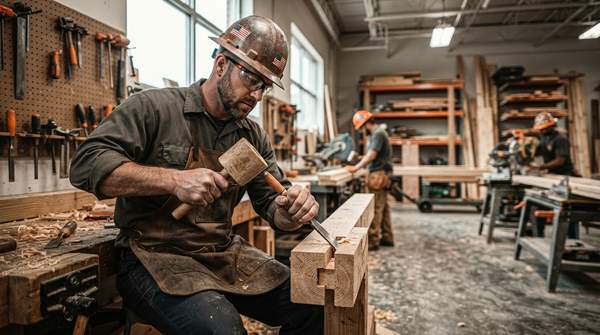
Navigating lumber aisles can be complex, but understanding how lumber is categorized by grade is the first step. These grades are determined by characteristics like the number and size of knots and the overall surface texture, which directly impact the wood's strength and appearance. Selecting the correct type and grade of wood is crucial for a successful, long-lasting result, whether you're framing a wall, building a deck, or crafting fine furniture. This guide will help you understand lumber types, properties, and uses with confidence.
Who Needs This Guide to Lumber?
This guide is designed for dedicated DIYers embarking on new home improvement projects, new contractors learning the ropes, and hobbyist woodworkers stepping up from plywood to solid wood. It demystifies the language of the lumberyard and connects the technical properties of wood to practical, real-world applications, helping anyone decide between different stacks of wood for their project.
While a quick visual inspection suffices for a single 2x4 shelf support in a garage, a deeper understanding of lumber is crucial for projects where structural integrity, appearance, or longevity are factors. From building a simple bookshelf to framing an entire house, the principles outlined here ensure you invest your time and money in the right materials for a lasting result.
Hardwood vs. Softwood: Understanding the Fundamental Differences
The first major division you'll encounter in the world of lumber is the split between hardwood and softwood. Now, the names can be a bit misleading; they don't strictly refer to the wood's density or hardness. The classification is botanical. According to the experts at Norman Lumber, hardwoods come from deciduous trees (those that lose their leaves, like oak, maple, and cherry), while softwoods come from coniferous trees (cone-bearing trees with needles, like pine, fir, and cedar).
These botanical differences lead to very real-world distinctions in their properties and uses:
- Softwoods (Pine, Fir, Spruce): These are the workhorses of the construction industry. Softwood generally grows faster, making it more abundant and less expensive. It's an excellent choice for structural applications like framing walls, joists, and rafters. While it's typically lighter and less dense than hardwood, don't mistake that for weakness. When properly graded for structural use, it's incredibly strong for its weight. The downside is that it dents and scratches more easily, making it less ideal for high-wear surfaces like flooring or tabletops unless you're aiming for a rustic, distressed look.
- Hardwoods (Oak, Maple, Walnut): These woods are prized for their durability, longevity, and appearance. They tend to be denser, heavier, and more resistant to wear and tear. This makes them the go-to choice for fine furniture, cabinetry, flooring, and detailed millwork. The rich grain patterns and colors of hardwoods are often the focal point of a project. The trade-off is cost and workability. Hardwoods are significantly more expensive and can be tougher on saw blades and drill bits.
For a shed frame, softwood is the smart, economical choice. For a dining room table you want to pass down to your kids, a hardwood like oak or walnut is a worthy investment.
What are the Key Properties of Different Lumber Types and Grades?
Once you've decided between hardwood and softwood, the lumber grade becomes the next critical factor. Lumber is graded at the mill to provide a standardized measure of its quality, impacting both structural performance and appearance. This process sorts boards based on natural characteristics that can affect their strength and look, including knots, checks, pitch pockets, shake, and stain, according to a 1968 NDEA Institute on Wood Technology course outline.
Here's what these characteristics mean for your project:
- Knots: These are the dark, circular marks where branches once grew. Tight, small knots are often just an aesthetic feature. Large, loose knots (or knotholes) can significantly weaken a board and are a major factor in structural grading. For a framing stud, you want minimal, tight knots. For a rustic feature wall, large knots might be exactly the character you're looking for.
- Checks, Splits, and Shakes: These are all forms of separation in the wood grain. A "check" is a lengthwise crack that doesn't go all the way through the board. A "split" goes all the way through. A "shake" is a separation between the annual growth rings. All of these can compromise the structural integrity of a piece of lumber, especially when under load.
- Wane: This is bark or a lack of wood on the edge or corner of a board. A small amount of wane on a framing stud that will be hidden in a wall is acceptable, but it's a defect you'd want to avoid in a piece for furniture.
Lumber grades are stamped directly on the wood. For construction lumber, you'll see grades like "Select Structural," "#1," "#2," and "#3," with "Select Structural" being the highest quality with the fewest defects. For appearance lumber used in cabinetry and furniture, grades are often based on how much of the board is clear of defects, with terms like "FAS" (Firsts and Seconds) or "Select" indicating higher quality.
Which Lumber is Best for Outdoor Construction?
Taking your project outdoors introduces challenges like moisture, rot, and insects. While wood has been a primary building material for centuries, not all species are naturally resistant to fungi and insect attack, as noted by the Food and Agriculture Organization of the United Nations (FAO). Therefore, treatment and species selection become paramount for ensuring safety and longevity.
For any wood that will be in direct contact with the ground or consistently exposed to the elements—think deck posts, joists, fence posts, and garden beds—you must use either a naturally resistant species or pressure-treated lumber.
- Pressure-Treated (PT) Lumber: This is typically a softwood, like Southern Yellow Pine, that has been chemically treated to resist rot, fungus, and insects. You can identify it by its greenish or brownish hue and the small incisions that sometimes dot its surface (these help the preservatives penetrate the wood). In my experience, it's the most common and cost-effective choice for decks, fences, and other outdoor structures. Always wear gloves, a mask, and eye protection when cutting PT lumber, and never burn the scraps, as the smoke can be toxic.
- Naturally Resistant Woods: Some species have natural oils and tannins that make them resistant to decay and insects. Cedar and Redwood are classic domestic choices, known for their beauty and durability in outdoor settings. They are excellent for deck boards, siding, and outdoor furniture. Tropical hardwoods like Ipe and Teak offer even greater resistance but come at a much higher price point.
Using untreated interior-grade lumber, like standard SPF (spruce-pine-fir) 2x4s, for an outdoor project is a recipe for disaster. It will absorb moisture, attract insects, and begin to rot within a few seasons, compromising the safety and integrity of your structure.
Our Recommendations
- The Weekend DIYer building shelves: Go with a high-quality softwood like Ponderosa Pine or a "Select" or "#2" grade common pine board. According to the North American Hardware and Paint Association, Ponderosa Pine has a softer texture that's easy to work with for light applications. It’s affordable, readily available, and can be easily painted or stained.
- The Aspiring Furniture Maker crafting a first table: Start with a forgiving and affordable hardwood like Poplar or Soft Maple. They are easier to machine than Oak but still offer good durability. Look for "FAS" or "Select" grades to get boards with minimal knots and defects for a clean, professional look.
- The Contractor framing a new wall: Stick with industry-standard structural lumber, such as #2 grade Spruce-Pine-Fir (SPF) or Southern Yellow Pine. The grade stamp is your guarantee that the lumber meets the strength requirements for building codes. Focus on straight boards with minimal crowning or twisting.
- The Homeowner building a deck: Use pressure-treated lumber for the entire substructure (posts, joists, and beams) for maximum rot and insect resistance. For the visible decking boards, you can continue with a higher grade of PT lumber or upgrade to a naturally resistant wood like Cedar for a more beautiful finish.
Frequently Asked Questions
How do I choose the right lumber at the store?
First, have a clear plan and a cut list. When you're at the lumberyard, inspect each board individually. Look down the length of the board to check for straightness—avoid any with significant bowing, twisting, or crowning. Check the grade stamp to ensure it's suitable for your application (structural vs. appearance). Finally, inspect for major defects like large, loose knots or long splits that could weaken the board.
What is the difference between nominal and actual lumber dimensions?
A common point of confusion involves nominal versus actual dimensions. "Nominal" dimension is simply the name of the lumber, like a 2x4. The "actual" dimension, however, is its true size after milling and drying; for example, a 2x4 is actually 1.5 inches by 3.5 inches, and a 1x6 is 0.75 inches by 5.5 inches. Always use the actual dimensions when planning your project to ensure accurate measurements.
Can I use untreated wood outdoors if I seal it?
While a high-quality exterior paint or sealer can offer some surface protection, it is not a substitute for using properly treated or naturally resistant wood. Sealants create a barrier, but any crack, screw hole, or end-grain exposure can let moisture in, trapping it and accelerating rot from the inside. For structural elements, it's a safety risk. For non-structural projects like a planter box, it will simply have a much shorter lifespan.
The Bottom Line
Selecting the right lumber ultimately boils down to matching the wood's properties to your project's specific demands. Begin by choosing between the affordability and utility of softwoods and the beauty and durability of hardwoods. From there, pay close attention to the lumber grade, as it is the best indicator of a board's structural strength and visual quality. Your next step is to head to the lumberyard with a clear understanding of these needs, ready to inspect each board to find the perfect material for the job.