The best wood filler for your project is the one matched to three questions: where is the repair (inside or outside), how big is it (a nail hole or a gaping gap), and how will it be finished (painted, stained, or clear-coated). For small interior holes that will be painted, a water-based filler is usually the right call. For exterior work or moisture exposure, choose a solvent-based or epoxy filler. For large, high-strength repairs, two-part epoxy is the category that holds up. This guide walks through the four main filler categories and their trade-offs, then gives you a decision matrix to pick the right type in seconds.
Understanding Wood Filler Types: A Quick Overview
Wood fillers come in three main commercial formulations—water-based, solvent-based, and two-part epoxy—plus the DIY sawdust-and-glue approach many woodworkers mix up themselves. According to a comparative overview from Ecedekor's technical team, water-based fillers dry quickly and are odorless, making them the standard for indoor furniture and hardwood floor repairs; solvent-based fillers are more resistant to external factors; and epoxy is reserved for jobs demanding the highest strength, such as structural repairs.
Bob Vila's tested product review similarly divides fillers into water-based and solvent-based formulas, noting that each is designed for specific project types, repair sizes, and application techniques. The key point for a DIYer: filler is not one product. Choosing the wrong category—say, an interior-grade filler on an outdoor sill—is a common reason repairs fail, crack, or wash out. The sections below break down what each category does well and where it falls short.
Water-Based Wood Fillers: For Interior and Paint-Grade Repairs
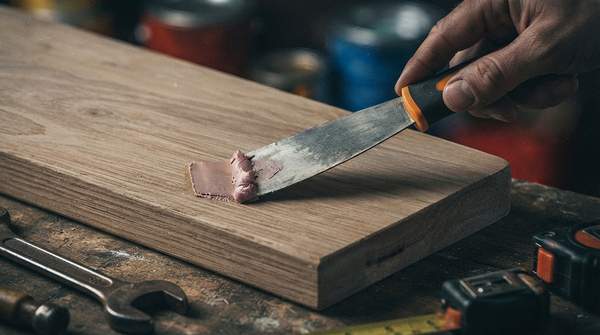
Water-based fillers are the everyday workhorse for interior DIY work. They are typically made with wood fibers or cellulose suspended in a water-based binder, which is what makes them easy to spread, easy to sand, and easy to clean up—soap and water before the filler dries is all it takes. A thin coat dries quickly, typically within 20 to 40 minutes, though drying time varies with thickness and conditions.
Their strengths are convenience and finish compatibility. They sand very easily once cured and provide a smooth surface that takes paint well, which is why This Old House's guidance calls water-based fillers often sufficient for interior projects, especially painted surfaces. They're also odorless or nearly so, a real advantage indoors.
The trade-offs are moisture and stain. Water resistance after drying is moderate, so exterior use depends on the specific product—some formulations are rated for both indoor and outdoor use, but many are interior-only. Stainability also varies: some water-based fillers accept stain, while others don't, so test a small area first. In Bob Vila's testing, one water-based product stood out for filling large holes across multiple surfaces with a zero-shrinkage, stainable, paintable, clay-like consistency—proof that the category has more range than its reputation suggests, though its thick consistency takes practice. As a rule, treat water-based filler as your default for small interior, paint-grade repairs.