There is no universal PPE kit for construction work. As squote's technical team puts it in their UK guide, PPE is "the last line of defence in the hierarchy of controls," and the specific equipment required depends entirely on the hazard in front of you. The practical skill for any tradesperson is knowing which category of protection a hazard calls for — and which standard or rating on the label confirms the gear can actually handle it.
Understanding Specialized PPE for Construction Hazards
PPE only works when it is matched to a specific risk. Brett Reese, writing for Haus of Tools, makes the point plainly: some jobs need just basic PPE while others need highly specialized equipment, and removing or minimizing a hazard should always happen before relying on gear. Under the UK's Personal Protective Equipment at Work Regulations 2022 (amended), employers must provide CE or UKCA marked PPE free of charge where risks cannot be adequately controlled by other means — and that duty now extends to workers generally, not just employees, per squote's summary of the regulations.
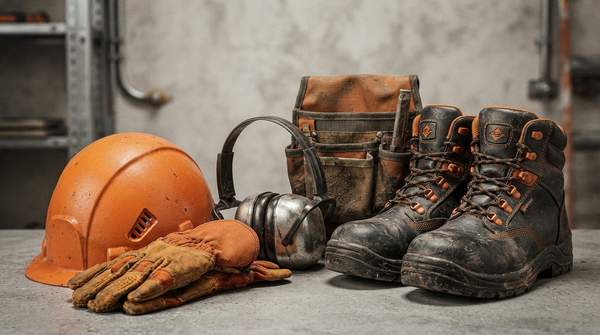
On most construction sites, a hard hat, safety footwear and hi-vis clothing form the mandatory baseline, squote's guide notes. Beyond that baseline, every additional item should be chosen because of a specific hazard: the dust from cutting, the solvent being brushed, the overhead work, the noise from the grinder. The rest of this guide works through those categories and the standards that govern them.
Respiratory Protection: Filtering Airborne Threats
Respiratory protective devices are essential for tasks such as painting, sanding or working with toxic chemicals, according to Omega Safety Training's PPE guide. The two main families differ fundamentally in how they protect you. Air-purifying respirators (APRs) filter contaminants out of the ambient air and include disposable masks, half-face and full-face respirators. Breathing apparatus (BA) instead supplies clean air from a tank, which Omega notes is essential in tight spaces or areas with low oxygen.
For the disposable filtering facepieces most tradespeople reach for, the relevant standard is EN 149, which defines three classes: FFP1, FFP2 and FFP3, with the ratings indicating progressively higher filtration efficiency. Choosing the correct level depends on the specific contaminant and its concentration — silica dust and wood dust both carry workplace exposure limits under HSE's EH40 guidance, and COSHH risk assessments drive the selection of respiratory protective equipment, as squote's standards summary explains. HSE's Respiratory Protective Equipment at Work guidance (HSG53) additionally covers RPE selection and fit testing.
Head, Eye, and Hearing Protection: Safeguarding Vital Senses
Industrial safety helmets fall under EN 397, which squote's guide describes as recently updated: the 2025 version supersedes the 2012+A1:2012 edition (withdrawn October 2025) and introduces Type 1 and Type 2 classifications, with Type 2 integrating working-at-height retention requirements. That distinction matters for anyone on scaffolding or roofs — a helmet that stays on during a fall is a different product from one designed only for impact.
For the eyes, safety goggles shield against dust, splinters and other hazardous materials, per Omega Safety Training's guide, with EN 166 specifying requirements for personal eye protection against flying debris, chemical splashes and harmful radiation. Hearing protection is a legal threshold question rather than a comfort preference: under the Control of Noise at Work Regulations 2005, the 80/85 dB(A) action levels trigger mandatory hearing protection zones, and squote's guide identifies earplugs and earmuffs (EN 352) as the standard equipment.
Hand and Foot Protection: Guarding Against Physical and Chemical Risks
Gloves are where "one pair for everything" fails fastest. Omega Safety Training breaks hand protection into distinct types: cut-resistant gloves for handling sharp tools, chemical-resistant gloves for working with solvents or corrosive materials, and electrically insulated gloves for electricians. The standards layer matters here too — EN 388 covers mechanical risks while EN 374 covers chemical risks, so a glove rated for one hazard offers no verified protection against the other. A cut-level 5 glove is the wrong tool for a solvent bath; a chemical-resistant glove is the wrong tool for sheet metal.
Below the ankle, EN ISO 20345 governs safety footwear, including toecap energy ratings, anti-slip soles and puncture resistance. The practical reading is that footwear selection is also hazard-specific: a site with nail-strewn floors calls for puncture-resistant soles, while heavy materials handling calls for a higher toecap energy rating.
Fall Protection: Preventing Serious Injuries at Height
Where the hazard is the drop itself, harnesses and lanyards are the relevant category — EN 361 for full-body harnesses and EN 354 for lanyards, per squote's standards listing. The equipment only functions as designed when connected to a secure anchor point, which is why squote's guide treats fall arrest harness selection and inspection as a distinct discipline within working at height, alongside dust control and asbestos awareness as specialized topics.
The updated EN 397 helmet classifications connect here as well: a worker at height needs the retention performance of a Type 2 helmet, not just impact protection. Fall protection is the clearest example of the guide's central principle — the equipment's specific, tested capability must match the hazard, because no general-purpose item covers this case.
Construction Hazard to PPE Selection Framework
Use this matrix to move from an identified hazard to the correct PPE category and the standard or rating to check on the label. Each row pairs a common construction hazard with the equipment class designed for it and the selection factor that distinguishes an adequate choice from an inadequate one.
| Hazard | Affected Body Part | Primary PPE Category | Key Selection Factor / Standard |
|---|---|---|---|
| Airborne particulates: dust, fumes, aerosols | Lungs / airways | Filtering facepiece or respirator | EN 149 — choose FFP1, FFP2 or FFP3 by contaminant and concentration; BA where oxygen is low |
| Falling objects, impacts, electrical hazards | Head | Industrial safety helmet | EN 397 — Type 2 for working at height (retention requirements) |
| Flying debris, chemical splashes, harmful radiation | Eyes / face | Safety glasses or goggles | EN 166 — match lens and frame to the specific hazard |
| Noise above action levels | Hearing | Earplugs or earmuffs | EN 352 — mandatory where noise exceeds 85 dB(A) over 8 hours under the 2005 Noise Regulations |
| Cuts, abrasions, extreme temperatures | Hands | Mechanical-risk gloves | EN 388 — cut-resistance level matched to the sharp material handled |
| Solvents, corrosive chemicals | Hands | Chemical-resistant gloves | EN 374 — chemical resistance; not interchangeable with cut-rated gloves |
| Falling objects, punctures, electrical hazards underfoot | Feet | Safety footwear | EN ISO 20345 — toecap energy rating, anti-slip sole, puncture resistance |
| Falls from height | Whole body | Harness and lanyard | EN 361 / EN 354 — connected to a secure anchor point |
The matrix also exposes the commonest selection errors: reaching for a cut-rated glove where a chemical-rated one is required, or a basic dust mask where the contaminant and its concentration call for a higher FFP class. Where a hazard appears in two rows — hands exposed to both blades and solvents — the correct answer is equipment rated against both, not a compromise on either.
Decoding PPE Standards: What the Ratings Mean
The standards listed above are not marketing labels; they specify minimum requirements and testing methods for each PPE category, as squote's guide emphasizes. EN ISO 20345 defines toecap energy ratings for footwear. EN 149 defines the FFP filtration classes. EN 397 defines helmet impact requirements — and, since its 2025 revision, the Type 1/Type 2 split that folds working-at-height retention into the helmet standard itself. EN 166 and EN 352 do the same for eye and hearing protection respectively.
Two regulatory instruments sit alongside these product standards. The Personal Protective Equipment at Work Regulations 2022 amended the 1992 Regulations to extend the duty to provide PPE from employees to workers generally. And the Control of Noise at Work Regulations 2005 (SI 2005/1643) sets the 80/85 dB(A) action levels that make hearing protection zones mandatory. COSHH drives respiratory selection through hazardous-substance risk assessments, with EH40 supplying the exposure limits for silica and wood dust that determine when a higher FFP class is needed.
One caution on currency: standards are periodically revised, as the EN 397 transition shows, so check that any equipment you buy is marked against the version in force for your task and jurisdiction. This guide covers UK/EU standards as documented in the sources; it does not extend to US OSHA requirements, nor to extreme or highly specialized environments such as hazmat work, and it does not recommend specific brands or models.
Making Informed PPE Choices for Jobsite Safety
The decision rule is simple to state and demanding to apply: tradespeople should consistently select PPE by directly matching the equipment's specific protective capabilities and relevant EN/ISO standards to the identified hazards of each task. That means reading the label for the standard and rating, not the product name — an FFP3 marking rather than "dust mask," an EN 374 rating rather than "chemical glove," a Type 2 helmet rather than "hard hat" when working at height.
The measurable indicator of success is correctly identified PPE on job sites, with workers demonstrating awareness of the specific standards and ratings applicable to their equipment. Before the next task, name the hazard, name the standard, and check the mark: if any of the three is missing, the selection is not yet complete.
Sources
- PPE Guide For Tradespeople: What's Required — squote Knowledge Base
- Tools of the Trade: PPE - Personal Protective Equipment — Haus of Tools
- Your Guide to Employee Personal Protective Equipment — Omega Safety Training