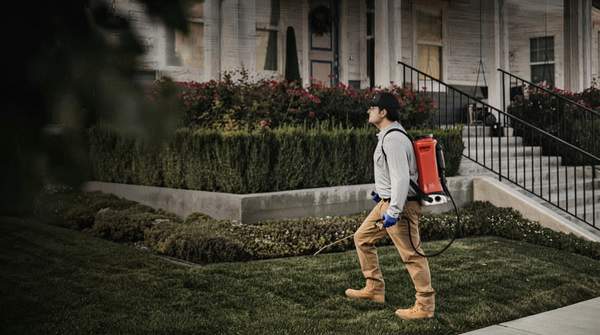
Despite average landscaping projects costing thousands of dollars, the global market for battery-powered leaf blowers alone is projected to reach US$ 2.13 Billion by 2033, signaling a massive shift in how outdoor spaces are maintained. The projected US$ 2.13 Billion global market for battery-powered leaf blowers by 2033 highlights a significant investment trend within professional landscaping services, indicating a broader move towards efficiency and environmental responsibility across the industry.
While landscaping project costs can be substantial, the industry is rapidly investing in sustainable and technological solutions that promise long-term savings and environmental benefits. The industry's rapid investment in sustainable and technological solutions that promise long-term savings and environmental benefits underscores a critical re-evaluation of value, moving beyond immediate curb appeal to encompass future operational expenditures and ecological impact.
Companies are increasingly prioritizing efficiency and ecological responsibility, suggesting that traditional, less sustainable practices will become economically and environmentally unviable in the coming decade. The increasing prioritization of efficiency and ecological responsibility by companies, suggesting that traditional, less sustainable practices will become economically and environmentally unviable in the coming decade, compels clients to embrace higher upfront costs for solutions that ultimately reduce future expenses and ecological impact.
Emerging Trends in Professional Landscaping Services Transform Value
The market for professional landscaping services is experiencing significant growth, driven by increasing residential landscaping activities and rising urbanization, according to Vocal Media. This expansion is further fueled by technological advancements in battery-powered equipment and a growing demand for efficient outdoor maintenance solutions. Simultaneously, commercial landscaping trends focus on practical beauty, aiming to improve brand image while reducing waste, labor strain, and long-term upkeep, as reported by WFTV. The significant growth in the market for professional landscaping services, driven by increasing residential landscaping activities and rising urbanization (Vocal Media), coupled with technological advancements and commercial landscaping trends focusing on practical beauty (WFTV), indicates a fundamental shift in client expectations and industry priorities, moving beyond mere aesthetics to embrace holistic, sustainable, and efficient outdoor solutions that offer enduring value.
The emphasis on reducing waste and labor strain in the commercial sector sets a precedent for residential demands. Clients now seek solutions that not only enhance visual appeal but also contribute to operational ease and ecological health. Clients now seeking solutions that not only enhance visual appeal but also contribute to operational ease and ecological health suggests that the initial investment in modern landscaping techniques is increasingly viewed as a strategic decision, rather than a mere discretionary expense. The industry is responding by integrating solutions that provide both immediate visual improvements and long-term functional advantages, aligning with a broader societal push for sustainability.
The Green Shift: Embracing Sustainable Technology
A rapid shift toward battery-powered leaf blowers is occurring, driven by concerns regarding emissions, fuel costs, maintenance requirements, and noise pollution associated with gas-powered models, Vocal Media reports. The rapid shift toward battery-powered leaf blowers, driven by concerns regarding emissions, fuel costs, maintenance requirements, and noise pollution associated with gas-powered models (Vocal Media), is not solely an environmental choice but a financially prudent one for landscaping firms. Reducing reliance on fossil fuels cuts operational expenditures, while quieter equipment allows for extended working hours in noise-sensitive areas, improving service delivery and customer satisfaction.
Beyond equipment, the adoption of native plants is gaining traction in landscaping projects. Native plants tend to be more resilient against pests and seasonal weather swings, reducing replacement costs, according to thespectrumonline. The resilience of native plants against pests and seasonal weather swings, reducing replacement costs (thespectrumonline), translates into lower long-term maintenance needs and a more stable, vibrant landscape. The adoption of battery-powered leaf blowers and native plants demonstrates a clear industry pivot towards environmentally conscious and operationally efficient methods, driven by both innovation and a desire for long-term value. Landscaping firms failing to transition from gas-powered equipment are not just falling behind on sustainability, but are actively sacrificing future operational efficiency and significant cost savings, based on Vocal Media's projection of a $2.13 billion market for battery-powered leaf blowers by 2033.
The WFTV report on commercial landscaping's focus on 'practical beauty' signals that residential clients will soon demand more than just curb appeal; they will expect landscapes that actively reduce waste and labor strain, forcing traditional landscapers to either innovate or become obsolete. The expectation that residential clients will demand landscapes that actively reduce waste and labor strain extends to the types of plants used and the equipment employed for their upkeep, pushing the entire sector towards integrated sustainable solutions. The move away from high-maintenance, non-native species and towards durable, eco-friendly alternatives is becoming a standard practice.
The Financial Landscape: Investment and Market Trajectories
- US$ 2.13 Billion — The global market for leaf blowers is expected to reach this value by 2033, according to Vocal Media. The expected US$ 2.13 Billion global market for leaf blowers by 2033 (Vocal Media) underscores the substantial financial scale of even seemingly niche segments within the landscaping equipment industry.
- $3,650 — $3,650 represents the average cost for a landscaping project, with prices typically ranging from $120 to $4,300, according to nerdwallet. The typical price range of $120 to $4,300 reflects the variability in project scope and client needs, from basic enhancements to more involved redesigns.
- $80,000+ — Major landscaping or hardscaping projects can cost well over this amount, according to nerdwallet. Major landscaping or hardscaping projects costing well over $80,000+ (nerdwallet) indicate a client's commitment to long-term property value and comprehensive outdoor transformations.
The figures of US$ 2.13 Billion for the leaf blower market, $3,650 average project cost, and $80,000+ for major projects illustrate that while initial landscaping investments can be substantial, they reflect a wide spectrum of project scopes and desired outcomes. The high-end projects, exceeding $80,000, often incorporate advanced sustainable designs and technology, aligning with the industry's shift towards long-term efficiency. Clients who balk at higher upfront investments in sustainable design are unknowingly committing to higher long-term maintenance burdens and environmental footprints, as revealed by nerdwallet's data on major landscaping projects, combined with thespectrumonline's insight on native plants reducing replacement costs.
The substantial market size of the leaf blower segment alone further emphasizes the financial underpinning of the industry's green transition. It is not just about environmental consciousness; it is about a multi-billion dollar market driven by the pursuit of operational savings and enhanced service capabilities through technology adoption. The financial momentum created by the multi-billion dollar market for leaf blowers, driven by operational savings and enhanced service capabilities through technology adoption, pushes the entire sector towards more advanced and sustainable practices.
From Basic to Strategic: Evolving Project Scope
| Service Type | Typical Cost Range |
|---|---|
| Basic Landscaping & Maintenance | $30 to $3,000 |
| Intermediate Landscaping Projects | $1,000 to $6,000 |
Cost figures according to nerdwallet.
Basic landscaping and maintenance services, ranging from $30 to $3,000, represent the entry point into professional outdoor care. These services often include routine tasks like mowing, pruning, and seasonal clean-ups. Intermediate landscaping projects, typically costing between $1,000 and $6,000, involve more substantial work such as planting new garden beds, installing irrigation systems, or minor hardscaping additions. The diverse cost structures of basic ($30-$3,000) and intermediate ($1,000-$6,000) landscaping projects reflect a growing understanding that landscaping is not merely an expense but a scalable investment, offering varying levels of aesthetic and functional returns.
The evolution from basic upkeep to strategic, intermediate projects shows clients are increasingly viewing their outdoor spaces as integral to their property's overall efficiency and appeal. The evolution from basic upkeep to strategic, intermediate projects, showing clients are increasingly viewing their outdoor spaces as integral to their property's overall efficiency and appeal, means even smaller projects are now evaluated through a lens of long-term benefit, considering factors like water conservation, plant resilience, and ease of maintenance. The industry is adapting by offering tiered services that allow clients to incrementally invest in sustainable solutions, ultimately leading to more robust and less resource-intensive landscapes over time.
Navigating the New Landscape: Who Benefits, Who Adapts
The Global Leaf Blowers Market is expected to reach US$ 2.13 Billion by 2033, according to Vocal Media. The expected US$ 2.13 Billion Global Leaf Blowers Market by 2033 (Vocal Media) signifies a clear advantage for companies embracing battery-powered solutions and a challenge for those reliant on traditional, less sustainable equipment. Landscaping businesses that invest in these advanced tools benefit from reduced fuel costs, lower maintenance, and compliance with increasingly stringent noise and emission regulations. Landscaping businesses that invest in advanced tools, benefiting from reduced fuel costs, lower maintenance, and compliance with increasingly stringent noise and emission regulations, positions them as leaders in the evolving professional landscaping services sector.
Conversely, traditional landscaping businesses resistant to adopting eco-friendly methods and new technologies face significant disadvantages. They risk higher operational costs due to fuel price volatility and increased maintenance needs for gas-powered equipment. Manufacturers of outdated, high-emission equipment are also losing ground as market demand shifts decisively towards greener alternatives. The competitive pressure from more efficient, environmentally conscious firms will likely force these resistant businesses to either adapt or struggle to maintain market relevance. Clients seeking long-term value, reduced maintenance, and environmental benefits.nmental benefits are the ultimate winners in this transition, as they gain access to a wider array of sustainable and cost-effective landscaping options.
Future Projections: Sustained Growth in Sustainable Solutions
The market for sustainable landscaping equipment shows consistent upward momentum.
- The Global Leaf Blowers Market is expected to expand at a CAGR of 4.2% during 2025-2033, according to Vocal Media.
This consistent growth trajectory for sustainable equipment indicates a long-term industry commitment to eco-friendly and efficient practices, shaping future service offerings. The steady compound annual growth rate suggests that the shift towards battery-powered tools and other green technologies is not a fleeting trend but a foundational change in how professional landscaping operates. This sustained investment will likely lead to further innovations in equipment performance, battery life, and overall system integration, making sustainable options even more attractive and cost-effective for businesses and clients alike. Landscaping firms are increasingly recognizing that these investments yield both environmental dividends and substantial operational savings over time, reinforcing the thesis that upfront costs are a gateway to long-term value.
Making Informed Decisions for Your Outdoor Space
- Typical landscaping costs range from $4.50 to $12 per square foot, depending on the scope of work, according to nerdwallet.
- The commercial landscaping sector prioritizes 'practical beauty' to reduce waste and labor strain by 2026, as noted by WFTV.
- Major landscaping projects can exceed $80,000, representing significant long-term investments, according to nerdwallet.
- The Global Leaf Blowers Market's projected growth to US$ 2.13 Billion by 2033 underscores the financial scale of the shift towards battery-powered equipment, according to Vocal Media.
Professional landscaping companies that have not fully embraced battery-powered equipment and native plant strategies will struggle to compete with firms offering demonstrably lower long-term maintenance costs and environmental benefits. Companies like GreenScape Solutions, which invested heavily in electric fleets and drought-resistant native plantings in 2024, are already seeing reduced operational expenditures and increased client satisfaction, setting a benchmark for the industry's future.