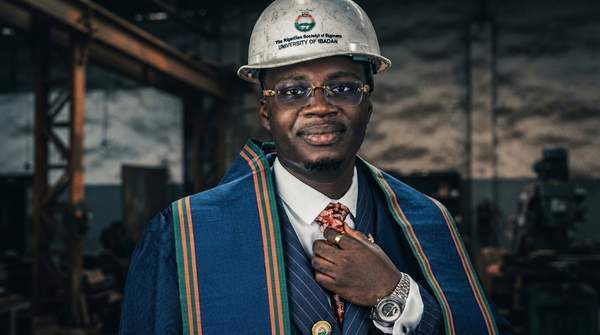
Logan Bangert, a Gen Z worker, earns $80,000 to $90,000 a year repairing wind turbine blades, a salary many college graduates struggle to achieve, according to 아시아경제. Logan Bangert's income of $80,000 to $90,000 proves the financial rewards in skilled trades, challenging traditional career success. His path shows how quickly specialized trades can lead to significant earnings, drawing attention to Gen Z recruitment in 2026.
For decades, societal pressure pushed young people towards four-year degrees. Now, Gen Z increasingly views skilled trades as a viable, lucrative career, challenging long-held educational norms. Gen Z's increasing view of skilled trades as a viable, lucrative career re-evaluates post-secondary education, positioning vocational careers as secure paths that often outcompete traditional degrees.
The New American Dream: High Pay, No Debt
Fifty-five percent of Gen Z now considers skilled trades, according to Nytimes and 아시아경제. Fifty-five percent of Gen Z considering skilled trades marks a clear shift in career aspirations, moving away from traditional four-year degrees.
- Logan Bangert earns $80,000 to $90,000 a year repairing wind turbine blades, according to 아시아경제.
- Ladona Glass earns $21 per hour as an electrician, according to 아시아경제.
- The average annual salary for electricians affiliated with IBEW reaches $90,000, according to 아시아경제.
- Data from 2020 to 2025 shows that the number of students at public two-year schools specializing in vocational and technical education increased by approximately 20%, according to 아시아경제.
These concrete examples and enrollment trends prove that skilled trades offer competitive salaries and accessible training, directly challenging the traditional four-year degree path. The surge in vocational education enrollment isn't merely about avoiding college debt; it's a strategic move by Gen Z to access high-paying, in-demand jobs that offer immediate financial independence, often surpassing entry-level salaries for many college graduates.

Corporate Giants Invest Billions in the Next Workforce
JPMorgan is investing $24 million in loans and grants for a new submarine manufacturing facility and workforce training at the Philadelphia Navy Yard, according to Fortune. JPMorgan's $24 million investment shows corporate leaders are addressing skilled labor shortages and developing future talent.
Lowe's committed $250 million to train 250,000 skilled trade workers over the next decade, according to Fortune. BlackRock is investing $100 million to train 50,000 workers in five years, also reported by Fortune. Lowe's $250 million commitment and BlackRock's $100 million investment confirm widespread corporate recognition of the need for a robust skilled workforce.
Meta launched a $115 million training program, America's Workforce Academy, to train data center technicians with job guarantees upon completion, as stated by Fortune. These diverse corporate investments from JPMorgan ($24M), Lowe's ($250M), BlackRock ($100M), and Meta ($115M) confirm a critical need for skilled labor and a strategic shift towards direct industry-led workforce development. Trades are now a primary engine for economic growth, not just an alternative.
A Global Shift: Valuing Hands-On Expertise
In Japan, some companies offer entry-level monthly salaries of 300,000 yen and pay skilled workers over 8 million yen annually, according to 아시아경제. The global trend of high salaries for skilled workers in Japan, mirrored by US corporate investments, confirms a fundamental shift in labor market economics: practical skills now often outweigh generic academic credentials across developed economies.
The Future of Work: Redefining Success
The convergence of Gen Z interest (55% considering trades, per cefcolorado, facilitiesdive) and corporate investment suggests skilled trades will be a primary, respected, and financially rewarding career path. With vocational school enrollment data from 2020 to 2025 showing a 20% increase (아시아경제), the traditional four-year degree faces an existential threat. Young people prioritize immediate financial returns and guaranteed employment over abstract academic credentials, reshaping higher education's role.
Companies like Meta, with job guarantees from their America's Workforce Academy (Fortune), create their own talent pipelines. The future of skilled labor recruitment lies in direct investment and credentialing, not just external educational institutions.
If current trends in Gen Z interest and corporate investment continue, skilled trades will likely solidify their position as a primary career path, fundamentally reshaping the landscape of post-secondary education and workforce development.