For most interior residential work—wiring running through the protected cavities of framed walls and ceilings—non-metallic cable, commonly called Romex, is the standard choice. But the moment a run leaves a finished wall for an exposed garage or basement surface, or enters a wet or outdoor location, that calculus changes: code requirements for physical protection and moisture resistance, not price, determine what you can install. Here is how the three common residential systems compare and where each belongs.
Understanding Residential Electrical Wiring Systems
The three systems differ fundamentally in where their protection comes from. Non-metallic (NM-B) cable bundles insulated conductors—including a grounding conductor—inside a soft, non-metallic sheath, so it relies on the building structure around it for protection. Metal-clad (MC) cable carries the same kind of insulated conductors, but inside an interlocking metal armor that protects the wires themselves. The third approach separates the two functions entirely: individual conductors—typically thermoplastic, heat-resistant, nylon-coated wire—carry the current, while a separate conduit provides all the protection.
One naming note: "Romex" is a registered trademark of General Cable Corporation, not the generic term, though it is widely used that way for nonmetallic sheathed cable. The National Electrical Code governs installation of these systems under Article 334 for NM cable, and local building departments may add their own requirements.
Non-Metallic (NM-B) Cable: The Residential Standard
NM-B cable has become the standard for modern residential installations, appreciated for its versatility, color coding, price point, and ease of installation. The "B" rating indicates it is rated for 90 degrees Celsius, and the cable includes either a green insulated or bare grounding conductor. Its flame-retardant, moisture-resistant jacket is restricted to indoor wiring in exposed or concealed locations, per code—wet locations and outdoor use are off-limits for standard NM.
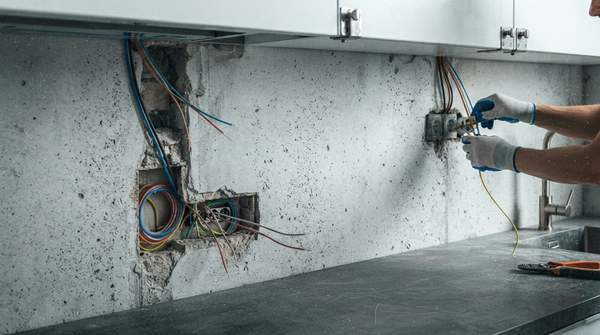
The key limitation is vulnerability. The code permits NM cable to be run exposed or concealed, but where it is exposed it must not be subject to physical damage. Contractors who describe renovation practice emphasize related details: keeping Romex centered in studs and using steel nail guards so fasteners can't pierce it. Where damage is possible, code requires protection by installing the cable in conduit, electrical metallic tubing (EMT), Schedule 80 PVC, pipe, guard strips, or listed surface raceways—effectively adding a second wiring system around the first.