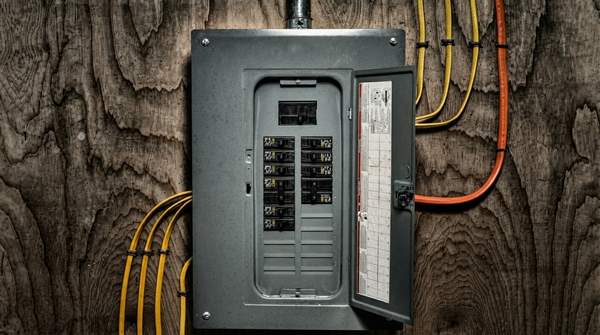
You should consider an electrical panel upgrade if your panel is a recalled brand such as Zinsco or Federal Pacific, if breakers trip frequently, or if you plan to add high-demand equipment like an EV charger, heat pump, or induction range. Any one of these is a clear reason to call a licensed electrician for a professional assessment. This guide gives you a checklist to diagnose your own situation and walks through what a professional replacement actually involves.
Why Your Home's Electrical Panel Matters
Your electrical panel is the central distribution point for all the power your home uses. Every circuit in the house—lighting, outlets, appliances—draws electricity through it, and the panel's job is to distribute that power safely and shut off a circuit when something goes wrong.
That job gets harder as households change. Modern homes commonly run heat pumps for heating and cooling, Level 2 EV chargers, electric water heaters, induction cooktops and electric ranges, home offices with multiple devices, smart home technology, electric dryers, and whole-home backup batteries or solar systems, as Endless Energy's Tim Spurling describes. Each of these draws power from the panel. If the panel lacks sufficient capacity, it may struggle to safely distribute electricity throughout the home.
The key question is never just whether the panel works today. It is whether the panel's capacity matches your home's actual electrical load—both what you run now and what you plan to add. That comparison is what a professional assessment answers, and it is the basis for every indicator in the checklist below.
Your Electrical Panel Upgrade Diagnostic Checklist
Work through this table against your own home. Compare your panel's brand, its behavior, and your appliance plans with each indicator. If even one row matches your situation, you have a clear reason to contact a licensed electrician for a professional assessment and a potential panel upgrade.
| Indicator | Why it matters | Action |
|---|---|---|
| Your panel is a Zinsco or Federal Pacific model | These panels are on the recall list due to safety defects, and most insurance companies will not write a new homeowner's policy on houses that have them, according to Tradesman Electric. | Immediate replacement becomes critical. Contact a licensed electrician. |
| Breakers trip frequently, lights flicker, you hear buzzing near the panel, breakers feel warm, or you have difficulty adding new circuits | These are common signs that the panel may be struggling to safely distribute electricity, as reported by Endless Energy. | Get a professional assessment to diagnose the underlying cause and determine whether an upgrade is needed. |
| You plan to add a high-demand appliance: EV charger, heat pump, or induction range | These appliances require dedicated circuits and often need more power than an older panel can supply, as Aero Energy's Lindsay Schneider explains. | Have a licensed electrician perform a load calculation to confirm whether the current panel can safely handle the additional load. |
The diagnostic logic is simple: the first row is a safety trigger, the second is a performance trigger, and the third is a capacity trigger. Any single match justifies a professional evaluation. Multiple matches make that call more urgent.
Safety First: Recalled Electrical Panels
The brand name on your panel door matters more than most homeowners realize. For homes with Zinsco or Federal Pacific panels, immediate replacement becomes critical, in the words of Tradesman Electric, because these panels are on the recall list due to safety defects.
The consequences extend beyond physical safety. According to the same electrician firm, most insurance companies will not write a new homeowner's policy on houses with these recalled panels. That can complicate a home sale or a policy renewal, independent of whether the panel has ever caused a visible problem.
Check the label inside your panel door or on the panel itself. If you see either brand name, treat it as a standing safety issue rather than a wait-and-see item. A licensed electrician can confirm the model and outline replacement options. This is not a situation where the panel's age or apparent condition changes the answer—the defect is in the manufacturing, per the reporting above.
Powering Modern Living: High-Demand Appliances
Even a healthy panel can be outgrown. The amperage demands of modern equipment are substantial, and Jolt Electric's appliance amperage reference makes the scale concrete: electric ranges typically require a 30–50 amp circuit, induction cooktops 40–50 amps, and Level 2 EV chargers 40–60 amps. Heat pump equipment varies widely by model but needs a dedicated circuit.
These high-demand appliances require dedicated circuits and often need more power than an older panel can supply, as Schneider notes. An upgrade ensures a new appliance has the safe, dedicated power it needs to function correctly without overloading the system.
Crucially, an upgrade is not automatically required. For many homes, you will not need an electrical upgrade for a heat pump or EV charger, Endless Energy reports—but the only way to know for sure is through a professional load calculation. As Kyle Carney of Krise Services puts it, an electrical load calculation determines whether your home's panel can safely handle the extra power required by an EV charger. Some homes have sufficient spare capacity; others need a panel upgrade or a load management solution.
Timing also matters. If you are planning an electrification project, evaluate your electrical capacity before installation rather than after. And as Aero Energy points out, upgrading in anticipation of future additions—such as a backup generator system, which often requires a compatible modern panel to interface with correctly—can prepare your home for what comes next.
What a Professional Panel Replacement Involves
If an assessment confirms an upgrade is needed, the process follows a predictable sequence from the homeowner's perspective.
- Assessment and system evaluation. Licensed electricians evaluate your existing panel's condition and determine specific replacement needs based on your home's electrical load and current appliances, calculating your service requirements and whether panel capacity matches your needs, per Tradesman Electric. Any necessary repairs identified during planning are completed before the replacement begins.
- Permitting. The work is arranged under the local permitting requirements that govern panel replacements, handled by the electrician rather than the homeowner, as Aero Energy's coverage of the upgrade process indicates.
- Installation. The replacement itself is performed by the licensed electrician, with the home's power shut off during the work. The installation is completed to comply with local electrical codes, which a licensed professional—not this article—interprets for your jurisdiction.
Expect the process to be professional end-to-end. This guide covers only the replacement of the home's main panel, not separate service upgrades from your utility company, and costs vary widely by location and project complexity, so no reliable universal estimate applies.
Next Steps: Consulting a Licensed Electrician
Homeowners should contact a licensed electrician for a professional load calculation and panel inspection if any checklist indicators are present or if planning significant electrical additions. This is not a DIY project: the safety risks, code requirements, and permitting all point to professional work.
The concrete deliverable to request is a professional assessment report from a licensed electrician confirming the current panel's capacity, condition, and compliance with local codes. That document turns a vague worry into a decision-ready answer: it tells you whether your existing panel can serve your home as-is, whether it needs replacement, and—before you buy that EV charger or heat pump—whether your panel can safely take the load.
Sources
- Mastering the Electrical Panel Replacement Process: A Practical Guide — Tradesman Electric
- Can Your Electrical Panel Handle a Heat Pump, EV Charger, and Modern Appliances? — Endless Energy
- When And How You Should Upgrade Your Electrical Panel - Aero Energy
- Amperage Requirements for Appliances: Avoid Tripped Breakers — Jolt Electric
- 200 Amp Panel Upgrade: Is Your Home Ready? — A#1 Air