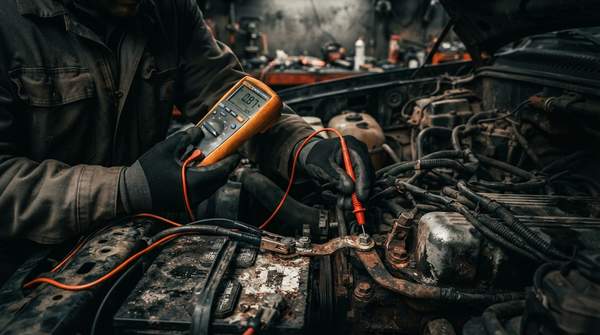
Ford slashed the F-150's body weight by a staggering 317 kg not with exotic metals, but by strategically bonding parts with two-part epoxy. This weight reduction, equivalent to removing several large adults, fundamentally redefines how vehicles are constructed and perform, enhancing both fuel efficiency and safety without relying solely on traditional materials.
Advanced adhesives are enabling lighter, safer, and more innovative vehicles, but their critical role is often overlooked by both consumers and some repair professionals. This oversight creates a hidden knowledge gap that can compromise vehicle integrity.
As vehicles become increasingly complex and multi-material, the expertise in applying and understanding advanced adhesives will become a defining factor in automotive repair quality and safety.
Advanced adhesives are specialized chemical compounds creating strong, durable bonds. Unlike traditional fasteners, they distribute stress evenly, reducing localized points. Designed for specific applications, they join dissimilar materials like aluminum to steel or composites, vital for lightweight, multi-material structures. Precise application and curing are critical for structural integrity and long-term performance.
The Unseen Revolution: How Adhesives Reshape Automotive Design and Repair
Ford's F-150 weight reduction of 317 kg, achieved through two-part epoxy bonds, exemplifies a fundamental shift in vehicle design, moving away from traditional welding and bolting, according to Mordor Intelligence. Automakers now leverage advanced bonds for unprecedented weight reductions.
Adhesive bonding enables new vehicle body layouts and hybrid material compositions, which can improve crash performance and reduce vibration, noise, and harshness in automobiles, reports Precision Business Insights. This means the structural integrity and safety of modern vehicles are increasingly reliant on 'invisible' chemical bonds, making specialized repair knowledge non-negotiable for the aftermarket.
The integration of specialized adhesives, such as silicone with 3 W/m·K thermal conductivity in Tesla's 4680 cells, also reveals that these materials are now critical performance components, not just assembly aids, according to Mordor Intelligence. This extends their role beyond structural integrity to critical system functionality like thermal management, highlighting a significant disconnect between sophisticated manufacturing applications and aftermarket repair preparedness.
The complexity of these bonds for structural integrity and thermal management implies a looming skill gap for repair professionals. Shops failing to adopt advanced adhesive repair techniques face significant challenges. Traditional methods, like welding, can damage heat-sensitive materials or alter high-strength steel metallurgy, compromising structural integrity. Without proper training, technicians risk improper repairs that fail OEM specifications, jeopardizing vehicle safety and longevity.
The automotive aftermarket adhesives market is growing due to longer vehicle lifespans, according to Precision Business Insights. This growth necessitates repair professionals invest in specialized training and equipment. Adhesives' critical role means even minor repairs demand precise knowledge of material compatibility, application techniques, and curing processes.
The widespread adoption of advanced adhesives in vehicle manufacturing has direct implications for vehicle safety. Improperly repaired structural components, where adhesives play a critical role, can fail during a collision, increasing the risk of injury. Consumers driving modern vehicles are often unaware that their car's safety cage relies heavily on these chemical bonds, not just visible welds or bolts.
For automotive professionals, understanding and correctly applying advanced adhesives is no longer optional; it is a fundamental requirement for maintaining vehicle integrity and passenger safety. Manufacturers who fail to communicate these specific material requirements risk compromising vehicle safety and functionality in the aftermarket, as standard repairs will be insufficient.
What are the advantages of using advanced adhesives in car repair?
Advanced adhesives offer several advantages in car repair, including improved structural integrity by distributing stress more evenly than traditional fasteners. They also facilitate the bonding of dissimilar materials like aluminum and carbon fiber, which is crucial for modern lightweight vehicle designs. Additionally, these adhesives can enhance crash performance and reduce noise, vibration, and harshness (NVH) within the vehicle cabin.
How do advanced adhesives improve automotive repair processes?
Advanced adhesives streamline repair processes by reducing the need for welding, which can deform panels or compromise material strength. They allow for cleaner, faster, and often more precise repairs, especially in complex multi-material structures. Their application typically requires less heat, preserving the integrity of surrounding components and finishes, leading to more efficient and higher-quality outcomes.
What are the different types of advanced adhesives used in the automotive industry?
The automotive industry utilizes various advanced adhesives, including epoxies for structural bonding, urethanes for windshield installation and flexible body panels, and silicones for sealing and thermal management. Acrylics are also used for bonding plastics and certain metals. Each type is selected based on its specific properties, such as strength, flexibility, temperature resistance, and curing time, to meet the diverse demands of vehicle construction and repair.
By 2026, repair shops not equipped with specific two-part epoxy application tools and training for Ford F-150's bonded structures will struggle to meet OEM repair standards. This necessitates continuous education and investment in specialized adhesive repair technologies for the automotive aftermarket.