If you already own a multimeter, your next diagnostic tool should be a circuit tester if your problems are physical—dead components, blown fuses, faulty wiring—or an OBD-II scanner if your problems are system-level, like a "Check Engine" light. The two tools work at different layers of your vehicle's electrical system, and choosing the wrong one wastes money without answering your question. Here is how each tool functions, and a decision framework for matching your symptoms to the right purchase.
Beyond the Multimeter: Why Specialized Tools Matter
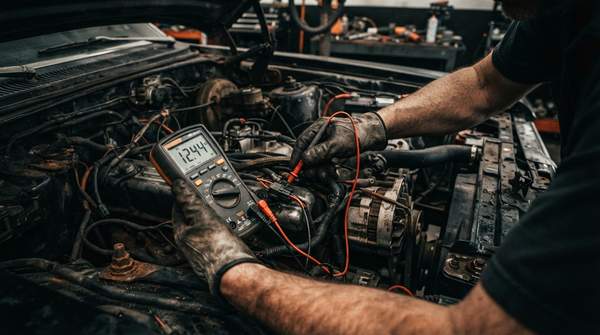
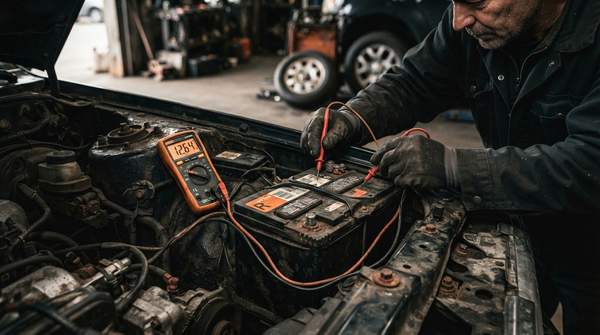
A multimeter measures voltage, current, and resistance, which makes it well suited for testing car batteries, alternators, and fuses, and for troubleshooting issues like a dead battery or a faulty alternator. As a guide from the tool retailer Eppy's puts it, a multimeter is "a must-have tool" for anyone working with a vehicle's electrical system, because it lets you test individual circuits and confirm each component is working as it should.
But precision measurement is not the same as quick verification or computer communication. A multimeter gives you numbers; it does not tell you, at a glance, whether power is reaching a particular part of the vehicle, and it cannot read the error codes stored by your car's onboard computer. That is where the two specialized tools come in: the circuit tester covers the physical wiring layer, and the OBD-II scanner covers the computer-control layer. Neither replaces the multimeter—they answer different questions.
Circuit Testers: Pinpointing Physical Electrical Issues
A circuit tester is a fundamental tool for diagnosing electrical issues in a vehicle. It checks the integrity of electrical circuits by detecting voltage, current, and continuity, and it is designed for exactly the kinds of problems DIYers face most often: faulty wiring, blown fuses, and malfunctioning components in the vehicle's electrical system.
Testers range from simple models with indicator lights to more advanced versions that provide detailed readings. A basic tester can confirm whether power is reaching a particular part of the vehicle—a quick, visual yes-or-no answer. More advanced circuit testers add capabilities such as testing for ground faults, measuring current draw, or checking wire connections in greater detail. The practical advantage over a multimeter is speed: for a simple "is this wire live?" check, a light or LED indication is faster than setting up probes and reading a display. This applies to basic electrical checks and physical circuit integrity, particularly on straightforward wiring problems.
OBD-II Scanners: Decoding Your Car's Computer
An OBD-II scanner works at a completely different layer. Rather than probing wires, it connects to the car's computer and reads diagnostic trouble codes—the error records the vehicle's electronic systems generate when something goes wrong. This is what makes it the go-to tool whenever a "Check Engine" light or another system warning appears.
While a scanner can read error codes related to electrical components, it does not go as deep as physical testing. The same guide notes that a multimeter "goes deeper, allowing you to test individual circuits"—a scanner tells you what the computer noticed, but not necessarily which wire, connection, or part has failed. That division of labor matters: the scanner narrows the problem to a system or component; the circuit tester or multimeter then verifies the physical cause. This capability is specific to modern vehicles with computer-controlled systems, so its value depends on how much of your car's behavior is electronically monitored.
Decision Framework: Choosing Your Next Electrical Diagnostic Tool
Use the matrix below to map your symptom to the correct first tool. The reasoning in each row follows directly from each tool's documented function: circuit testers detect power, ground, and continuity in physical circuits, while OBD-II scanners read trouble codes from the computer.
| Symptom / Problem | Recommended Tool | Reasoning |
|---|---|---|
| A specific component (headlight, radio, power outlet) is not working | Circuit tester | Confirms whether power is reaching the component and whether its circuit has continuity—exactly what circuit testers are built to check. |
| A fuse keeps blowing | Circuit tester | Blown fuses and faulty wiring are core circuit-tester territory; the tool verifies circuit integrity and power flow. |
| The "Check Engine" light is on | OBD-II scanner | The light means the computer has stored a diagnostic trouble code; only a scanner can read it. |
| A system-level problem with no obvious failed part (engine, transmission, emissions behavior) | OBD-II scanner | Scanners provide insight into engine, transmission, and emissions systems by communicating with the computer. |
One symptom deliberately sits outside this matrix: a dead battery. That is a multimeter problem—measuring voltage is the documented approach—so if that is your recurring issue, your existing multimeter already covers it and neither new tool is the priority.
Complementing Your Toolbox: Multimeter, Circuit Tester, and OBD-II Scanner
Think of the three tools as covering successive layers of the same system. The multimeter is the foundation: it measures voltage, current, and resistance, giving you precise values for batteries, alternators, fuses, and individual circuits. The circuit tester sits on top of it for speed—when you need a fast visual confirmation that power or ground is present, it saves time compared with taking careful multimeter readings for a simple check.
The OBD-II scanner completes the set by opening a channel to the computer that the other two tools cannot access. A realistic diagnostic workflow often uses them in sequence: the scanner identifies which system flagged a problem, then the circuit tester or multimeter verifies the physical circuit behind it. Each tool addresses a different layer of the vehicle's electrical system, which is why owning more than one is genuinely useful rather than redundant.
Two boundaries are worth stating. This framework covers basic DIY tools only—professional equipment like oscilloscopes and advanced bidirectional scanners is outside its scope, and complex electrical issues may still require a professional mechanic. And because tool models and prices change frequently, treat this as a category-level decision rather than a specific product recommendation.
Making the Right Choice for Your DIY Diagnostics
The decision comes down to your symptom: for physical circuit issues like a dead component or a blown fuse, choose a circuit tester; for "Check Engine" lights and computer-related problems, opt for an OBD-II scanner. If your issue is a dead battery or charging problem, your multimeter already handles it.
The measurable indicator of success is simple: the reader correctly identifies the appropriate tool for their specific vehicle symptom, leading to a more efficient diagnostic process. Before you buy, write down your exact symptom—component not working, fuse blowing, or warning light illuminated—and match it to the matrix above. If your symptom does not fit any row cleanly, or if the tool you choose does not produce an answer, that is the point at which a professional mechanic becomes the more efficient next step.