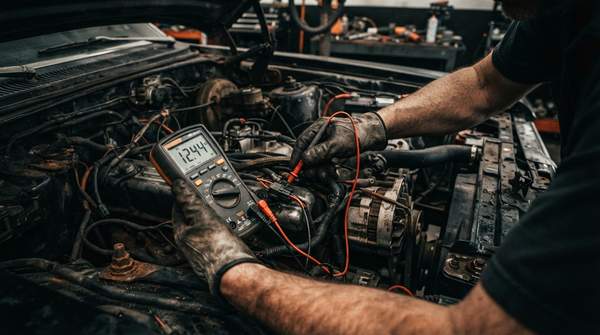
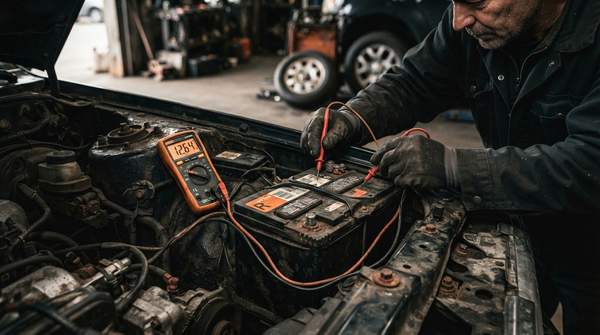
A standard digital multimeter, once a mechanic's go-to, is effectively blind to the rapid data pulses on a modern vehicle's CAN bus, only providing an unhelpful average voltage. The multimeter's limitation renders traditional diagnostic methods insufficient for complex CAN bus systems, leading to misdiagnoses and prolonged repair times. While CAN bus dramatically reduced vehicle wiring complexity and offers software flexibility, its intricate digital protocols demand advanced diagnostic tools and expertise that traditional methods cannot provide. The automotive repair industry now faces a growing divide: shops equipped for CAN bus diagnostics will thrive, others will struggle to service modern vehicles.
CAN bus technology significantly reduced vehicle wiring complexity compared to older point-to-point systems, according to Autopi. The streamlined, network-based architecture reduces weight and simplifies manufacturing by requiring fewer physical connections between Electronic Control Units (ECUs). Beyond physical simplification, CAN bus offers software flexibility. Functions like warning light triggers can be modified via software without re-wiring. This adaptability allows easier updates and customization. However, while the CAN standard defines electrical signals and message structure, message content varies between OEMs and custom builds, according to HP Academy. This creates a challenge for universal diagnostic interpretation, demanding a new approach to diagnostics for this software-defined network.
The Digital Backbone: How CAN Bus Works
A high-speed CAN bus operates with a data transfer rate of 500K bits/sec, according to Snap-on, enabling rapid communication between numerous ECUs within a vehicle. The 500K bits/sec speed is critical for real-time operations, from engine management to advanced driver-assistance systems. The network relies on two wires, CAN High and CAN Low, which transmit differential voltages to represent data bits. This differential signaling helps reject electrical noise, ensuring reliable communication even in electromagnetically noisy automotive environments.
Messages on the CAN bus are broadcast to all connected nodes, but only the intended recipient ECUs process the message based on its identifier. The message identifier also dictates message priority, allowing critical data, such as braking commands, to take precedence over less urgent information like ambient temperature readings. The system also incorporates sophisticated error detection mechanisms to maintain data integrity across the network.