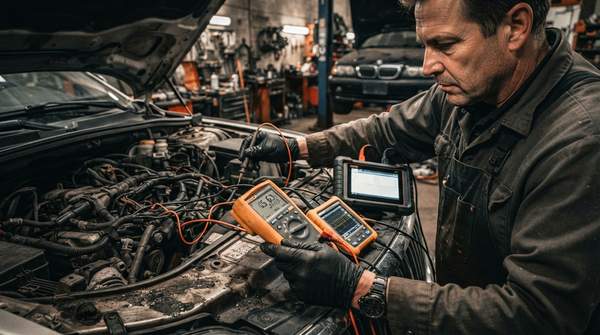
Effective automotive electrical troubleshooting is not about owning one do-everything device. It is about knowing which of three core instruments answers the question in front of you: the scan tool talks to the vehicle's control modules, the digital multimeter verifies basic electrical integrity, and the oscilloscope reveals signal behavior over time. This guide compares their distinct diagnostic roles, then lays out the features that separate a professional-grade scan tool from a basic code reader. Note that it deliberately avoids cost figures and specific product recommendations, and it is not a step-by-step operating manual.
The Core Three: Scan Tool, Multimeter, and Oscilloscope
Writing for Vehicle Service Pros, technician and instructor Scott Brown frames modern diagnostics around a layered toolkit. Electrical issues, he explains, "require precise measurements which can provide the technician with valuable insight," and both digital multimeters and oscilloscopes deliver either instantaneous information or the ability to record values over time. The scan tool occupies a different layer: it communicates directly with the vehicle's onboard systems to retrieve diagnostic trouble codes (DTCs) and their meanings.
The three tools answer three different questions. A scan tool tells you what the vehicle's computer thinks is wrong. A multimeter tells you whether the physical circuit — voltage, current, resistance — behaves as it should. An oscilloscope shows you how an electrical signal actually changes moment to moment, exposing faults that neither of the others can see. Most complex jobs, from an intermittent sensor drop-out to a network communication fault, require at least two of these perspectives before you can commit to a repair.