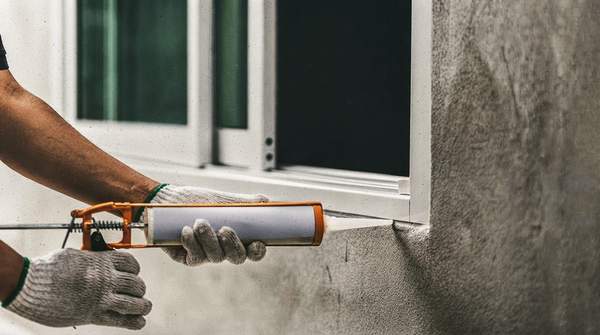
The right exterior caulk depends on three questions: what material you are sealing, how much the joint moves, and whether you need to paint over it. Silicone offers the greatest flexibility and weather resistance but resists paint; polyurethane adheres strongly to many building materials and takes paint; butyl rubber bonds well to dissimilar materials and stands up to sunlight. Here is how to match each type to your project.
Introduction: Why Choose the Right Exterior Caulk?
Exterior caulk protects windows, doors, siding, gutters, and masonry by keeping a house waterproof against the elements, and different surfaces demand different performance qualities from the sealant. According to the team at Bob Vila, which tested exterior caulks on real homes, choosing the right formula requires looking closely at compatibility, gap size, and paintability. Using the wrong type can mean a joint that cracks, peels, or loses adhesion after weather exposure.
This guide compares three common exterior sealant types—silicone, polyurethane, and butyl rubber—by their adhesion, flexibility, weather resistance, and paintability. It covers general caulk types, not specific brands, and does not include quantitative ratings like certified movement percentages or temperature limits. Application technique is discussed only as it affects material choice.
Silicone Sealants: Flexibility and Weather Resistance
Silicone is the most common type of exterior caulk, prized for durability and water resistance. BuildingGreen's sealant guide credits silicone with UV resistance, temperature resistance, the highest movement capability of the common types (Class 50–100), a generally longer service life, and continued flexibility over time. That flexibility persists even after curing, which is why Bob Vila's reviewers call it ideal for sealing drafty windows and doors.
The trade-offs are significant. Pure silicone sealants are not paintable, according to BuildingGreen, though manufacturers offer color options. Bob Vila's testing team notes that silicone does not typically seal well to wood, and it can be very difficult to remove once applied. Silicone can also have a strong odor, take considerable time to fully cure, and sits at the high end of the price range.
Polyurethane Sealants: Strong Adhesion and Paintability
Polyurethane sealants are tough—BuildingGreen describes them as even abrasion-resistant—and unlike silicone, they can be painted. Bob Vila's guide credits polyurethane with strong adhesion to wood, concrete, masonry, and metal, making it versatile across common building materials. Its flexibility suits joints that expand and contract, such as expansion joints and gaps in siding.
A comparison from sealant manufacturer Junbond lists polyurethane's key advantage as strong adhesion, with the caveat that it is less flexible than silicone. For painted exteriors and porous materials like wood, concrete, and masonry, that combination of adhesion and paintability makes polyurethane the practical choice where silicone's poor paint adhesion would be a problem.