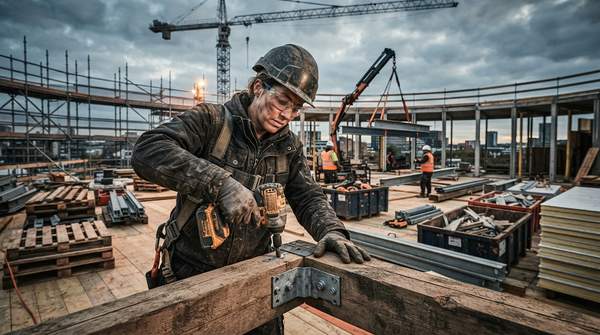
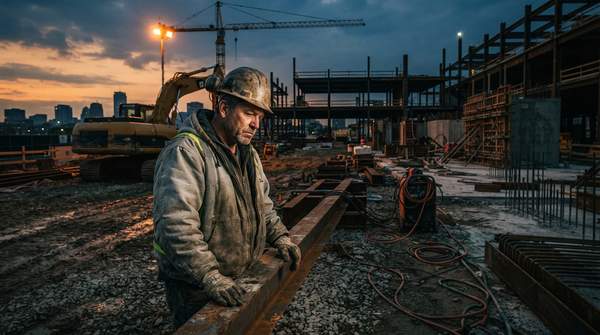
Old bridges, once deemed beyond repair for modern traffic loads, are now being retrofitted with carbon fiber, extending their life by decades. This application of advanced composite materials gives critical infrastructure a second chance, enabling it to meet the demands of increased traffic volume and heavier vehicles. It directly impacts the safety and reliability of daily commutes for millions, offering a durable solution for infrastructure challenges.
Many existing concrete structures, however, remain susceptible to corrosion and degradation, posing significant challenges for maintenance and public safety. Advanced composite materials in modern construction applications offer a lightweight and highly durable solution for their repair and reinforcement, addressing these vulnerabilities head-on.
Therefore, the widespread adoption of composites is poised to redefine infrastructure maintenance and new construction, leading to more resilient and sustainable built environments. This shift redefines what is repairable, delaying costly full replacements and offering long-term economic and environmental benefits.
Carbon Fiber-reinforced Polymer (CFRP) stands out as a critical material in modern construction due to its unique properties. This composite provides significantly high strength and stiffness while remaining lightweight, attributed to the addition of carbon to its fibers, according to E3s-conferences. As a specific type of Fiber-reinforced Polymer (FRP)—composite materials made of a polymer matrix reinforced with fibers—CFRP's exceptional strength-to-weight ratio makes it the most common FRP system for concrete strengthening applications, as noted by Structuremag.
CFRP's exceptional strength-to-weight ratio and resistance to environmental degradation make it uniquely suited to address the weaknesses of conventional construction materials. Unlike traditional repair methods, FRP composites can be manufactured on site using the wet lay-up process, as reported by Structuremag. This on-site fabrication capability provides adaptability and ease of application not typically associated with high-performance structural solutions, allowing for precise customization and efficient application to complex geometries.
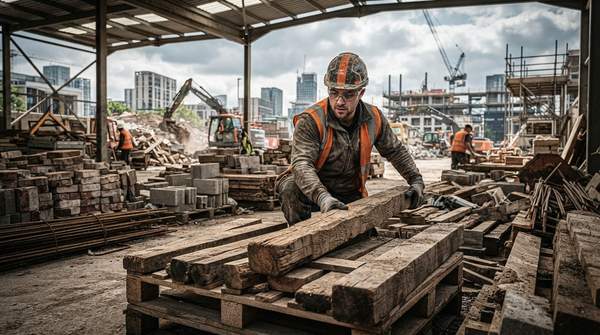
Strengthening and Repairing Existing Structures
Engineers use Carbon Fiber-reinforced Polymer (CFRP) for reinforcing structures and providing additional stability, strength, and resistance to concrete or reinforced concrete structures, according to Coordsystems. This method extends the operational life of critical infrastructure with less disruption than traditional approaches. Composites are increasingly used to repair various structures, including bridge beams, bridge decks, parking garages, and pipelines, as noted by Compositesworld.
A key advantage of FRP composites lies in their adaptability; FRP fabric is easily tailored to fit any geometry, including ‘U’ wrapping around beams, Structuremag reports. The on-site manufacturing and tailorability of FRP composites mean that complex, previously unrepairable structural damage can now be addressed with unprecedented precision and efficiency, fundamentally altering the economics of infrastructure repair.
Meeting Modern Infrastructure Challenges
Many existing concrete structures face significant challenges from aging and increased demands, but CFRP offers precise solutions. This material retrofits old bridges, increasing their load capacity to tolerate modern transportation service loads, according to Coordsystems. Advanced composites effectively re-engineer structures to meet current requirements.
CFRP also plays a vital role in enhancing the resilience of structures against natural disasters. It can be used to retrofit for seismic requirements and to repair damaged reinforced concrete structures, Coordsystems states. Research indicates that wrapped CFRP has the best improvement effect on carrying capacity and ductility among three different strengthening methods, as detailed by Mdpi. This superior performance suggests that simply patching damaged concrete is an outdated approach; true structural resilience now demands strategic composite reinforcement that fundamentally re-engineers the structure.
While Compositesworld highlights FRP rebar as an anti-corrosive replacement for steel in new concrete structures, emphasizing a preventative role, Structuremag and Coordsystems primarily focus on CFRP for strengthening and retrofitting existing, often damaged, concrete structures. This dual-track application demonstrates composites' versatility: foundational corrosion prevention in new builds alongside critical structural enhancement for aging assets.
The Broader Impact: Sustainability and Future Construction
Beyond immediate repair needs, composite materials contribute to long-term sustainability and advancements in new construction. FRP rebar, for instance, serves as an anti-corrosive replacement for steel rebar in concrete structures, according to Compositesworld. This preventative measure helps extend the lifespan of new builds by mitigating the primary cause of concrete degradation.
FRP reinforcement enables lightweight, durable concrete structures, as Sciencedirect notes. The inherent properties of composites enable the creation of entirely new classes of structures that are lighter, more durable, and inherently more sustainable, setting a new standard for future construction. Companies failing to integrate advanced composites like CFRP into their infrastructure maintenance strategies are overlooking a critical opportunity to extend asset lifespans by decades, as demonstrated by the retrofitting of old bridges to tolerate modern loads, according to Coordsystems.
Frequently Asked Questions
What are the main types of composite materials used in building beyond CFRP?
Beyond carbon fiber-reinforced polymer (CFRP), other significant types of composite materials in construction include glass fiber-reinforced polymer (GFRP) and aramid fiber-reinforced polymer (AFRP). GFRP offers a cost-effective solution with good strength-to-weight properties and corrosion resistance, often used in less demanding applications than CFRP. AFRP provides exceptional impact resistance and is employed where energy absorption is a priority.
What are the limitations of composite materials in construction?
Despite their numerous advantages, composite materials do have limitations. The initial material cost for advanced composites can be higher compared to traditional steel or concrete, which might influence project budgeting. Additionally, the specialized training and equipment required for proper installation can add to project complexity and necessitate careful planning for construction teams.
How do composite materials contribute to sustainable construction practices?
Composite materials contribute to sustainable construction through several key factors. Their extended service life significantly reduces the frequency of repairs and replacements, thereby lowering the overall lifecycle environmental impact of structures. Furthermore, the lightweight nature of composites decreases transportation emissions and the total volume of raw materials needed, leading to a smaller carbon footprint for construction projects.
If current trends in composite adoption continue, infrastructure maintenance will likely shift from costly replacements to strategic, long-term reinforcement, ensuring a more resilient and sustainable built environment for decades to come.