Materials

8 Eco-Friendly Building Materials Revolutionizing Construction in 2026

In November 2025, construction giant CRH acquired Eco Material Technologies for USD 2.

KB
Kyle Brenner

April 11, 2026 · 6 min read

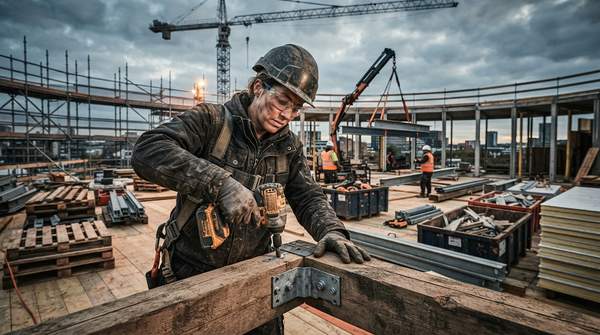
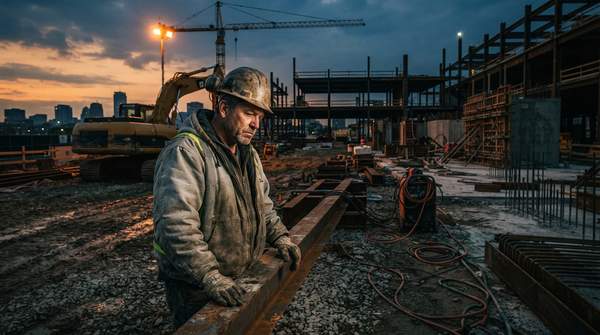
Futuristic construction site in 2026 featuring innovative eco-friendly building materials and advanced technology, symbolizing sustainable progress.

In November 2025, construction giant CRH acquired Eco Material Technologies for USD 2.1 billion. The acquisition signals a massive industry pivot towards supplementary cementitious materials (SCMs), with an investment nearly three times the entire 2025 global green cement market size of USD 690.53 million. It shows a concentrated focus on optimizing cement components rather than diversifying into entirely new sustainable materials.

The global sustainable construction materials market is projected to exceed a trillion dollars, yet truly low-carbon alternatives like raw earth remain niche compared to modified cement. The tension—between vast market potential and limited investment in radical alternatives—defines current green construction. The industry appears poised for a substantial, gradual shift towards sustainable materials, with green cement acting as a primary bridge.

The sustainable construction materials market expands at an 8.2% CAGR, driven by low-carbon mandates, embodied-carbon transparency, and green building certifications (Usdanalytics). The 8.2% CAGR projects the market to reach USD 1395.50 billion by 2034 (Precedence Research). The market's growth and projected size confirm an irreversible market trend, fueled by both environmental necessity and economic opportunity.

Innovative Eco-Friendly Building Materials for 2026

1. Fly Ash-Based Green Cement

Best for: Large-scale infrastructure and commercial projects.

Fly ash-based green cement led the green cement market in 2025 with a 41.3% share (Vocal Media). Fly ash-based green cement uses a coal combustion byproduct, cutting the need for virgin clinker.

Strengths: Cost-effective; abundant feedstock; significant carbon reduction. | Limitations: Relies on coal power plant operations; supply can be inconsistent. The reliance on coal power plant operations poses a long-term risk as coal power declines. | Price: Comparable to slightly higher than traditional Portland cement.
2. Green Cement Solutions

Best for: Broad construction applications seeking reduced environmental impact.

The global green cement market reached USD 690.53 million in 2025 (Precedence Research). The global green cement market includes various formulations designed to lower cement's carbon footprint.

Strengths: Direct substitute for traditional cement; strong market support; aids green building certifications. | Limitations: Higher initial cost in some regions; not a "zero-carbon" solution. Its role is primarily as a transitional material, not an ultimate solution. | Price: Varies, often 5-15% higher than conventional cement.

3. Engineered Bamboo

Best for: Structural elements, flooring, and decorative finishes in residential and commercial buildings.

Bamboo held the highest revenue share, 40%, in the 2024 sustainable construction materials market (Precedence Research). Its rapid growth makes it highly renewable.

Strengths: High strength-to-weight ratio; rapid renewability; sequesters carbon during growth. | Limitations: Needs treatment for pests and moisture; limited fire resistance without engineering. Broader adoption requires robust engineering solutions and regulatory acceptance. | Price: Competitive with traditional timber, varies by product.

4. Advanced Supplementary Cementitious Materials (SCMs)

Best for: Enhancing concrete performance and reducing embodied carbon in cement-based mixes.

CRH acquired Eco Material Technologies for USD 2.1 billion in November 2025 to boost its SCM position (Usdanalytics). AI algorithms can cut traditional cement use by 30-50% by optimizing SCM combinations (Vocal Media). The dual approach leverages industrial byproducts and advanced optimization.

Strengths: Cuts clinker content; improves concrete durability; uses industrial byproducts. | Limitations: Availability depends on industrial waste streams; requires precise mix design. The industry must invest in robust supply chain logistics and advanced material science to fully leverage SCMs. | Price: Feedstocks like fly ash and slag are often cost-effective.

5. Ferrock

Best for: High-strength concrete alternatives, especially where recycled content is a priority.

Ferrock, made from recycled steel dust, offers a stronger, sustainable alternative to traditional concrete (Contractor Foreman). It cures by absorbing carbon dioxide.

Strengths: Stronger than concrete; uses industrial waste; carbon-negative curing. | Limitations: Still developmental for widespread commercial use; specific waste stream supply chain challenges. Its carbon-negative potential makes it a critical long-term research focus, despite current commercial hurdles. | Price: Currently higher due to limited production, expected to decrease with scale.

6. Raw Earth Construction

Best for: Low-carbon residential and commercial buildings, especially in suitable climates.

Raw earth boasts just 1/40 the carbon footprint of concrete (Contractor Foreman). Techniques include rammed earth, adobe, and cob.

Strengths: Extremely low embodied energy; excellent thermal mass; natural aesthetics. | Limitations: Needs specific soil compositions; vulnerable to moisture without proper design; labor-intensive. Overcoming these practical challenges is key to scaling its significant environmental benefits. | Price: Material cost is very low, but labor can be higher.

7. Bio-Based Building Materials

Best for: Insulation, interior finishes, and non-load-bearing structures.

Germany granted €500 million for bio-based building materials in May 2025 (Usdanalytics). Bio-based building materials include hempcrete, mycelium composites, and straw bales.

Strengths: Renewable resources; carbon sequestration; often good insulation. | Limitations: Variable structural performance; specific moisture and pest resistance. Standardized performance metrics and enhanced durability are crucial for broader market acceptance. | Price: Varies widely, from cost-effective natural forms to higher engineered composites.

8. Slag-Based Green Cement

Best for: Marine environments, wastewater treatment plants, and general construction.

Slag, a steel production byproduct, is an abundant SCM feedstock that cuts costs (Mordor Intelligence). It boosts concrete durability and reduces permeability.

Strengths: Improves resistance to sulfates and chlorides; uses industrial waste; reduces heat of hydration. | Limitations: Slower setting time than traditional cement; regional availability depends on steel production. Its benefits are best realized in projects where slower curing is acceptable or can be managed with admixtures. | Price: Often competitive with or lower than traditional Portland cement.
Green Cement Market: Growth and Regional Overview

Metric2025 Data2035 ProjectionKey Insight
Global Market SizeUSD 690.53 millionUSD 1,174.30 millionSignificant market expansion indicates growing adoption and investment.
Projected Growth (CAGR)N/A5.45% (2026-2035)Steady growth rate shows sustained demand for sustainable alternatives.
Largest Regional ShareAsia-Pacific: 34%N/AAsia-Pacific leads in green cement adoption, driven by rapid urbanization and industrial growth.

Investment and Policy Driving Sustainable Construction

Germany’s government granted €500 million for bio-based building materials in May 2025 (Usdanalytics). The €500 million grant pushes novel, bio-based solutions, aiming to diversify beyond cement-centric strategies.

However, private sector investment heavily favors optimizing existing cement technologies. CRH's USD 2.1 billion acquisition of SCM specialist Eco Material Technologies dwarfs government grants for bio-based alternatives. The market's financial commitment shows that while governments advocate for radical material shifts, the market's financial commitment leans towards incremental improvements within existing cement infrastructure.

Significant investment in AI algorithms to cut traditional cement usage by 30-50% (Vocal Media) further confirms companies prioritize enhancing current practices. This prioritization favors improving cement-based solutions over a wholesale shift to inherently lower-carbon materials like raw earth, which remains niche despite its 40x carbon footprint advantage.

While radical alternatives like Ferrock and raw earth show promise, the construction industry will likely continue its primary bet on optimizing existing cement solutions, with SCMs and AI-driven efficiencies leading the charge through 2035.

Frequently Asked Questions about Eco-Friendly Building Materials

Are eco-friendly building materials more expensive?

Initially, some eco-friendly building materials, like certain engineered wood products or advanced insulation, can have higher upfront costs compared to conventional options. However, these materials often lead to significant long-term savings through reduced energy consumption, lower maintenance requirements, and potential tax incentives or rebates for green building certifications. For example, a study by the World Green Building Council found that green buildings typically achieve a 7% increase in asset value compared to traditional buildings.

What are the benefits of using green building materials?

Beyond carbon footprint reduction, green building materials offer benefits such as improved indoor air quality due to lower volatile organic compound (VOC) emissions, enhanced occupant comfort through better thermal performance, and increased building resilience. These materials contribute to healthier living and working environments by minimizing exposure to harmful chemicals and maintaining stable indoor temperatures, reducing the need for extensive heating and cooling systems.