Wegmans, the beloved grocery chain, just reported $14.3 billion in annual sales, securing its spot as the 36th largest family-owned business in America on Forbes' inaugural list. Wegmans' position confirms its substantial market presence and significant economic power. The reported sales figures, sourced from IndexBox and DELCO Today, illustrate the considerable scale attainable by private enterprises.
Many consumers associate family businesses with small, local operations. However, Forbes' new list reveals a powerful, multi-billion dollar sector that includes some of the nation's largest enterprises. The disparity between public perception and economic reality indicates a fundamental misunderstanding of these companies' true influence.
The economic influence and unique operational models of these large family-owned businesses are likely underestimated, representing a significant, often overlooked, force in the national economy. Their inherent long-term strategic visions often provide a distinct competitive advantage over publicly traded counterparts.
America's Hidden Economic Powerhouses
- Walmart, a global retail giant, secured the top spot with $713 billion in annual sales, as reported by IndexBox.
- Publix Super Markets ranked 8th, generating $63.2 billion in revenue, also according to IndexBox.
- H-E-B earned the top Texas ranking on Forbes’ largest family businesses list, according to the Austin American-Statesman.
- H-E-B's annual revenue reached $49.6 billion, the Austin American-Statesman noted.
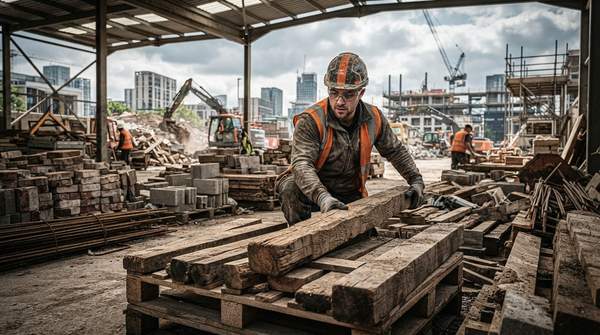
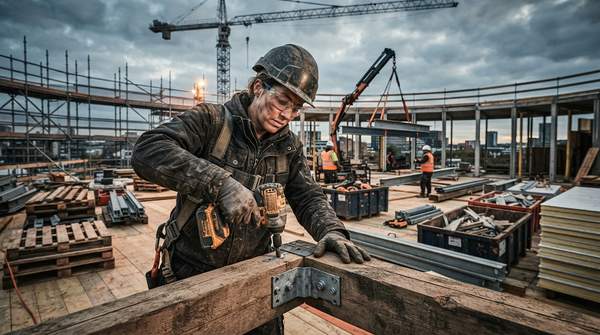
- Beyond retail, over 20% of America's 100 largest family-owned enterprises operate in construction or closely related fields, as per IndexBox.
The figures illustrate that family ownership is not a niche model but a prevalent structure driving multi-billion dollar enterprises across diverse sectors, from retail to heavy industry. The sheer economic output of these privately held entities suggests a significant, understated contribution to national GDP, often operating with strategic priorities distinct from publicly traded corporations. The long-term focus frequently enables sustained market presence and growth, distinguishing them from publicly traded counterparts driven by quarterly results.

Walmart's Family Ties and Market Scale
Walmart, a global retail giant with $713 billion in annual sales, tops Forbes' list, directly challenging common assumptions about corporate structure. Its status as a family-owned business proves that private ownership poses no barrier to achieving national or global market dominance. The operational scale, often surpassing many publicly traded companies, fundamentally alters the perception of what a family business can achieve.
The significant revenue disparity between Walmart's $713 billion and companies like Wegmans at $14.3 billion underscores the extreme range of economic power within the family business sector. The figures confirm that 'family business' is a broad category, encompassing everything from regional market leaders to global economic behemoths, all operating under a private ownership model.
Grocery Giants and Sector Dominance
The prominent inclusion of multiple grocery chains—Wegmans, Publix, and H-E-B—among the top 100 indicates the grocery sector is exceptionally conducive to large, privately-held family enterprises. Publix's $63.2 billion in revenue and H-E-B's $49.6 billion reinforce this trend, demonstrating a robust and resilient business model within the industry.
The sustained market share of family-owned enterprises like Wegmans and Publix in the grocery sector suggests these companies are formidable competitors. Their operational structure, often allowing for patient capital deployment and strategic market positioning, provides distinct advantages that publicly traded rivals may underestimate.
Construction's Unseen Strength
While consumer-facing brands like Wegmans and Publix capture public attention, over 20% of the largest family businesses operate in construction or related fields. Over 20% of the largest family businesses operate in construction or related fields, representing a significant, yet less visible, economic force within the family-owned sector. These companies collectively contribute substantially to the US economy, often without the public recognition afforded to retail brands.
The strong presence of construction firms on Forbes' list challenges the common perception that large family businesses are primarily consumer-oriented. The strong presence of construction firms on Forbes' list implies that economic analyses of national output and employment must account for these powerful, often privately held, industrial enterprises. Their sustained investment in infrastructure and development projects provides a stable, long-term economic bedrock that public markets often overlook.
The prevalence of large, family-owned enterprises across diverse sectors, from retail to heavy construction, fundamentally redefines their role in the national economy. Their unique operational models, often prioritizing long-term stability over short-term gains, suggest a resilience that publicly traded companies may struggle to match. Therefore, the economic influence and strategic impact of these businesses will likely continue to grow, prompting a re-evaluation of traditional corporate structures and investment strategies in the coming years.