The sustainable construction material market is projected to reach USD 1,400.77 billion by 2034, according to GlobeNewswire. This growth signals a shift from decades of concrete, steel, and vinyl dominance. Clients, contractors, and regulators now seek materials that reduce environmental impact and improve long-term performance, making understanding sustainable eco-friendly building materials a core competency. This isn't just environmentalism; it's about constructing smarter, more durable, and healthier structures. Let's explore these materials and their importance for professionals and serious DIYers.
What Are Sustainable Building Materials?
Sustainable and eco-friendly building materials minimize negative environmental and health impacts throughout their entire life cycle. As the U.S. Department of Energy notes, these environmentally preferable products reduce adverse effects on human health and the environment compared to competing options. This principle applies to a building's core components, offering long-term benefits beyond initial costs.
A material's "sustainability" is defined by a combination of characteristics, not a single factor. Evaluating a new product for a project requires considering several key lenses.
- Resource Sourcing: Is the material made from rapidly renewable resources, like bamboo or cork? Is it composed of recycled content, like cellulose insulation or recycled steel?
- Embodied Energy: How much energy did it take to extract, manufacture, and transport the material to the job site? Materials like rammed earth have very low embodied energy, while aluminum has a very high one.
- Performance and Durability: A truly sustainable material is one that lasts. A product that needs to be replaced every five years creates more waste and consumes more resources over time, regardless of what it's made from.
- Health Impact: Does the material off-gas volatile organic compounds (VOCs) or other harmful chemicals? Materials that contribute to better indoor air quality are a critical component of sustainable building.
- End-of-Life: Can the material be reused, recycled, or biodegrade safely when the building is eventually demolished? Reclaimed wood is a prime example of a material that can have multiple lives.
What are the main types of sustainable building materials?
Green building materials, a vast and growing field with 10 to 18 key types, are best understood by category. Most sustainable materials fall into three main groups: rapidly renewable, recycled/reclaimed, or natural/earthen. Each category serves a specific purpose on a modern, efficient job site.
Rapidly Renewable Materials
Rapidly renewable materials are harvested from plants that grow back quickly, directly reducing the risk of deforestation and resource depletion.
- Bamboo: Technically a grass, bamboo can reach maturity in just 3-5 years, compared to decades for traditional hardwoods. It's incredibly strong and versatile, making it a popular choice for flooring, cabinetry, and even structural components in some designs.
- Cork: Harvested from the bark of the cork oak tree without harming the tree itself, cork is a fantastic material for flooring and insulation. It's naturally antimicrobial, fire-resistant, and provides excellent thermal and acoustic insulation.
- Hempcrete: A concrete-like material made from the woody inner fibers of the hemp plant mixed with a lime-based binder. It's lightweight, a great insulator, and carbon-negative, meaning it absorbs more CO2 during its growth than is emitted during its production.
Recycled and Reclaimed Materials
This category focuses on giving old materials a new purpose, effectively diverting waste from landfills and reducing the demand for virgin resources in construction.
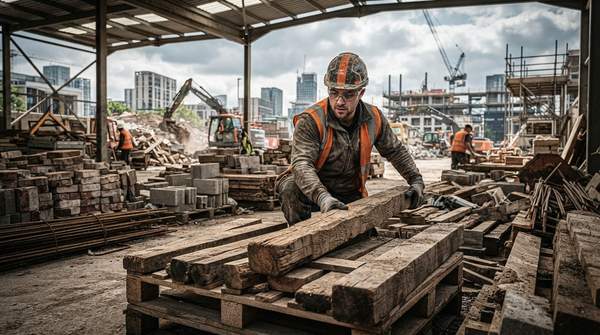
- Reclaimed Wood: Sourced from old barns, factories, and warehouses, reclaimed wood offers character and quality that's hard to replicate. Old-growth timber is often denser and more durable than new lumber. It’s perfect for flooring, beams, and feature walls, and a great choice if you're planning a project like building a small outdoor deck with a unique look.
- Recycled Steel: Steel is one of the most recycled materials on the planet. Using recycled steel for framing or roofing has a significantly lower environmental footprint than producing it from scratch, without any loss of its structural integrity.
- Cellulose Insulation: A standout in this category, cellulose insulation is primarily made from recycled paper and cardboard. According to a report from market.us, the main types include Wood Cellulose, Cotton Cellulose, and Recycled Paper Cellulose Insulation. The same report notes it can be installed in two primary ways: Blown-In for attics and existing walls, and Spray-On for new construction, where it fills every cavity to create a tight thermal seal.
Natural and Earthen Materials
Natural/earthen materials, used for centuries, are being rediscovered for their low environmental impact and high performance, connecting structures directly to their local environment.
- Rammed Earth: This technique involves compacting a mixture of damp soil, clay, sand, and a stabilizer (like a small amount of cement) into forms. The resulting walls are dense, durable, and have incredible thermal mass, helping to regulate indoor temperatures naturally.
- Straw Bales: Using compressed bales of straw from agricultural waste as structural walls or infill is an old idea seeing a modern resurgence. When properly sealed with plaster, straw bale walls offer exceptional insulation values (R-value).
Benefits and Challenges in Sustainable Material Adoption
Switching to sustainable materials involves both distinct long-term advantages and on-the-ground challenges, which contractors must understand before bidding. It is not a simple one-for-one swap.
The Long-Term Benefits
The upsides of building with green materials extend far beyond just a good conscience. According to a report by Earth.org, sustainable buildings offer tangible economic and social benefits. This represents a shift from viewing sustainability as a cost to seeing it as an investment. For instance, superior insulation from materials like cork or cellulose directly translates to lower heating and cooling bills for the life of the building. Using non-toxic materials with low or zero VOCs improves indoor air quality, which is not only a health benefit but a major selling point for clients. This focus on a healthy work environment is just as crucial as having the right safety gear; it's about mitigating long-term risks, much like why investing in quality PPE is non-negotiable.
The On-the-Ground Challenges
From my perspective on the job site, the path to adoption has its hurdles. The first is often upfront cost. While some sustainable materials are competitive, many high-performance green products carry a premium price tag that can be a tough sell for budget-conscious clients. Second is availability. You can’t always run down to the local big-box store for a pallet of hempcrete or a specific FSC-certified hardwood. Sourcing these materials can require more planning and may lead to longer lead times, impacting project schedules. Finally, there's the skills gap. In my experience, finding a crew that can properly install a rammed earth wall or apply a perfect lime plaster over straw bales requires specialized training. It's a different skill set than traditional stick-framing, and a lack of qualified labor can be a major bottleneck in some regions.
Why Sustainable Materials Matter for the Modern Tradesperson
The commercial green construction market is on a significant growth trajectory, according to Fortune Business Insights. For modern tradespersons, ignoring this industry shift presents a business risk. Clients, increasingly educated, demand healthier, more efficient buildings. Contractors who understand the pros and cons of materials like bamboo flooring versus reclaimed oak, or who can discuss insulation options, gain a competitive advantage.
Investing time now to learn the properties and installation techniques for key sustainable materials can open new, higher-margin project opportunities. The demand for professionals skilled in these materials will grow, future-proofing your business. This positions you as a knowledgeable consultant, guiding clients toward smarter, more durable, and responsible choices for their homes and businesses.
Frequently Asked Questions
What is the most common sustainable building material?
Wood and timber products, especially those certified by organizations like the Forest Stewardship Council (FSC), are among the most widely used sustainable materials. Wood is renewable, a natural carbon sink, and is used in everything from structural framing to interior finishes. Reclaimed wood is also extremely popular for its durability and aesthetic appeal.
Are eco-friendly building materials more expensive?
It depends entirely on the material. Some, like reclaimed materials or locally sourced earth for rammed earth construction, can be less expensive than conventional options. However, many manufactured green products, such as high-performance insulation or specialty non-toxic finishes, can have a higher upfront cost. The key is to evaluate the lifecycle cost, as many of these materials pay for themselves over time through energy savings and lower maintenance.
How do sustainable materials affect a building's energy efficiency?
Many sustainable materials are chosen specifically for their superior performance in energy efficiency. Materials with high insulation values, like cellulose, cork, and straw bales, drastically reduce the amount of energy needed for heating and cooling. Furthermore, materials with high thermal mass, such as rammed earth or concrete with recycled fly ash, can absorb heat during the day and release it at night, naturally stabilizing indoor temperatures.
The Bottom Line
Sustainable, eco-friendly building materials are now diverse and accessible within the construction industry, having moved from the fringe to the mainstream. For tradespeople and contractors, mastering these materials is a critical skill for staying competitive and meeting the demands of a changing market. This evolution directly impacts business success.