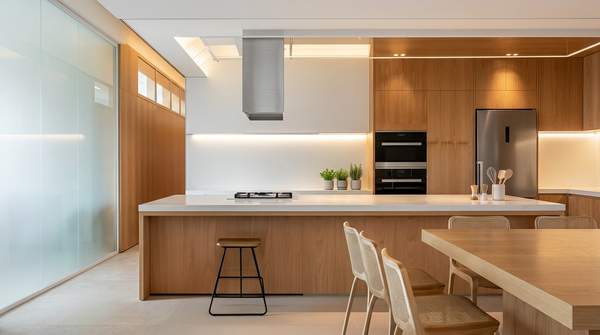
The 2021 International Building Code (IBC) allowed mass timber buildings to reach 18 stories, a significant increase that redefines possibilities for urban construction. This regulatory update includes provisions for up to 18 stories of Type IV-A construction for Business and Residential Occupancies, according to Woodworks. The regulatory update signals a shift towards embracing wood as a primary structural material for taller buildings.
New building codes are allowing significantly taller mass timber structures, but the material science and manufacturing processes still present critical challenges for widespread, reliable adoption. Challenges, particularly concerning adhesive bonding, raise questions about the immediate feasibility of high-rise mass timber projects.
While mass timber is poised for a boom in tall building construction, its true potential will depend on overcoming inherent material and manufacturing complexities and a deeper understanding of wood's fundamental properties.
Understanding the New Mass Timber Construction Types
The new construction classifications in the 2021 IBC directly link material stringency with allowable building scale. Construction types with more stringent material limitations and higher Fire-Resistance Rating (FRR) requirements were generally permitted to be taller and larger, according to Woodworks. The principle of linking material stringency with allowable building scale underpins the allowance for mass timber to extend to 18 stories.
For instance, Type IV-A mass timber construction, which permits the tallest timber buildings, mandates the highest level of fire resistance and material quality. The 2021 IBC's new Type IV categories were specifically designed to accommodate mass timber by establishing stringent material and fire-resistance standards, directly correlating with increased allowable building height and size. The regulatory framework ensures that as buildings grow taller, the materials used must meet escalating safety benchmarks.
The allowance for taller mass timber buildings is directly tied to more stringent fire-resistance ratings, implying that the structural integrity of mass timber, while permitted, still requires significant engineering and material specification to meet safety standards comparable to noncombustible alternatives. Careful selection and consistent quality of wood materials are paramount for meeting these elevated requirements.
The Science of Mass Timber: Species, Properties, and Performance
Understanding the varied properties of wood species is critical for effective mass timber design in 2026. A study investigates the properties of mass timber sourced from various wood species, aiming to offer insights for designers assessing design compliance and substitution potential, according to research published on Link Springer. The research is vital for optimizing material choice for different structural demands.
Currently, softwood dominates mass timber applications, a trend elucidated by the same study. The prevalence of softwood is often attributed to its availability, workability, and cost-effectiveness, making it a primary choice for engineered wood products like Cross-Laminated Timber (CLT) and Glued Laminated Timber (Glulam). However, the continued dominance suggests a significant gap in understanding or processing hardwoods, limiting the full spectrum of material properties available for these taller structures.
Effective mass timber design necessitates a detailed understanding of various wood species' characteristics and why softwoods currently prevail in engineered timber applications. Without exploring a broader range of wood types, the industry may miss opportunities for enhanced strength, durability, or specific aesthetic qualities that hardwoods could offer in specialized construction scenarios.
Navigating the Challenges and Potential of Engineered Wood
While softwoods currently dominate, the application potential of hardwoods in engineered wood products is significant. A 2021 study analyzes hardwood's potential by examining general characteristics, mechanical properties, and performance in various application scenarios, according to research on Link Springer. Hardwoods typically offer greater density and hardness, which could be advantageous for specific structural elements or high-wear surfaces in buildings.
Despite this potential, critical manufacturing challenges persist for mass timber. Issues related to adhesive distribution and bond-line integrity are indicated as significant problems in mass timber production, based on the same research. Inconsistencies can compromise the structural reliability of engineered wood products, especially in demanding high-rise applications where consistent material performance is non-negotiable.
The 2021 IBC's ambitious allowance for 18-story mass timber buildings was prematurely optimistic given these persistent, fundamental manufacturing challenges. Regulatory progress has outpaced material science readiness, particularly concerning the reliable formation of adhesive bonds that are crucial for the long-term integrity of mass timber elements in tall structures.
Common Questions on Wood Construction Limitations
What is the strongest type of wood for building?
Ipe, also known as Brazilian Walnut, is often considered among the strongest woods for structural applications due to its exceptional density and resistance to decay. This hardwood is particularly suitable for heavy-duty outdoor structures where both strength and longevity are paramount.
Is pine wood good for construction?
Pine, a common and economical softwood, finds extensive use in construction for framing, sheathing, and certain mass timber applications. Its workability and widespread availability make it a popular choice, though for demanding structural elements, pine often requires engineering into products like Glulam or CLT to achieve necessary load-bearing capacities.
What dictates a building's allowable size based on construction type?
A building's allowable size is directly tied to its construction type's material limitations and Fire-Resistance Rating (FRR) requirements. Construction types that were more lenient in terms of materials and FRRs generally had smaller allowable building sizes, according to Woodworks. The framework ensures that stricter fire safety and material standards permit taller and larger structures.
The Future of Wood Construction: Balancing Innovation with Fundamentals
Even with advancements in engineered wood, fundamental principles of wood properties remain essential for reliable construction. For instance, when laying out project parts, the grain should be oriented so the fibers support the load, and ideally cut so the grain is continuous, running the length of the board, as detailed by WorkshopCompanion. The basic understanding of wood mechanics is crucial for ensuring structural integrity, regardless of whether the material is solid lumber or a sophisticated mass timber panel.
Meticulous design and craftsmanship are still paramount in the evolving landscape of timber construction. The ability to properly assess wood's inherent characteristics, combined with rigorous quality control in manufacturing, will determine the success of future mass timber projects. The success of future mass timber projects includes not only selecting the right wood species but also ensuring consistent adhesive bonding and structural performance.
Ultimately, the widespread adoption of 18-story mass timber buildings, as permitted by the 2021 IBC, hinges on the industry's ability to consistently overcome these manufacturing challenges. By 2027, developers like Brookfield Properties, who were investing in sustainable construction, will need to see demonstrably reliable mass timber products to fully commit to these taller structures, moving beyond regulatory potential to proven practical execution.