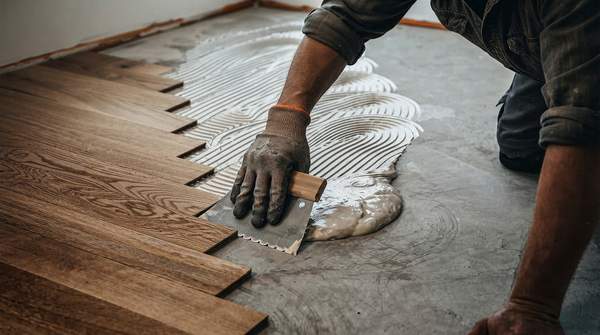
Selecting the right flooring for high-traffic areas in your home is a critical decision for any homeowner planning a DIY renovation. The ideal choice balances durability, water resistance, material cost, and ease of installation. This guide compares four common residential flooring types—laminate, vinyl plank, engineered hardwood, and ceramic/porcelain tile—to help you make an informed decision that suits your budget and skill level.
Understanding High-Traffic Flooring Needs
High-traffic areas in a home, such as entryways, hallways, living rooms, and kitchens, demand flooring that can withstand constant foot traffic, potential spills, and general wear and tear. According to Williams Floor Center, choosing the right floor requires balancing durability, moisture performance, and long-term cost. For homes with active children or pets, Consumer Reports suggests considering very resilient flooring. Understanding the specific characteristics of each flooring type is essential to ensure longevity and satisfaction with your renovation.
Laminate Flooring: Durability and AC Ratings
Laminate flooring is constructed with a dense fiberboard core, topped with a photographic image layer and a clear plastic protective layer, allowing it to mimic various materials, including wood. Consumer Reports notes that the best laminates can resist scratching and discoloration from sunlight better than most wood products.
The durability of laminate flooring is primarily indicated by its AC (Abrasion Class) rating, a crucial number that measures resistance to wear, impact, and staining. Strait Floors explains that AC ratings range from AC1 (light residential use) to AC5 (heavy commercial use), and it is important to match the AC rating to your household activity. Carpets of Dalton emphasizes that installing a lower-rated product in a high-traffic area can void the warranty.
- AC1 (Moderate Residential Use): Suitable for bedrooms or closets with very light traffic.
- AC2 (General Residential Use): Appropriate for living rooms or dining rooms with moderate traffic.
- AC3 (Heavy Residential Use / Moderate Commercial Use): This is a popular and versatile rating for active homes, handling heavy residential traffic well. It is ideal for high-traffic hallways, living rooms, and kitchens, according to Carpets of Dalton. Strait Floors recommends AC3 for most families, especially in living rooms, hallways, and open layouts with constant foot traffic.
- AC4 (General Commercial Use / Heavy Residential Use): Engineered for high-stress environments, AC4 is perfect for very busy homes, multi-generational households, or spaces with large, active pets, as noted by Carpets of Dalton. Leicester Flooring suggests AC4 waterproof laminate for kitchens due to standing traffic, dragged chairs, and cooking activity, and also recommends AC4 or AC5 for stairs due to constant pivot motion.
- AC5 (Heavy Commercial Use): Designed for very heavy commercial traffic.
Traditional laminate flooring is vulnerable to moisture, which can lead to core swelling and delamination, according to Williams Floor Center. While water-resistant laminate options exist, they are not fully waterproof like vinyl or tile. Material costs for laminate flooring typically range from $4 to $9 per square foot, with higher AC ratings often increasing the price, as reported by Consumer Reports and Strait Floors.
Vinyl Plank (LVP/LVT): Waterproof Durability
Luxury vinyl tile (LVT) and luxury vinyl plank (LVP) flooring use synthetic materials like polyvinyl chloride (PVC). Bruce Flooring notes that LVT typically refers to square tiles, while LVP uses planks to mimic hardwoods. These products are known for their durability and moisture resistance, often being fully waterproof.
Vinyl plank is a strong candidate for busy family rooms, entries, and kitchens where pets and children create frequent wear, according to Williams Floor Center. Its synthetic materials and construction prevent water absorption and damage, making it 100% waterproof. This makes LVT an excellent choice for moisture-prone areas like bathrooms and kitchens, as highlighted by Consumer Reports and Bruce Flooring.
Vinyl plank offers flexible installation options, including floating, and is generally considered DIY-friendly. Bruce Flooring indicates that LVT is often the easiest to install, with installation costs ranging from $1 to $5 per square foot for labor. Material costs for luxury vinyl tile typically range from $2 to $7 per square foot, making it a cost-effective option, according to Bruce Flooring.
Engineered Hardwood: Natural Look with Enhanced Stability
Engineered hardwood flooring features a real wood veneer over a stable core, offering the aesthetic of solid hardwood with improved performance. MSI Surfaces notes that engineered hardwood is more dimensionally stable against moisture and temperature changes than solid hardwood, making it suitable for areas with moisture or temperature fluctuations, such as basements and kitchens, according to Bruce Flooring.
While engineered hardwood offers improved water resistance compared to solid hardwood, it is not fully waterproof. Rustic Floor Supply advises that no engineered floor is fully waterproof and spills should be wiped up promptly. Hartco Floors also recommends avoiding wet mopping and using cleaners designed for wood floors to prevent warping and cupping.
The wear resistance of engineered hardwood is determined by the hardness of its wood species wear layer, measured by the Janka hardness rating. Rustic Floor Supply recommends aiming for a Janka rating of 1,000 lbf or higher for flooring, with ratings above 1,500 lbf offering excellent durability for high-traffic homes. Species like Brazilian Cherry (2,350 lbf) and Hickory (1,820 lbf) provide exceptional hardness. For high-traffic areas, Garrison Collection suggests choosing a harder wood species and a strong finish. The thickness of the wear layer also contributes to longevity, with Rustic Floor Supply recommending 4mm+ wear layers for entries.
Engineered hardwood offers versatile installation methods, including nail-down, glue-down, or floating, and is suitable for above or below-grade installations, even over concrete, as detailed by MSI Surfaces. Bruce Flooring notes that both LVT and engineered hardwood are suitable for DIY enthusiasts, with engineered hardwood installation costs for labor ranging from $3 to $10 per square foot. Material costs for engineered hardwood typically range from $4.50 to $20+ per square foot, according to MSI Surfaces, making it generally more expensive than laminate but less than solid hardwood.
Ceramic and Porcelain Tile: Ultimate Resilience
Ceramic and porcelain tiles are classic materials renowned for their exceptional durability and resistance. Consumer Reports highlights that both ceramic and porcelain tile resist wear, moisture, scratches, dents, and stains. Porcelain, a type of ceramic, can be used both indoors and outdoors, while ceramic tile is most appropriate for indoor use.
These tiles are highly durable and water-resistant, making them an excellent choice for high-traffic and moisture-prone areas like kitchens, bathrooms, and entryways. Their inherent properties prevent water absorption and damage, offering a truly waterproof surface.
Material costs for ceramic and porcelain tile typically range from $3 to $5 per square foot, as reported by Consumer Reports. However, installation can be more challenging and time-consuming for DIYers compared to other flooring types. Consumer Reports estimates that tile installation can cost up to $7,000 for a standard 320-square-foot living room, reflecting the expertise and time required.
Decision Framework: Choosing the Right Flooring for Your Home
When planning your DIY flooring renovation for high-traffic areas, consider the following comparison to align your choice with your specific needs, budget, and skill level.
| Flooring Type | Wear Resistance (e.g., AC Rating) | Water Resistance | DIY Installation Difficulty | Material Cost per Sq Ft |
|---|---|---|---|---|
| Laminate | AC3 suitable for most residential areas; AC4 recommended for high-traffic zones, homes with kids/pets, and open layouts. (AC ratings measure abrasion, impact, and stain resistance.) | Traditional laminate is vulnerable to moisture; avoid in wet areas unless a specifically engineered water-resistant variant. (Water-resistant options exist but are not fully waterproof.) | Low to Moderate | $4-$9 (Higher AC ratings often increase price.) |
| Vinyl Plank (LVP/LVT) | Durable for busy family rooms and high-traffic areas; wear layer thickness is key. (Specific AC ratings do not apply, but construction is designed for high traffic.) | 100% waterproof, excellent for moisture-prone areas like bathrooms and kitchens. (Synthetic materials prevent water absorption.) | Low (Often easiest to install, especially floating options.) | $2-$7 (Varies by quality, thickness, and design.) |
| Engineered Hardwood | Wear resistance based on wood species' Janka hardness (aim for 1,000 lbf+ for flooring, 1,500 lbf+ for high traffic) and wear layer thickness (4mm+ for entries). | Improved water resistance over solid hardwood, but not fully waterproof. Requires prompt cleanup of spills. (More dimensionally stable against moisture than solid hardwood.) | Moderate (Flexible installation: floating, nail-down, glue-down.) | $4.50-$20+ (Generally more expensive than laminate, less than solid hardwood.) |
| Ceramic and Porcelain Tile | Exceptional resistance to wear, scratches, dents, and stains. (General high durability affirmed.) | Resists moisture, 100% waterproof. Suitable for all moisture-prone areas. | High (Requires more time and expertise.) | $3-$5 |
For homeowners prioritizing budget and ease of DIY installation in moderately high-traffic areas, laminate with an appropriate AC rating (AC3 or AC4) or luxury vinyl plank are strong contenders. If superior water resistance and maximum durability are paramount, especially in kitchens and bathrooms, vinyl plank or ceramic/porcelain tile are excellent choices. Engineered hardwood offers the aesthetic appeal of real wood with enhanced stability, suitable for various areas, but requires careful attention to spills. Your final decision should weigh these factors against the specific demands of your home's high-traffic zones.
Sources
- Comparing Vinyl and Laminate Flooring Durability and Cost: A Guide for Orlando Homeowners - Orange City, Fl - Williams Floor Center — Williamsfloorcenter
- Flooring Buying Guide - Consumer Reports — Consumer Reports
- Straitfloors
- Laminate Flooring AC Rating Guide | Durability & Traffic | Carpets of Dalton — Carpets Of Dalton
- AC Ratings Explained: AC1 Through AC5 and What Each Level Actually Handles — Leicester Flooring
- Engineered Hardwood vs. LVT – Which is Better? | Bruce Flooring
- Solid vs Engineered Hardwood: Performance Compared — Msisurfaces
- Most Durable Engineered Hardwood Flooring Guide for 2025 — Rustic Floor Supply
- Engineered Hardwood Flooring Pros and Cons | Hartco Floors
- Which Engineered Hardwood Flooring Is Most Durable? - Garrison Collection — Garrison Collection