Most foundation cracks are not emergencies, but a few patterns deserve prompt professional attention. The practical distinction, according to home improvement and inspection guidance, is not the crack's orientation alone but whether it is stable or actively changing. A hairline vertical crack from concrete curing is common; a horizontal crack with a bowing wall is a warning sign. Here is how to identify the four most common crack patterns, what typically causes them, and a checklist that turns your observations into a clear "monitor" or "call a professional" decision.
Vertical Cracks: Common and Often Minor
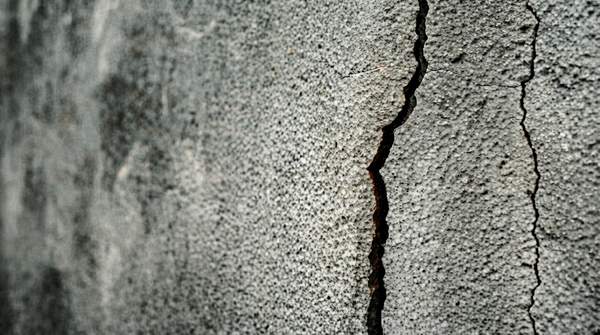
A vertical crack runs primarily from top to bottom through a foundation wall. Some are almost perfectly straight, while others wander slightly as they travel through the concrete. They are commonly seen in poured-concrete foundation walls, and their orientation by itself does not establish the cause.
The most frequent explanation is benign. Concrete changes as it cures and dries, and shrinkage cracks often develop as it loses moisture. Terry Fraser of Renco Home Improvements notes that new home builds are prone to shrinkage cracks within the first year, that these cracks are often vertical, and that they pose no structural threat to the foundation. Vertical cracks can also result from the natural settling of a home, particularly in the first few years after construction.
Size matters here. Renco's guidance states that a crack between 1 and 2 millimeters running vertical or diagonal may be non-structural, a cosmetic result of the natural curing process. But a vertical crack earns closer scrutiny if it grows, leaks water, or shows displacement. Fraser's practical advice for new-build owners: photograph and document the crack, and if it grows or more cracks appear, investigate a repair such as an epoxy injection. He also suggests contacting your builder, since shrinkage cracks may be covered under a home warranty.
Horizontal Cracks: A Potential Warning Sign
A horizontal crack runs primarily side to side across a foundation wall. Unlike vertical cracks, this pattern may accompany lateral loading or movement of the wall itself, which is why experts treat it with more caution.
The typical driver is external pressure. Soil pressing against the wall, including pressure from water in the surrounding ground, can push a foundation wall inward over time. This Old House includes horizontal-leaning indicators among the signs that suggest a crack may be structural rather than cosmetic.
What elevates a horizontal crack from noteworthy to urgent is the behavior of the wall around it. Check for bowing, leaning, offset, or displacement, and whether the crack is progressing. Water infiltration is a common associated problem, and any of these findings warrants a professional evaluation rather than monitoring. A horizontal crack in a wall that is still straight and shows no movement over time is less alarming, but because this pattern is associated with wall movement, it should never be dismissed on appearance alone.
Diagonal and Stair-Step Cracks: Signs of Uneven Movement
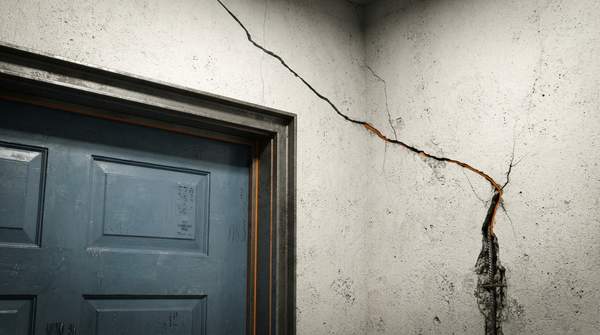
Diagonal cracks run at an angle across concrete or masonry. They may occur where different areas of a structure are moving differently, and they often form at stress concentrations around openings such as windows and doors. Soil around the foundation can shift or settle unevenly, putting pressure on these weaker points and causing the concrete to crack.
While not always immediately serious, diagonal cracks can widen over time and may allow water to seep in, so they are worth watching. Check the crack's shape, location, and any displacement, along with other symptoms inside the house.
Stair-step cracks follow the mortar joints between blocks in a stepped pattern, rather than cutting through the concrete itself. They may accompany different forms of masonry or foundation movement. Check the wall's alignment and whether any blocks are displaced. Woods Basement Systems notes that stair-step cracks are often associated with structural movement and can allow water infiltration, making them important to address. As Crack Wizard's homeowner guide puts it, identifying the pattern is only the first step: the table of crack types "is best used to identify a crack pattern, not to determine whether a foundation needs structural repair."
Foundation Crack Severity Checklist
Work through these five checks on your specific crack. Each check has a "monitor" outcome and a "call a professional" outcome. If any single check lands in the professional column, treat the crack as needing evaluation.
| Check | What to Look For | Monitor If | Call a Professional If |
|---|---|---|---|
| 1. Width | Measure the crack's widest point | Under 1/4 inch (roughly 1–2 mm cosmetic range) | Wider than 1/4 inch |
| 2. Displacement | Run a finger across the crack; look for one side higher than the other | Both sides flush and level | One side is offset, or the wall bows, leans, or is out of alignment |
| 3. Water intrusion | Look for moisture, staining, or active leaks at the crack | Dry, with no staining | Water entering through any part of the foundation |
| 4. Change over time | Photograph the crack with a date; compare over weeks and months | Same size, no new cracks | Widening, spreading, or new cracks appearing |
| 5. Associated symptoms | Check doors, windows, and floors elsewhere in the house | Everything operates normally | Doors or windows suddenly stick or stop operating properly, uneven floors, or leaning walls |
The reasoning behind the matrix is straightforward. This Old House's guidance emphasizes that how a crack changes over time is often more important than how it looks at first, and that the key question is whether a crack is stable or a sign of ongoing movement. The 1/4 inch width threshold appears in This Old House's FAQ as a sign worth consulting a structural engineer about, while Renco's 1–2 mm guidance identifies the cosmetic end of the range. Displacement, water, and interior symptoms are the independent warning signs that override a reassuring width measurement.
When to Call a Professional
The clearest triggers for professional evaluation are cracks that are widening or spreading, doors or windows that suddenly stop operating properly, visible gaps that continue to grow, and water entering through any part of the foundation. These signs, as This Old House explains, often point to active movement or ongoing pressure that will not resolve on its own.
Wide or expanding cracks deserve particular urgency. Woods Basement Systems advises that any crack wider than 1/4 inch, showing signs of movement such as one side being higher than the other, or actively widening, should be taken seriously, since these can indicate structural issues such as foundation failure from soil problems or water pressure.
Conversely, DIY repairs are best suited for cracks that remain the same size over time, show no signs of movement or displacement, and are not associated with other symptoms like sticking doors or uneven floors, according to This Old House. Even then, such fixes address the surface, not the underlying cause, so ongoing monitoring remains important. This article is a guide for initial assessment only; it does not replace a professional structural engineering evaluation, and general advice may not fit every foundation type or local soil condition. Repair methods themselves are beyond its scope.
Your Next Step: Monitor or Call a Pro?
Based on your assessment using the checklist, either monitor the crack for changes over time or contact a qualified structural engineer or foundation repair specialist for a professional evaluation. If every check landed in the monitor column, photograph the crack with today's date and recheck it on a regular schedule. If any check landed in the professional column, or you are simply unsure, get an evaluation rather than waiting.
The measurable indicator to watch is whether the crack's width, displacement, presence of water, or associated symptoms such as sticking doors remain stable or worsen over a defined monitoring period. Stability supports continued monitoring; any worsening is your signal to make the call.
Sources
- Foundation Cracks: What Is Normal and When to Worry — This Old House
- 10 Types of Foundation Crack Problems You Should Know — Renco Home Improvements - Foundation Repair
- Crack Attack: The 5 Most Common Foundation Cracks and What They Mean — Woods Basement Systems
- Types of Foundation Cracks: A Homeowner Guide — Crack Wizard