Most tasks at a residential electrical panel belong to a qualified electrician, but a homeowner can safely handle a few simple interactions—resetting a tripped breaker, flipping the main breaker, and reading labels—by following a handful of disciplined practices. The safety stakes are real: panels can expose you to electric shock, arc flash, and fire, and a 120/240-volt residential panel is more dangerous than its "low voltage" label suggests. This guide translates those professional safety concepts into five homeowner-scale rules, then gives you a decision framework for when to stop and call a pro.
Understanding the Hidden Dangers of Your Electrical Panel
An electrical panel concentrates three hazards in a small metal box: electric shock or electrocution, arc flash, and fire, according to a workplace electrical panel safety briefing. An arc flash is a sudden release of energy that can burn exposed skin and ignite clothing, and it does not require high voltage to be lethal. Guidance from Tyndale USA, a supplier of arc-rated apparel, cites NFPA 70E to make the point plainly: even 120/208V systems can generate arc flashes with more than enough energy to cause "catastrophic or fatal injuries."
The common homeowner assumption that low voltage means low risk is exactly the mistake the Tyndale article warns electricians against. Its stated rule is that arc flash incident energy depends on amperage, cycle time, and worker distance—not just voltage. A residential panel also complicates things because almost none have had a formal arc flash risk assessment, so there are no labels at the panel warning of arc flash or shock risk. In that absence, the NFPA 70E tables become the default way professionals judge the hazard—CAT 1 PPE with at least 4 cal/cm² arc-rated clothing for panelboards rated 240 volts and below. That is the professional standard, and it tells you something important: opening a residential panel is not a casual homeowner activity.
Essential Safety Practice 2: Know When and How to De-Energize
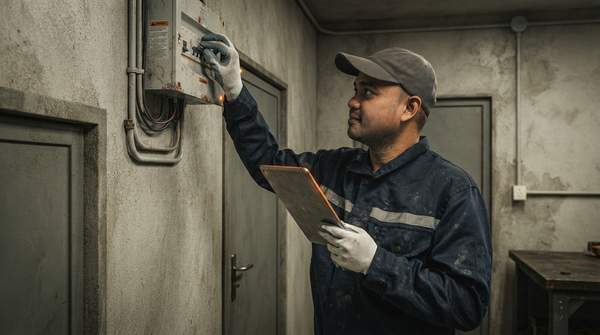
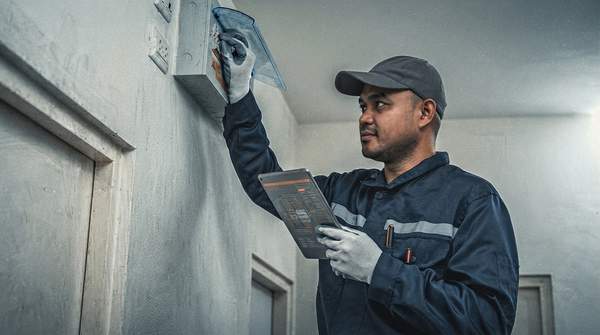
Your single most important lever is the main switch. MidAmerican Energy advises that if your panel has a main switch—usually located at the top of the panel—you should use it to cut off all power before changing a circuit breaker, or in an emergency such as an electrical fire or shock. If your panel has no main switch, the same utility guidance says to turn off all individual circuit breakers to cut power to the home.
Two cautions keep this practice honest. First, de-energizing the home does not make the panel itself safe: the service conductors and lugs ahead of the main breaker can still be energized, which is precisely why work inside the panel remains an electrician's job. Second, verify rather than assume. MidAmerican Energy notes that voltage testers come in many varieties, including plug-in types that check whether an outlet is energized, and treats a tester as part of the basic safety toolkit around panel work. For a homeowner, the practical rule is simple: use the main breaker to de-energize before you touch anything inside the panel's external controls, and confirm with a tester that a circuit is dead before doing anything beyond flipping switches.