CNS Cleaning Company now services over 1,100 client locations monthly. This expansion reflects significant business model shifts and major contract growth across the global commercial cleaning services sector.
Businesses increasingly demand integrated partners offering accountability and responsiveness, moving beyond basic cleaning. This trend reshapes contracts from transactional agreements to performance-based partnerships, impacting providers from local family-owned firms to large multinational ventures. Client dissatisfaction with inconsistent service and a lack of follow-up from traditional providers drives this industry evolution, forcing adaptation of its core value proposition.
What We Know So Far
- CNS Cleaning Company, a Philadelphia-based provider, now services over 1,100 client locations each month and reports a 97% retention rate among its top clients over a 10-year period, according to a press release published on courier-journal.com.
- Primech A & P, a Singapore-based company, has secured a major public sector contract valued at approximately US$24.0 million to provide integrated cleaning services for six prominent food centres, as reported by The Globe and Mail.
- A major public cleaning contract in southern Gran Canaria, with a total value of €129.5 million over its term, is set to expire in 2027, triggering preparations for a new large-scale tender, according to reporting from maspalomas24h.uk.
- Demand for more responsive and accountable commercial cleaning services is rising in Philadelphia, with businesses seeking partners that function as an extension of their own operations.
- The janitorial services business Green Clean Commercial was recently sold to a robotics business, signaling a deeper integration of automation technology within the industry.
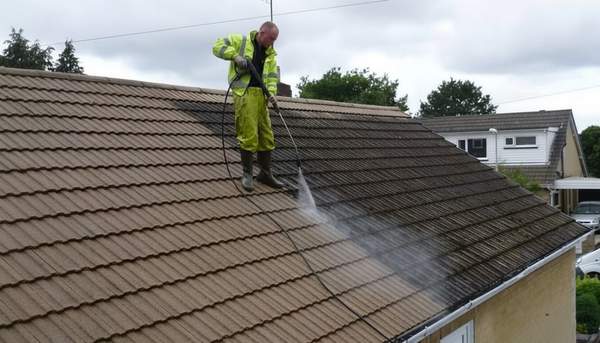
Cleaning Services Industry Business Model Shifts Explained
A fundamental shift is occurring in how cleaning services are contracted and delivered, particularly in competitive urban markets like Philadelphia. Businesses are moving away from purely cost-based, transactional relationships. Instead, they are adopting service-driven models that prioritize reliability, communication, and operational integration. This trend directly responds to persistent issues with inconsistent service quality and poor accountability from traditional providers.
Companies like CNS Cleaning Company exemplify this new approach. With over four decades of experience, the family-owned firm has built its model around customer service, resulting in a 97% retention rate among its top clients. "Businesses today expect more than a clean facility," said Bill Dunn, Owner of CNS Cleaning Company, in a statement. "They expect responsiveness, consistency, and a partner who understands their operations." This sentiment reflects a broader market demand for cleaning companies that act less like third-party vendors and more like embedded partners responsible for maintaining a facility's operational standards.
The evolution of cleaning services is not limited to client relations; technology is changing the very structure of service delivery. The recent acquisition of Green Clean Commercial by a robotics firm underscores a move toward automation to enhance efficiency and consistency. As clients demand higher standards and data-driven performance metrics, cleaning companies are compelled to invest in technologies that transform the industry's operational and financial models.
Key Regions Driving Cleaning Sector Contract Expansions
Globally, business model shifts are reflected in new, large-scale public and private contracts. Two notable examples in Singapore and Spain's Gran Canaria highlight the trend toward performance-based, technologically advanced, and long-term agreements that redefine the scope of cleaning services.
In Singapore, Primech A & P recently secured a US$24.0 million government-linked contract for a 4+1-year term. The agreement covers integrated cleaning services for six major hawker and food centres. The contract's scope is extensive, including general maintenance, Centralised Dishwashing Services (CDW), pest control, and adherence to Singapore’s GreenGov sustainability standards. "This award reflects our strong capabilities to consistently secure and deliver large-scale, integrated cleaning contracts supported by technology-driven operations," said Ken Chang, Head of Operations at Primech A & P. The contract explicitly emphasizes innovation, automation, and data-driven performance management, aligning with the nation's push toward smart urban infrastructure.
Meanwhile, a different dynamic is unfolding in Maspalomas, Gran Canaria. The region is preparing for a new tender for its street cleaning, waste collection, and beach maintenance contract, set to be awarded in 2027. The current twelve-year contract, held by a joint venture and valued at €129.5 million over its lifetime, is expiring. According to maspalomas24h.uk, local firms are now forming engineering teams to forge alliances with larger European groups. Their goal is to compete for the new mega-contract, challenging the dominance of major external corporations and ensuring service models are more aligned with local needs.
| Feature | Singapore (Primech A & P) | Gran Canaria (Upcoming Tender) |
|---|---|---|
| Contract Value | ~US$24.0 Million | ~€129.5 Million (based on current contract) |
| Term | 4+1 Years (Performance-based) | 12 Years (Current contract term) |
| Key Scope | Integrated services, dishwashing, pest control, sustainability | Street cleaning, waste collection, beach maintenance |
| Primary Driver | Technology, automation, data-driven performance | Expiration of long-term contract, push for local alliances |
What Happens Next
The upcoming 2027 tender in Gran Canaria will be a key event, testing whether newly formed local alliances can successfully compete for a contract historically held by major corporations. The outcome could set a precedent for how large municipal contracts are structured and awarded in Europe.
In markets like the U.S. and Singapore, the focus will remain on the integration of technology and the refinement of service-driven partnership models. The success of companies like CNS and the technology-centric approach of Primech will likely pressure other providers to invest in automation, data analytics, and improved client management systems. How smaller cleaning businesses will adapt to these capital-intensive demands, and whether the industry will see further consolidation as technology becomes a primary competitive differentiator, remain open questions.