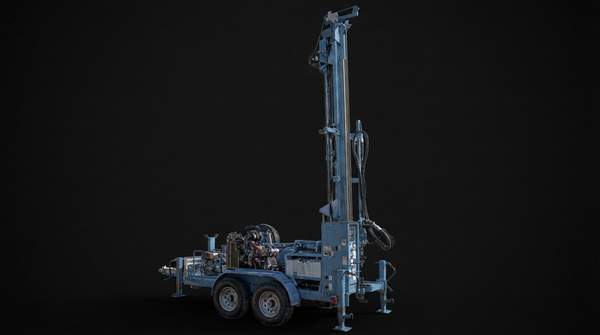
A residential water well is, at its core, a hole that reaches groundwater plus the equipment that moves that water into your house on demand. The U.S. Environmental Protection Agency and well professionals recognize three basic types of private wells — drilled, driven, and dug — distinguished mainly by how deep they go and how they were built, which in turn drives how vulnerable each is to contamination. Most American homes not served by a public system draw from drilled wells, which reach roughly 100 to 500 feet, according to well-system guides that track residential depths.
Comparative Overview of Residential Well Types
The three well types differ in construction, depth, and contamination risk. A Clemson University Home & Garden Information Center factsheet notes that drilled wells can reach confined aquifers, which tend to carry fewer contaminants than the shallow aquifers the other two types tap — one reason drilled wells are the preferred drinking-water well in South Carolina. Use the table below to match your well's visible features — diameter of the casing, depth, and how it was made — to its likely type. If you are evaluating a property with a large-diameter, stone- or brick-lined opening, you almost certainly have a dug well; a narrow steel pipe sticking up a few feet suggests a drilled or driven well.
| Well Type | Typical Depth | Construction Method | Contamination Susceptibility |
|---|---|---|---|
| Drilled | Roughly 100–500 feet for most residential wells | Rotary or percussion drilling rigs penetrate into bedrock; lined with casing | Lowest — depth and casing protect against surface contamination |
| Driven | Typically 30 to 50 feet | A small-diameter pipe, screened at the bottom, is driven into the ground | Moderate — shallower groundwater is more exposed |
| Dug | Usually 10 to 30 feet | Hole dug by shovel or backhoe and lined with stone, brick, or tile | Highest — shallow and traditionally lined, offering the least protection |
Depth matters for water quality as well as yield. A residential well guide from NightOwl Monitoring, authored by Jim Blair, reports that deep wells at 100 feet and beyond reach more stable, better-protected aquifers, though they require more powerful pumps and cost more to drill. Reliable Home Inspections adds a geological wrinkle worth knowing when you talk to a driller: a drilled well must intersect fractures in the bedrock that actually contain groundwater — depth alone doesn't guarantee a water supply.