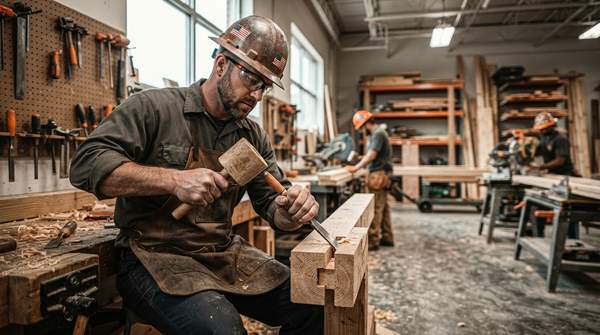
To solve the persistent skilled trades gap, high schools must prioritize comprehensive, hands-on vocational training and apprenticeship pathways over the outdated, one-size-fits-all push for a four-year university degree. The persistent shortage of skilled labor is not a cyclical dip; it is a structural crisis decades in the making, and our educational system's reluctance to embrace practical, career-focused learning is a primary cause. Let's get right to it: we are facing a demographic cliff in the trades, and the pipeline of new talent has slowed to a trickle while demand continues to surge.
The stakes could not be higher. According to builderonline.com, the skilled trades industry faces a massive retirement cliff, with a staggering 41% of the current construction workforce expected to retire by 2031. This exodus leaves a void that our current educational priorities are ill-equipped to fill. The housing industry is already grappling with affordability pressures and labor shortages, and this demographic time bomb will only exacerbate the problem. Simultaneously, a report from Fortune notes that an aging workforce, combined with a surge in demand for infrastructure and real estate, means there are considerably more job openings than skilled workers available. This isn't just an industry problem; it's a fundamental economic challenge that affects every American who needs a home repaired, a road built, or a power grid maintained. The time for incremental change is over.
Addressing the Skills Gap: Why Hands-On Learning Matters
The most effective solution to the skills gap is to build a robust talent pipeline that begins long before a student graduates. This requires a fundamental shift in how we view high school education, moving away from a purely academic focus to one that integrates rigorous, hands-on vocational training. The value of this approach is not theoretical; it’s being demonstrated in programs across the country.
Consider the Building Maintenance and Management program at Gadsden Technical College in Florida. According to a report from wtxl.com, students are not just reading textbooks; they are building an entire house from the ground up. This immersive experience provides them with skills that are immediately usable on a job site. They work side-by-side with local contractors, learning everything from laying the foundation to the final finishing touches. This is the kind of education that builds confidence and competence. As program director Kerwyn Jones-Wilson told reporters, upon completion, these students can "go out into the industry and to the community and start working for themselves as entrepreneurs."
This model also teaches the business of the trades. The completed home, which is already 80 percent finished, will be sold by the students. Approximately 20 percent of the sale's proceeds will then be reinvested directly into the program, creating a sustainable model that can fund future student projects. This is the definition of practical, career-ready education. It’s a far cry from abstract classroom lessons that leave students wondering how they'll apply their knowledge in the real world.
The Counterargument
For decades, the prevailing wisdom has been that a four-year college degree is the gold standard, the only reliable ticket to a stable, middle-class life. The counterargument to a renewed focus on vocational education often centers on the idea that it limits a student's potential, pigeonholing them into a specific career path too early and closing the door to higher education and the broader opportunities a bachelor's degree can provide. Proponents of this view believe that a liberal arts education creates more well-rounded citizens and that trades are a fallback option for those not suited for academic pursuits.
This perspective is not only outdated but increasingly disconnected from economic reality. First, it ignores the crushing financial burden of a traditional college path. Fortune reports the average cost of college now exceeds $38,000 per year, a figure that has led to a national student debt crisis. As career strategist Trevor Houston noted in the same article, "College doesn’t carry the same [return on investment] it once did." Meanwhile, apprenticeships and trade school programs often allow students to earn while they learn, entering the workforce with valuable skills and little to no debt. The cultural tide is already turning; a survey by Britebound found that one in three parents are now open to their children attending trade school, and the percentage who believe career and technical education (CTE) is the best path has nearly tripled since 2019, from 13% to 35%.
Furthermore, the notion that vocational training is a dead end is demonstrably false. Innovative programs are now creating seamless pathways from CTE in high school to advanced credentials and college degrees. In New Jersey, Thomas Edison State University (TESU) is expanding an initiative to convert high school career training directly into college credit, as reported by Community News. Depending on their program, students can earn between six and 40 college credits, significantly reducing the time and cost of a future degree. This isn't an "either/or" proposition; it is a "both/and" approach that respects skilled labor while keeping the door to higher education wide open.
Deeper Insight: Building an Ecosystem of Opportunity
From my years covering this industry, I’ve seen countless well-intentioned but isolated programs fail to make a lasting impact. A single good shop class or a one-off career fair isn't enough. To truly solve the skilled trades gap, we must build a comprehensive ecosystem that connects students, educators, industry partners, and community organizations. The evidence shows that the most successful initiatives are not standalone but are part of a larger, collaborative network.
This ecosystem has several key components. It starts with investment, like The Home Depot Foundation's Path to Pro initiative, which is putting an initial $1 million into reviving high school shop classes. It requires direct industry partnership, as seen in Maui, where the Construction Industry of Maui donated $44,000 to fund 12 scholarships for construction students. It involves community groups, like the Dayton HBA and the Victory Project, which are focusing on workforce development and instilling a strong work ethic.
Crucially, this ecosystem must offer multiple, flexible on-ramps. For some students, it might be a program like the one in Gadsden, leading directly to a job after graduation. For others, it’s the TESU model, where high school CTE credits provide a head start on a college degree. For many, it will be a formal apprenticeship that combines paid on-the-job training with classroom instruction. The key is creating a system where all these paths are visible, valued, and interconnected. When we present the trades not as a lesser alternative but as a dynamic field with diverse entry points and unlimited potential for growth, we will start to see the needle move.
What This Means Going Forward
The momentum for this educational shift is building, but its success is not guaranteed. Going forward, we can expect to see a growing divide between school districts that embrace this new reality and those that cling to the "college-for-all" model of the past. The districts that invest in modern CTE programs and build strong industry partnerships will see their graduates thrive in high-demand, well-paying careers. Those that don't will be doing their students a profound disservice.
I predict that more states will follow New Jersey’s lead, creating official frameworks for converting CTE experience into college credits, thereby legitimizing vocational pathways in the eyes of parents and students alike. We should also watch for more corporate foundations and industry associations to step up with funding and resources, recognizing that they cannot afford to sit on the sidelines and wait for the education system to solve the labor crisis on its own. The future of our infrastructure, our housing market, and our economic competitiveness depends on the choices we make today. It's time to put the tools back in the hands of our students.