The recent 'progressive capitalism' discussion presents an ambitious vision for the American economy. For those in the skilled trades, however, its proposals mix promising goals with frustratingly vague strategies. While the framework correctly identifies the need for more training and better jobs, its high-level concepts lack the detailed, practical blueprint necessary for shop floor implementation. This reveals a significant gap between political ambition and the realities of running a contracting business or working a job site.
The skilled trades are at a critical juncture. A persistent labor shortage threatens the backbone of our infrastructure, making any national policy purporting to solve it deserving of full attention. As reported by the Washington Post, Rep. Ro Khanna has put forward "progressive capitalism" as a new economic philosophy. The ideas being floated are large-scale and, if enacted, would undoubtedly ripple through every trade, from plumbing to advanced manufacturing. We need to analyze these proposals not for their political appeal, but for their practical utility.
Policy Proposals: Strengthening Skilled Labor in a Progressive Economy
Progressive capitalism's vision for labor, as outlined in recent discussions and reported by the Washington Post, centers on a "Marshall Plan for America." This plan commits to good jobs that pay decent wages, are healthy and safe, and provide workers with a voice and a share in equity and profits. These goals—safety first, always, and fair pay for a hard day's work—are the bedrock of our industry and something any tradesperson can support.
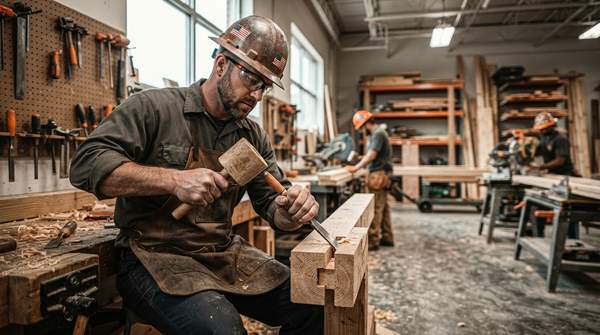
To achieve this, the proposals directly address the skills gap. The Washington Post reports a call for new trade schools and tech institutes designed to train 100,000 workers each year. The scope is broad, intended to cover both next-generation pathways like drone certification and robotics technology, as well as the essential core trades:
- Welding
- Carpentry
- Plumbing
- Electrical work
The Counterargument: A Bold Vision or a Vague Promise?
Proponents contend America's stark inequality—where 19 billionaires held wealth equal to over 10 percent of U.S. GDP by the end of 2024, as noted by the Washington Post—requires bold, systemic solutions, not incremental tweaks. From this perspective, a national training initiative and universal healthcare are foundational shifts, not just line items, creating a more dynamic and equitable workforce. The goal is to change the entire economic environment, making it more fertile for both workers and small business owners in the trades.
While a grand vision inspires change, in the skilled trades, the 'how' is as important as the 'what.' The reported proposals are all vision and no schematic, like a skyscraper blueprint without detailed foundation, electrical, or plumbing plans. They don't address immediate, practical questions for shop owners and apprentices: Who will staff 100,000 new training slots? Who develops curriculum meeting modern job site standards? How does a national plan integrate with thousands of existing, successful, locally-run union and non-union apprenticeship programs?
Bridging Policy and the Shop Floor
The 'progressive capitalism' framework fundamentally disconnects by treating skilled trades as a problem solvable with a massive, top-down infusion of cash. The challenges, as observed through conversations with welders, carpenters, and master plumbers, are far more nuanced than just funding. They involve a complex mix of cultural perception, local business conditions, and an intricate, established system of apprenticeships. Pouring trillions of dollars into new schools without a plan to attract students and qualified instructors is like buying a warehouse full of high-end tools for a crew that doesn't exist.
Last month, I spoke with the owner of a mid-sized HVAC company in Ohio. He's been trying to fill two technician spots for over a year. His problem isn't a lack of training facilities nearby; it's finding young people who see a long-term career in the trades and are willing to commit to the rigors of an apprenticeship. A national policy that doesn't address this cultural component—the value and dignity of skilled labor—is only solving half the problem. Any serious plan must be built from the ground up, in partnership with the local businesses, community colleges, and union halls that are already on the front lines of workforce development.
What This Means Going Forward
The introduction of these ideas into the national conversation is not without value. It places a much-needed spotlight on the importance of the skilled trades to the nation's economic health. The challenge, however, is to move beyond ambitious talking points and toward concrete, actionable policy. For the trades community, the discussion raises several critical, unanswered questions. What are the official next steps for these proposals? Will there be a process for industry stakeholders—the very people who will be tasked with executing this vision—to provide input? How will new federal programs avoid disrupting the effective state-level and private apprenticeship systems already in place? Until these practical questions are addressed with detailed plans, 'progressive capitalism' remains an interesting economic theory, but not yet a workable solution for the American tradesperson.