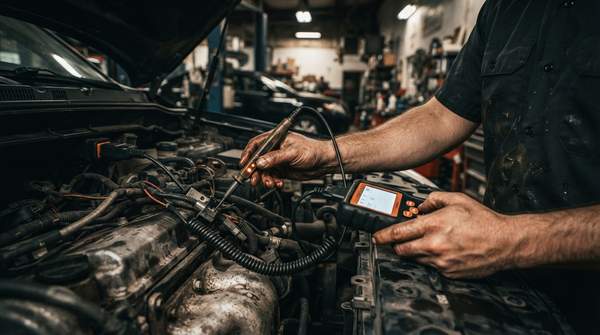
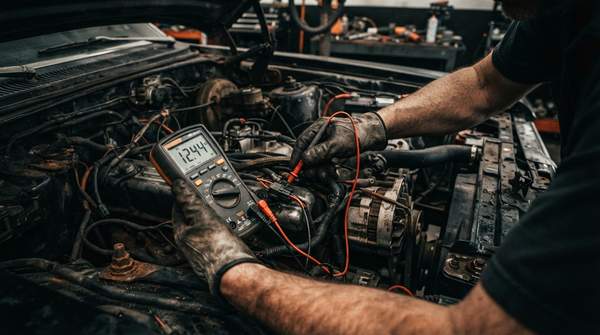
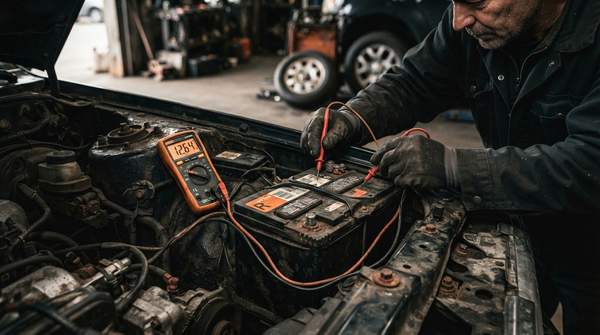
In just over 17 seconds, the Motopower MP69033 can read and display fault codes, outperforming all hardwired scanners on the market, according to Car and Driver. This speed, while impressive, often creates a false sense of diagnostic completeness for those tackling vehicle issues at home.
Modern vehicle systems are increasingly complex, yet the accessibility and perceived sufficiency of basic diagnostic tools often lead users to underestimate necessary diagnostic capabilities. As vehicles integrate advanced driver-assistance systems (ADAS), the demand for accurate diagnostics and calibration tools intensifies, a trend noted by Ad-hoc-news De.
As vehicle technology advances, reliance on professional-grade diagnostic systems will grow, marginalizing basic code readers to a niche market for only the simplest fault identification. The Motopower MP69033's rapid code-reading capabilities, while impressive, create a dangerous illusion for DIYers, suggesting they can fully diagnose complex modern vehicle issues when they are only scratching the surface.
1. Snap-on Diagnostic Systems
Best for: Professional automotive technicians and high-volume repair shops.
Snap-on offers vehicle diagnostic systems that connect to modern vehicles' electronic control units, helping technicians identify fault codes, guide repairs, and access service information, according to Ad-hoc-news De. Their business model focuses on professional customers, providing comprehensive solutions for complex issues. This model ensures Snap-on's continued relevance in a market demanding advanced, integrated solutions.
Strengths: Professional-grade capabilities, extensive vehicle coverage, integrated repair information, recurring revenue streams through software subscriptions. | Limitations: High initial cost, steep learning curve, ongoing software subscriptions. | Price: Professional-tier, varies significantly by model and features.
2. Innova 5610
Best for: Experienced DIYers and entry-level professional technicians.
The Innova 5610 extends beyond simple code reading, offering five system and actuator tests, a hybrid/EV battery test function, and an ABS bleeding procedure. This device receives codes in 31.2 seconds, displays 19 Live Data PIDs, 12 Freeze Frame Data PIDs, and monitors 6 I/M systems, as detailed by Car and Driver. These capabilities position the Innova 5610 as a robust option for detailed diagnostics beyond simple fault codes, bridging the gap between basic readers and professional systems.
Strengths: Advanced system tests, specialized functions for hybrid/EV, comprehensive data display. | Limitations: Higher cost than basic readers, not a full professional system. | Price: Mid-range.
3. Ancel BD310
Best for: Value-conscious DIYers and technicians needing advanced features on a budget.
The Ancel BD310 provides many perks of expensive scanners while remaining affordable and was named 'Best Display OBD-II Scanner for DIY Use' by Car and Driver. It retrieves codes in 18.6 seconds (Plug-In to Bluetooth), shows 18 Live Data PIDs, 13 Freeze Frame Data PIDs, and monitors 6 I/M systems. Its performance at an affordable price point challenges the notion that advanced diagnostics must come with a premium cost, making sophisticated tools accessible to a broader user base.
Strengths: Excellent display, fast code retrieval, strong feature set for its price. | Limitations: Bluetooth connection can be less reliable than hardwired, may lack some high-end professional functions. | Price: Affordable.
4. BlueDriver Pro
Best for: Technicians and DIYers prioritizing user-friendly app-based diagnostics.
BlueDriver Pro features an intuitive, easy-to-use app and helpful diagnostic direction, simplifying complex data for a broad user base. Its reliance on an intuitive app suggests a future where diagnostic tools prioritize user experience and accessibility, potentially expanding the market for advanced DIY diagnostics.
Strengths: User-friendly interface, guided diagnostics, strong app integration. | Limitations: Relies on a smartphone app, may not offer the same depth as dedicated professional tools. | Price: Mid-range.
5. Advanced Scan Tools (Category)
Best for: Automotive technicians requiring in-depth system analysis.
Advanced scan tools offer features like live data viewing, ABS/SRS code access, and battery tests, going beyond basic code reading and clearing, according to SlashGear. These are essential for diagnosing a wider array of vehicle issues. The necessity of these tools highlights the growing chasm between simple code identification and the comprehensive analysis required for modern vehicle repair.
Strengths: Comprehensive system access, live data monitoring, critical for modern vehicle complexities. | Limitations: Higher cost, requires more technical understanding. | Price: Varies, generally higher than basic readers.
6. Basic OBDII Code Readers (Category)
Best for: Average DIYers for sporadic, simple diagnostic work.
Basic OBDII code readers view and clear Diagnostic Trouble Codes (DTCs). SlashGear states that for average DIYers, a cheap code reader is 'likely sufficient for sporadic diagnostic work.' While adequate for trivial fault codes, The limitations of basic OBDII code readers underscore the risk of incomplete repairs when applied to complex modern vehicle systems.
Strengths: Low cost, ease of use, sufficient for simple code identification. | Limitations: Limited functionality, cannot diagnose complex modern vehicle systems, creates a false sense of diagnostic completeness. | Price: Low-cost.
Comparison of Automotive Diagnostic Tools
| Tool | Best For | Key Capabilities | Code Read Time (Average) | Cost/Complexity | Limitations |
|---|---|---|---|---|---|
| Snap-on Diagnostic Systems | Professional Technicians | Comprehensive ECU diagnostics, guided repairs, service info | Not specified (Professional-grade) | High (Initial + Subscription) | Steep learning curve, recurring costs |
| Innova 5610 | Experienced DIYers, Entry-Level Pros | 5 system/actuator tests, hybrid/EV battery test, ABS bleeding | 31.2 seconds | Mid-range | Not a full professional system |
| Ancel BD310 | Value DIYers/Technicians | 'Best Display for DIY Use,' many advanced features | 18.6 seconds (Plug-In to Bluetooth) | Affordable | Bluetooth reliance, lacks some high-end professional functions |
| BlueDriver Pro | User-Friendly Diagnostics | Intuitive app, helpful diagnostic direction | Not specified (App-based) | Mid-range | Relies on smartphone app, depth varies |
| Advanced Scan Tools (Category) | Automotive Technicians | Live data, ABS/SRS access, battery tests | Varies | Higher cost | Requires technical understanding |
| Basic OBDII Code Readers (Category) | Average DIYers (Sporadic) | View and clear DTCs | Varies (often fast) | Low-cost | Limited functionality, incomplete diagnoses |
If vehicle complexity continues its current trajectory, the market for effective automotive diagnostic tools will likely consolidate around systems offering deep integration and calibration, relegating basic OBDII readers to preliminary checks.
Frequently Asked Questions
What are the top diagnostic tools for car mechanics?
Professional car mechanics often rely on comprehensive systems like those offered by Snap-on, which provide deep ECU diagnostics, guided repairs, and access to service information. These systems go far beyond basic code reading to address complex vehicle issues and ADAS calibrations.
What tools do I need to start as an auto technician?
To begin as an auto technician, you need a combination of hand tools and diagnostic equipment. Beyond basic code readers, an advanced scan tool offering live data viewing, ABS/SRS code access, and battery tests is essential for modern vehicle diagnostics, as basic readers are increasingly insufficient for comprehensive repairs.
What is the most important diagnostic tool for a car?
The most important diagnostic tool for a car is an advanced scan tool or professional diagnostic system capable of interpreting complex vehicle data, performing system tests, and accessing advanced driver-assistance system (ADAS) information. Simple code readers, while quick, only scratch the surface of modern vehicle issues.