A simple windshield replacement or tire alignment can silently disable your car's advanced safety features if a crucial sensor isn't recalibrated. Modern vehicles rely on sophisticated sensors for safety and performance, yet common maintenance tasks inadvertently compromise these systems without proper calibration. Drivers often operate vehicles with non-functional safety technologies, demanding increased vigilance from car owners and technicians as vehicles become more sensor-dependent, making routine maintenance more complex and costly.
The Silent Sentinels: How Car Sensors Power Your Vehicle
The Electronic Control Unit (ECU) in modern vehicles relies on a continuous stream of data from numerous sensors. These sensors provide real-time information, acting as the car's eyes and ears. The ECU uses this data to adjust settings or activate systems, optimizing vehicle performance, enhancing efficiency, and improving safety, according to Autopi. This constant feedback loop ensures dynamic operation within optimal parameters; without it, vehicle systems cannot respond effectively to changing conditions, compromising overall function.
Under the Hood: Key Sensor Types and Their Functions
Vehicles incorporate diverse sensor types, each optimizing engine and system performance. An oxygen sensor tracks exhaust gas oxygen levels, assisting the ECU in air-fuel mixture optimization. A Mass Air Flow (MAF) sensor monitors air entering the engine, allowing real-time air-fuel adjustments, according to Autopi. A Throttle Position Sensor (TPS) measures throttle opening, enabling the ECU to adapt engine response. Each sensor plays a vital, specialized role; a malfunction in one can disrupt the entire system's data symphony, leading to cascading performance issues.
The Hidden Risk: Why ADAS Sensor Calibration is Crucial
Advanced Driver-Assistance Systems (ADAS) sensors require precise calibration, a step frequently overlooked in routine maintenance. Calibration is necessary not just after collisions, but also following common service like windshield replacement, suspension repair, or wheel alignment, as highlighted by AAA. Uncalibrated sensors provide faulty information, causing ADAS to malfunction or fail entirely, triggering warning lights, diagnostic codes, steering vibration, or vehicle pull. This industry oversight means many modern cars are less safe than owners believe, operating with compromised safety systems after seemingly minor repairs.
Protecting Your Investment: What Drivers Need to Know
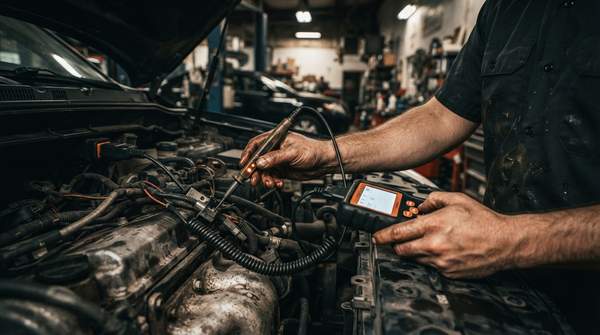
To safeguard vehicle safety features, always inquire about ADAS sensor recalibration when scheduling repairs. Explicitly ask service centers if ADAS cameras or radar systems require recalibration after windshield replacement or wheel alignment. Seek specialized service centers equipped with proper diagnostic tools and training. Proactive inquiry and specialized service are essential to maintaining modern vehicle safety systems and ensuring advanced features function as intended.
Common Questions About Car Sensors and Diagnostics
What are the main types of car sensors?
Beyond engine management, modern cars feature environmental sensors for cabin climate, safety sensors for airbags, and numerous ADAS sensors like radar and cameras for adaptive cruise control and lane keeping assist. Each type provides specific data to different control modules.
How do automotive sensors work?
Automotive sensors convert physical parameters (e.g. temperature, pressure, position) into electrical signals. These signals transmit to the ECU or other control units, which interpret the data and make necessary adjustments or trigger actions.
What are the symptoms of a bad car sensor?
Failing sensor symptoms vary but often include dashboard warning lights, reduced fuel efficiency, rough idling, transmission shifting issues, or safety feature malfunctions. For example, a failing wheel speed sensor could affect ABS performance.
The Future of Automotive Care: Precision and Vigilance
By 2026, as manufacturers like Bosch and Continental further integrate complex sensor arrays, recalibration will likely become an even more central and mandatory aspect of routine automotive service, if the industry adapts its standard maintenance protocols.