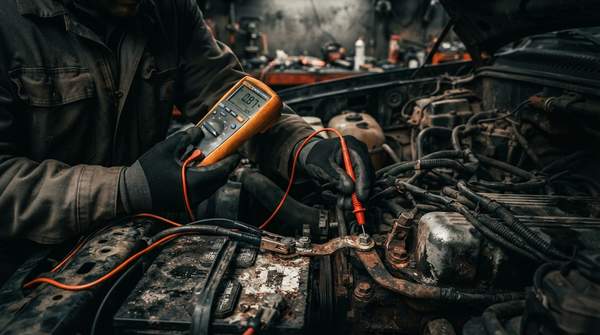
Annual subscriptions for factory diagnostic software cost thousands. Tesla charges $3,188 per year, Ford around $2,500, and General Motors approximately $1,200, according to ТопЖир. These escalating fees burden independent automotive repair shops. Vehicle maintenance and repair costs rose 36 percent between May 2022 and May 2026, according to U.S. Bureau of Labor Statistics data cited by The Detroit News via ТопЖир. Independent shops struggle to afford necessary diagnostic tools, making competitive repairs difficult. This combination of rising proprietary software costs and surging repair expenses creates an unsustainable environment, likely forcing market consolidation or widening the service gap between dealerships and independent providers.
Essential Diagnostic Tools
1. OBD2 Scanners
Best for: General automotive technicians and DIY enthusiasts needing foundational diagnostics.
OBD2 scanners diagnose critical powertrain and emission issues. They identify problems like catalytic converter and oxygen sensor faults, EVAP system leaks, engine misfires, fuel injection issues, and transmission problems including fluid temperature and faulty shift solenoids, according to Udiagtech. Their broad applicability makes them foundational.
Strengths: Broad applicability; cost-effective; user-friendly. | Limitations: Limited to powertrain/emissions data; no deeper proprietary diagnostics. | Price: Typically $50 - $500.
2. Specialized Calibration Equipment for ADAS
Best for: Shops performing collision repair or windshield replacement on modern vehicles with ADAS.
ADAS components in modern vehicles require specialized calibration equipment after minor repairs. This ensures safety-critical systems, like cameras and radar sensors, function correctly. Without it, post-service vehicle safety is compromised.
Strengths: Essential for safety-critical ADAS; ensures proper vehicle operation. | Limitations: High initial investment; requires specific training; brand-specific. | Price: Thousands of dollars.
3. Tesla Factory Diagnostic Software
Best for: Specialized Tesla service centers and independent shops with significant investment.
Tesla's diagnostic software is crucial for comprehensive service on its proprietary electronics. Annual access costs $3,188, as reported by ТопЖир. This high, mandatory fee is a significant barrier for independent shops.
Strengths: Full diagnostic/programming for Tesla; essential for software-dependent repairs. | Limitations: Extremely high annual subscription; limited to Tesla vehicles. | Price: $3,188 annually.
4. Ford Factory Diagnostic Software
Best for: Ford-focused independent repair shops and dealerships needing in-depth system access.
Ford vehicles require factory diagnostic software for detailed troubleshooting, module programming, and recalibrations. The annual subscription costs around $2,500. This proprietary access is essential for modern Ford systems.
Strengths: Complete diagnostic/repair for Ford; necessary for modern Ford systems. | Limitations: High annual subscription; exclusively for Ford vehicles. | Price: Around $2,500 annually.
5. General Motors Factory Diagnostic Software
Best for: Independent shops and dealerships specializing in General Motors vehicles.
General Motors vehicles need dedicated factory diagnostic software for thorough maintenance and precise diagnostics. The annual subscription is approximately $1,200. This provides in-depth access to GM modules and systems.
Strengths: Full diagnostic/programming access for GM; supports complex system repairs. | Limitations: Substantial annual cost; restricted to General Motors models. | Price: Approximately $1,200 annually.
Preventative Diagnostics: Saving on Costly Repairs
Early, accurate diagnosis with accessible tools like OBD scanners mitigates major component failures and saves consumers money by addressing issues proactively.
| Diagnostic Action | Potential Issue Detected | Associated Repair Cost (if undetected) |
|---|---|---|
| OBD Scanner Transmission Temperature Test | Overheating transmission fluid | $1,500 for transmission bands replacement (according to Innova) |
| General OBD2 Scan for Codes | Faulty transmission solenoid | $500 for transmission solenoid replacement (innova.com) |
While universal OBD2 scanners offer foundational utility, proprietary software costs force independent shops to choose between financial sustainability and comprehensive repairs. This dynamic will stifle aftermarket innovation and consumer choice.
The Shifting Landscape for Independent Shops
Independent auto repair shops face increasing challenges. Escalating software, diagnostic equipment, and technician training costs hinder competition, according to ТопЖир. This investment barrier inflates overhead for even basic services. The 36% surge in vehicle maintenance costs, coupled with independent shops' software struggles, imposes a hidden tax on car ownership. Consumers indirectly subsidize automakers' control over the repair ecosystem. This escalating investment creates a competitive disadvantage, threatening independent shops' long-term viability. Market consolidation could reduce independent options for consumers by Q4 2026. Automakers' control over diagnostic information influences consumer vehicle choices, shifting repair overhead.
Common Questions on Diagnostic Tools
What diagnostic tools do professional mechanics use?
Professional mechanics use universal OBD2 scanners for general electrical system faults (battery, charging, sensors) and automaker-specific proprietary software for deeper, brand-specific diagnostics and module programming, according to Udiagtech.
What is the most essential tool for an automotive technician?
A universal OBD2 scanner is the most essential tool for an automotive technician. Its broad diagnostic capabilities across various vehicle systems allow quick identification of common issues like engine misfires or transmission faults, serving as the foundational diagnostic layer.
What are the top 5 diagnostic tools for auto mechanics?
Top diagnostic tools include universal OBD2 scanners for broad fault detection, specialized ADAS calibration equipment, and proprietary factory diagnostic software from Tesla, Ford, and General Motors. These cover basic code reading to advanced system recalibrations and brand-specific programming.
If current trends persist, independent repair shops will likely struggle to maintain comprehensive service capabilities, potentially narrowing consumer choices and increasing overall repair costs.