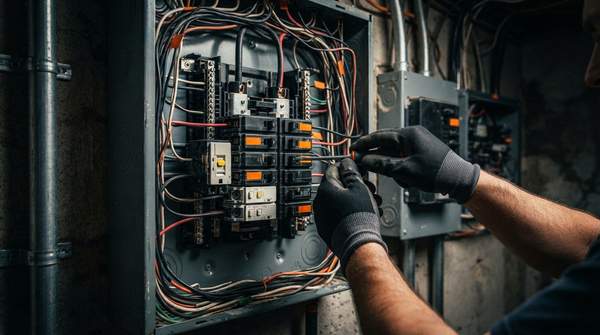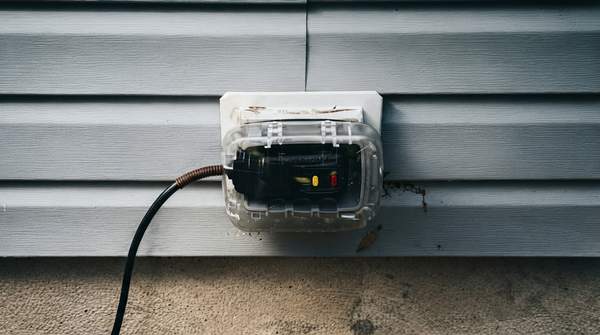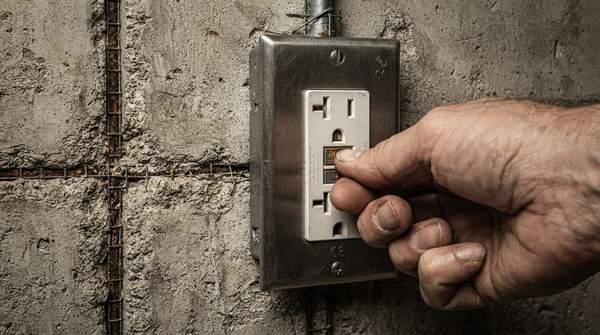
When a GFCI outlet trips and refuses to reset, the problem is usually one of three things: a tripped circuit breaker, a faulty appliance plugged into the circuit, or a failed GFCI device itself. A process of elimination published by Patterson Property Inspections lets most homeowners isolate the cause in a few minutes without touching a wire. This guide walks through that sequence, explains how GFCI and AFCI protection differ, and marks the point where you should stop and call a licensed electrician. It applies to standard 120-volt residential outlets in the United States and does not cover 240-volt dryer or range circuits.
Understanding GFCI and AFCI: Your Home's Electrical Guardians
GFCI stands for ground fault circuit interrupter. It detects current leaking to ground and cuts power to the outlet to prevent electrical shock. As Berkeys' electricians explain, a standard breaker can take seconds to trip — too slow to stop a serious shock — while a GFCI acts faster than your nervous system can register pain. That speed is why code requires GFCI protection in areas where shock hazards are greatest, including kitchens, bathrooms, garages, outdoor outlets, and pool and spa areas.
AFCI, or arc fault circuit interrupter, solves a different problem. As Eaton describes it, an AFCI device monitors a circuit for dangerous arcing conditions and trips quickly to stop the flow of electricity before the electrical system becomes an ignition source for a fire. The Electrical Safety Foundation notes that AFCI requirements have been included in the National Electrical Code since the 2005 edition, though each state may adopt the NEC in whole or in part, so local requirements vary.
Where AFCI protection applies has expanded over successive NEC editions. Per the 2008 NEC additions, AFCI protection covers family rooms, dining rooms, living rooms, parlors, libraries, dens, bedrooms, sunrooms, recreation rooms, closets, hallways, and laundry areas; the 2014 NEC added dwelling-unit kitchens. ExpertCE's summary of NEC 210.12 puts it plainly: the requirement now reaches nearly everywhere in a dwelling unit. AFCI coverage here is informational — the troubleshooting steps below apply specifically to GFCI devices.