Materials

What Are Composite Materials in Modern Construction? A Deep Dive

Composite materials are no longer a niche product; they are a fundamental component of how we build everything from sidewalks to skyscrapers. These engineered materials offer enhanced properties, answering the call for greater durability and efficiency in modern construction.

KB
Kyle Brenner

April 6, 2026 · 7 min read

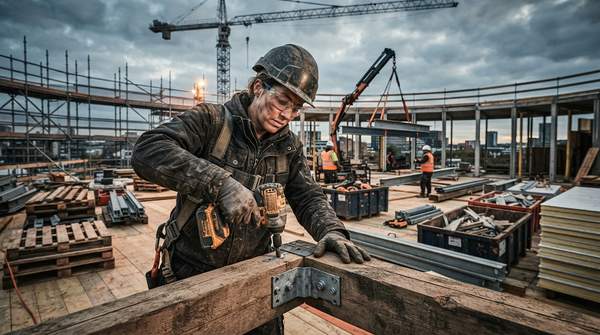
Futuristic skyscraper under construction, showcasing advanced composite materials like carbon fiber and reinforced concrete, symbolizing modern engineering and sustainable building.

Concrete is the most widely used material on the planet after water, with its construction usage by weight more than double steel, aluminum, wood, and plastic combined. This makes it a perfect entry point for understanding composite materials in modern construction properties applications. These engineered materials are a fundamental component of how we build everything from sidewalks to skyscrapers.

Legacy materials like wood, steel, and stone, while long-relied upon, have inherent limitations: wood rots, steel rusts, and both are heavy. As projects become more ambitious and environmental conditions more demanding, the need for materials with enhanced properties has grown. Composite materials answer that call, essential for large-scale designs and seeing increasing demand due to environmental concerns and the need for greater durability.

What Are Composite Materials?

Composite materials are materials constructed from two or more constituent materials with significantly different physical or chemical properties. When combined, they produce a material with characteristics different from the individual components. The individual substances remain separate and distinct within the finished structure, which is key to their performance. Think of it like a chocolate chip cookie: the dough (the matrix) holds everything together, while the chocolate chips (the reinforcement) provide a distinct property—in this case, flavor and texture. In construction, the principle is the same, but the goal is strength, lightness, or durability.
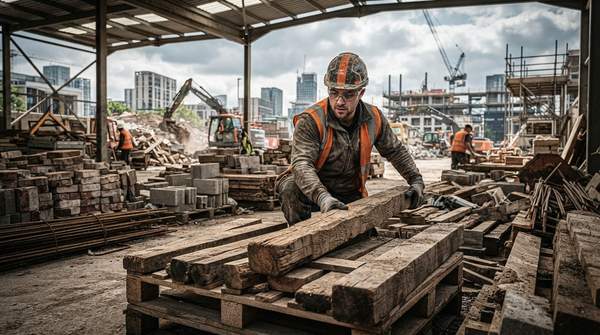

While the term sounds futuristic, humans have been making composites for millennia. Examples include the straw-and-mud bricks used in ancient construction and the wattle-and-daub technique, which dates back over 6,000 years. Even the Romans were masters of composites; the architect Vitruvius detailed specific recipes for concrete over two thousand years ago. What's changed is the sophistication of the science. A modern composite typically consists of two main elements:

  • The Matrix: This is the binder or "host" material that surrounds and holds the reinforcement. It transfers stress between the reinforcing fibers and protects them from environmental or physical damage. Common matrices include polymer resins, cement, and metals.
  • The Reinforcement: This is the material incorporated to provide strength and stiffness. It's often fibrous, like glass, carbon, or aramid fibers, but can also be particles or sheets. In reinforced concrete, the steel rebar is the reinforcement.

The matrix, typically more ductile, protects the strong but sometimes brittle reinforcement fibers, while the reinforcement provides the strength and rigidity the matrix lacks. This synergy allows engineers to tailor materials for very specific performance requirements.

Key Properties and Advantages of Composite Materials in Construction

Composites are a mandatory part of the construction industry due to their significant advantages over traditional materials. By combining materials, properties can be engineered that are not possible with monolithic substances, offering benefits from easier installation to a much longer service life.

Unmatched Corrosion Resistance

One of the most significant failures of traditional materials is their susceptibility to corrosion. The 2021 Surfside condominium collapse in Florida, where 98 people died, has been linked to the severe corrosion of steel reinforcing bars within the concrete structure. This is a tragic, real-world example of what's at stake. Composite materials offer a direct solution. According to a report from AZoBuild, materials like glass-fiber reinforced polymer (GFRP) are inherently resistant to rust and chemical attack. This property was leveraged in a massive project in Saudi Arabia, where GFRP was used to reinforce a 23-kilometer concrete flood channel, a structure that would have been highly vulnerable to steel corrosion.

High Strength-to-Weight Ratio

Composites can be incredibly strong while remaining remarkably lightweight. Carbon fiber, for example, can be five times stronger than steel and twice as stiff, yet weigh about two-thirds less. This property has profound implications for construction. Lighter components are easier and cheaper to transport to the job site. They often require smaller cranes or less manpower to install, which can accelerate project timelines. Furthermore, using lighter materials can reduce the overall load of a structure, potentially allowing for smaller, less expensive foundations. A study in IOPscience notes that the use of composites can be profitable for the industry, leading to significant cost savings in construction, installation, and transportation.

Design Flexibility and Durability

Unlike standard steel beams or wooden planks, composites can be molded into complex, custom geometries, giving architects unprecedented freedom for innovative and efficient designs. Research on next-generation building systems shows composites are used for advanced building façade systems that are both aesthetically striking and highly functional. Engineered for extreme durability, they resist fatigue, impacts, and changing weather conditions far better than many conventional materials.

PropertyTraditional Materials (e.g., Steel, Wood)Composite Materials (e.g., FRP, Reinforced Concrete)
Corrosion ResistanceSusceptible to rust, rot, and chemical degradation.High to excellent inherent resistance.
Strength-to-WeightGenerally high density and heavy for their strength.High strength with significantly lower weight.
InstallationRequires heavy equipment and is often labor-intensive.Lighter components allow for faster, often cheaper installation.
Design FlexibilityLimited by standard shapes, sizes, and joining methods.Can be molded into complex and optimized shapes.
Lifespan MaintenanceOften requires regular maintenance like painting or sealing.Typically requires less maintenance over its service life.

Specific Applications of Composites in Modern Architecture and Infrastructure

Composite materials are used in a wide array of applications, from massive public works to residential buildings, where their specific properties solve critical challenges. Industry analysts at CompositesWorld note that infrastructure and construction projects increasingly turn to composites for bridge decks, utility poles, rail components, and rebar.

In large-scale structures like bridges, dams, and apartment buildings, carbon fiber plates are often used to reinforce existing concrete structures, extending their life and increasing their load-bearing capacity. Composite bridge decks are lighter than concrete, allowing for wider bridge spans and faster replacement of aging infrastructure. In the residential space, composite materials are common in everything from roofing and siding to decking and window frames, offering homeowners durable, low-maintenance alternatives to wood.

Basic concrete has incredible compressive strength but very low tensile strength. To solve this, steel rebar is embedded, creating reinforced concrete where concrete handles compression and steel handles tension—the backbone of modern construction. However, steel can rust, leading to composite rebar made from GFRP or other polymers. This composite rebar performs the same function without corrosion risk, creating a more durable product.

Why Composite Materials Matter: The Push for Safer, More Sustainable Building

Understanding composite materials directly impacts the safety, longevity, and environmental footprint of our built world. For professionals in the trades, choosing the right material is a critical decision, driven by the need to build better, safer, and more resilient structures.

The push for durability is also linked to sustainability. Every time a structure needs to be repaired or replaced due to material failure, it consumes more resources, generates more waste, and has a significant environmental impact. By building with more durable composite materials from the start, we can extend the service life of our infrastructure and reduce the cycle of constant renewal. However, the sustainability of composites is a complex topic. While they offer longevity, many advanced composites rely on petroleum-based resins, and their end-of-life recycling can be challenging. Furthermore, the production of cement for concrete, our most-used composite, is a major source of global CO2 emissions. The industry is actively working on developing more sustainable composites, including those using bio-based resins and alternative cements, but it remains a significant challenge.

Frequently Asked Questions

What is the most common composite material in construction?

By a massive margin, the most common composite material is concrete. It is a mixture of a cementitious binder (the matrix) and aggregate like sand and gravel (the reinforcement). When steel rebar is added to create reinforced concrete, it becomes a composite within a composite, forming the structural basis for most modern buildings and infrastructure.

Are composite materials stronger than steel?

This question requires a nuanced answer. In terms of strength-to-weight ratio, many composites, like carbon fiber, are significantly stronger than steel. This means for the same weight, the composite is much stronger. However, in terms of absolute strength for a given size, a steel beam might be stronger than a composite one. The key advantage of composites is that their properties can be precisely engineered for a specific application, optimizing for strength, stiffness, and weight in a way that is not possible with a uniform material like steel.

Are all composite materials environmentally friendly?

No, not necessarily. While their durability can lead to sustainability benefits by extending a structure's life and reducing maintenance, many high-performance composites are made from petroleum-based polymers and are difficult to recycle. Furthermore, the production of cement for concrete is a major contributor to global carbon emissions. The development of greener composites using bio-resins, recycled materials, and low-carbon cements is a critical area of ongoing research in the construction industry.

The Bottom Line

Composite materials represent a fundamental shift in construction, moving from monolithic materials to highly engineered systems. They provide tailored solutions to long-standing challenges like corrosion, weight, and design limitations, making them indispensable on the modern job site. For tradespersons and contractors, understanding these materials' properties and applications is essential for building safer, more efficient, and lasting structures.