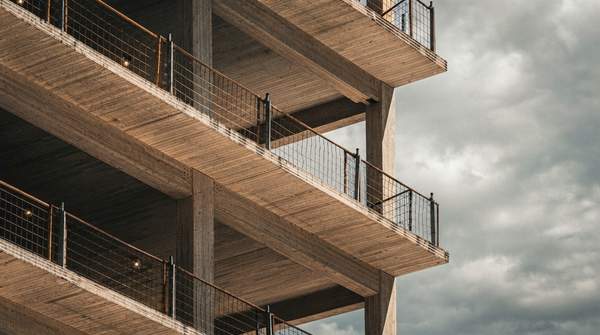
Cross-Laminated Timber (CLT) panels, a form of engineered lumber, now reach lengths up to 20 meters, enabling rapid construction of massive structures. This scale allows builders to assemble large sections off-site, drastically cutting on-site labor and project timelines. Such pre-fabricated components fundamentally alter construction planning and execution, shifting towards industrialized processes.
Traditional lumber offers natural beauty and specific strengths, but engineered lumber gains favor for its superior consistency, efficiency, and reduced waste. This creates tension between established practices and modern project demands. While solid wood retains its appeal, its practical application in large-scale endeavors faces new challenges from engineered alternatives.
As construction demands greater speed and sustainability, engineered lumber will likely expand its market share, pushing traditional lumber to specialized or premium applications. This reflects a broader industry trend to optimize every building stage, from material sourcing to final assembly.
Understanding Softwoods
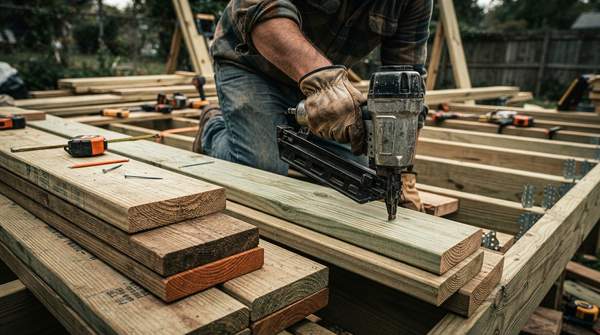
Softwoods are easier to work with, making them foundational for many building applications, from structural studs to flooring and siding, according to Marks Lumber. Their pliability allows for easier cutting, shaping, and fastening than hardwoods. This workability makes softwoods a preferred choice for general construction tasks where speed and ease of manipulation are important, adapting to various designs and on-site modifications.
However, traditional softwood workability now competes with engineered lumber's pre-engineered consistency and waste reduction. This challenges the traditional definition of 'easy to work with,' as pre-cut, precisely manufactured components often outweigh the simple cut-and-nail ease of raw softwood.
The Efficiency Edge of Engineered Lumber
Engineered lumber allows crews to frame a typical home 10–15% faster than traditional lumber, according to Truitt and White. The 10–15% faster framing translates directly to reduced labor costs and faster project completion, making engineered lumber a compelling choice for maximizing output and minimizing overhead. Consistent dimensions and predictable performance streamline framing, reducing on-site adjustments. The 10–15% faster framing is not incremental; it indicates a shift towards prefabrication and rapid assembly of massive structural components, fundamentally altering project timelines and labor requirements.
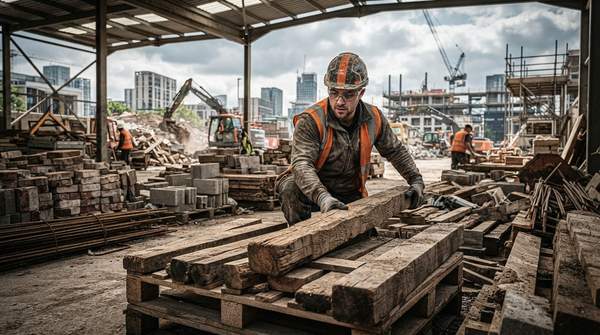
Companies prioritizing traditional lumber for structural applications effectively incur 10-15% higher labor costs and significant material waste, based on Truitt and White's data. This erodes their competitiveness against builders leveraging engineered solutions. Engineered lumber's standardized nature also simplifies inventory management and reduces material handling, further boosting project efficiency.
The Enduring Value of Hardwoods
Hardwoods are generally low maintenance due to their density, which increases resistance to normal weather conditions, according to Beiler Sawmill. This density provides superior resistance to environmental factors, making them ideal for long-lasting, low-upkeep applications where durability is key, such as high-traffic flooring, durable cabinetry, and fine furniture. Their robust cellular structure resists dents, scratches, and wear, preserving aesthetic appeal and contributing to an extended lifespan.
While hardwoods offer specific strengths and natural beauty, engineered lumber's superior efficiency and consistency increasingly relegate traditional lumber to aesthetic or specialized, smaller-scale applications. Hardwoods remain valued for unique grain patterns and rich colors, often irreplaceable by manufactured products. However, their role in large-scale structural construction diminishes as engineered alternatives provide more practical, cost-effective solutions.
Sustainability and Waste Reduction
Engineered lumber boasts a minimal waste factor, with every piece usable, unlike traditional lumber's higher waste due to unusable pieces, according to Truitt and White. The minimal waste factor contributes to sustainable building and optimized material costs, aligning with environmental goals. Engineered lumber manufacturing utilizes nearly every part of the log, minimizing the environmental footprint and reducing demand for virgin timber. Builders precisely order engineered components, cutting excess material that often ends up in landfills, a sharp contrast to traditional lumber's on-site waste from knots, imperfections, and off-cuts.
Despite lumber futures hovering around $550–$557 per 1,000 board feet, engineered lumber's minimal waste and 10-15% faster framing make traditional lumber's apparent price competitiveness deceptive. Its higher waste and slower installation introduce hidden costs, making it significantly more expensive in practice. The ability to produce 20-meter CLT panels, noted by Buckland Timber, indicates engineered lumber as the foundational material for rapid, large-scale construction. This positions traditional lumber as an increasingly niche, aesthetic, or custom-build material, not a mainstream structural component.
Economic Outlook
Lumber futures hovered around $550–$557 per 1,000 board feet in December 2025, according to Lumber Capital. The $550–$557 per 1,000 board feet price point influences material selection and project budgeting. However, raw lumber cost is only one component; true economic viability emerges when installation efficiency and waste factors are considered. The broader market, reflected in these undifferentiated lumber futures, has yet to fully price in engineered lumber's project-level efficiencies. This disconnect means raw material cost doesn't reflect true installed value. Builders must account for traditional lumber's hidden costs—increased labor and material waste—to accurately compare options.
By Q3 2026, construction firms failing to integrate engineered lumber's cost-saving benefits, like 10-15% faster framing and minimal waste, will likely face eroding profit margins against competitors.