A new generation of building materials can store energy with three times the density of traditional solutions, while others actively sequester carbon, fundamentally changing how buildings interact with their environment. A new generation of building materials offers a path for structures to become energy self-sufficient and contribute positively to environmental health.
Advanced composite materials offer unparalleled structural and thermal performance for buildings, but their widespread adoption is still hindered by conventional industry practices.
As sustainability pressures intensify and material science advances, the construction industry will likely increasingly pivot towards these engineered solutions to meet evolving demands for efficiency and environmental responsibility.
Engineered for Performance: What Are Modern Composites?
Modern composite materials enhance structural performance by combining two or more distinct materials, yielding superior characteristics. Unlike traditional building materials, composites are engineered for specific structural and thermal properties. Engineering composites for specific structural and thermal properties reduces the building sector's energy and carbon footprint, according to Sciencedirect. Such tailored design optimizes building performance and environmental impact, addressing challenges conventional materials cannot.
Beyond Insulation: Active Energy Management with Composites
Thermochemical materials (TCMs) offer volumetric energy densities at least three times higher than phase change materials (PCMs) and sensible heat storage, according to Sciencedirect. They store and release energy via chemical reactions between a salt and water vapor, resulting in negligible heat loss, a counterintuitive property for energy storage solutions, also per Sciencedirect. Buildings could soon generate and store their own climate control, rendering energy-intensive HVAC systems obsolete.
Building with Nature: Carbon-Sequestering Composites
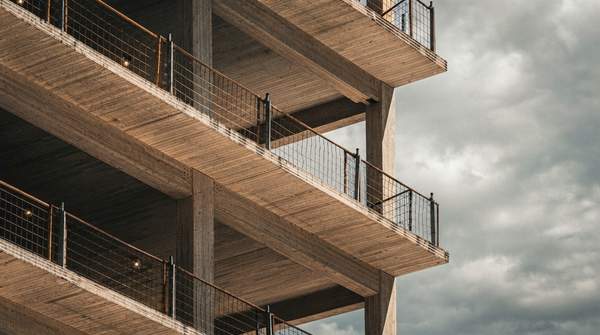
Wood-based composites function as structural and thermal insulation while actively sequestering carbon, according to Mdpi. The dual functionality of wood-based composites transforms buildings from environmental burdens into ecological assets. The construction sector's continued reliance on high-carbon materials is an active choice against decarbonization, overlooking a direct pathway to turning the built environment into a carbon sink and contributing significantly to global decarbonization efforts.