Safety

Top 5 Advanced PPE Innovations for High-Risk Environments in 2026

Discover the leading PPE innovations for high-risk environments in 2026. This guide details five categories of advanced Personal Protective Equipment, evaluated for technological integrations and material science advancements.

BF
Ben Foster

April 5, 2026 · 7 min read

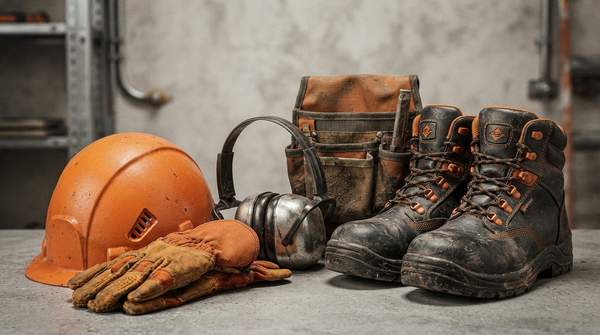
Workers in a futuristic industrial setting wearing advanced personal protective equipment with integrated smart technology, demonstrating enhanced safety in high-risk environments.

The tech-enabled PPE landscape is rapidly evolving, highlighted by recent industry moves like Mechanix Wear's acquisition of OTEX, a specialist in technology-integrated PPE, as reported by Health and Safety International. This guide details five categories of advanced Personal Protective Equipment, evaluated for their technological integrations, material science advancements, and capacity to mitigate severe workplace hazards. It provides safety managers with a clear breakdown of current innovations to inform procurement and safety protocol development.

The list compiles recent product announcements from early 2026, performance data from industry reports, and market analysis on significant technological developments.

1. Integrated Smart Hoods — Best for All-in-One Environmental Management

Integrated smart hoods consolidate worker protection by combining respiratory protection, head protection, and environmental monitoring into a single piece of headgear. These systems are ideal for workers in chemical processing, pharmaceuticals, or advanced manufacturing, where multiple airborne hazards and rapidly changing air quality demand comprehensive solutions. A single unit eliminates multiple, potentially conflicting PPE pieces, reducing fitment issues and improving user comfort and mobility over long shifts.

A prominent example is the SMARTHOOD technology from OTEX, the company recently acquired by Mechanix Wear and now operating under its Chicago Protective Apparel division. This technology integrates advanced air-quality sensors and active cooling systems directly into industrial headgear. This allows for real-time monitoring of the user's breathing zone and automatic adjustments to airflow, providing a superior level of protection compared to passive respirator systems. The main limitation is the reliance on battery power for the integrated electronics and air systems, which requires strict charging and maintenance protocols. Failure to comply may result in a complete loss of respiratory and monitoring functions.

  • Key Attribute: Consolidation of air filtration, cooling, and sensing.
  • Primary User: Industrial workers in environments with complex airborne particulate or gas hazards.
  • Limitation: Dependence on battery life and electronic systems requires rigorous maintenance schedules.

2. Specialized Multi-Gas Detectors — Best for Covert or High-Stakes Operations

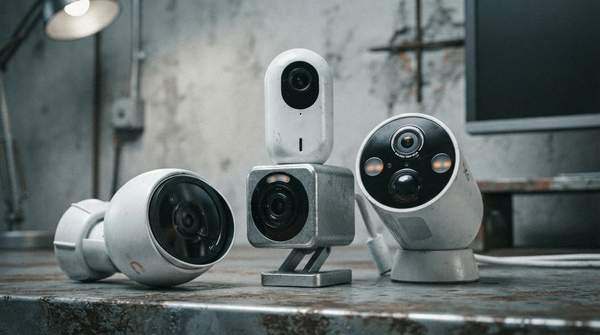
While multi-gas detectors are standard equipment, recent innovations focus on specialized applications for high-risk tactical and emergency response teams. These devices are designed for personnel who must enter volatile, unknown environments where discretion is as critical as safety. This includes military special operations, hazardous materials teams, and police tactical units responding to chemical threats. Their key advantage over standard industrial detectors is the inclusion of features that prioritize operational security without compromising detection capability.

Dräger’s updated X-am 8000 multi-gas detector exemplifies this trend. According to Health and Safety International, the device, which can detect up to seven gases simultaneously, now includes a "Stealth Mode." This feature silences all audible alarms and deactivates visual alerts, relaying critical gas exposure data to the user via a vibrating alarm. This allows teams to operate with a reduced sensory footprint, which is paramount in tactical situations. The primary drawback is that such specialized features command a premium price, and the complexity may require more intensive training than standard detectors to ensure personnel can interpret alerts correctly under stress.

  • Key Attribute: Discreet alerting systems for tactical environments.
  • Primary User: Military, law enforcement, and HAZMAT first responders.
  • Limitation: Higher cost and increased training requirements compared to standard models.

3. Advanced Composite Mining Helmets — Best for High-Impact Protection

For miners, tunnel workers, and demolition crews facing constant rockfalls and falling debris, head protection innovations now incorporate advanced composite materials and design ergonomics. These helmets move beyond basic impact absorption, offering a quantifiable increase in impact energy dissipation compared to older polyethylene hard hats, significantly improving outcomes in subterranean and heavy construction environments.

According to a 2026 gear guide from Farmonaut.com, modern coal mining helmets can reduce the incidence of head injuries by up to 60% compared to legacy models. This performance gain is achieved through the use of materials like carbon fiber and reinforced polymers, which offer a higher strength-to-weight ratio. Many also feature integrated cap lamps, communication systems, and MIPS (Multi-directional Impact Protection System) technology to reduce rotational forces on the brain during an impact. A potential limitation is that the enhanced rigidity of some composite materials may transfer more force in certain low-grade impacts, and their cost can be substantially higher than standard-issue helmets.

  • Key Attribute: Documented 60% reduction in head injuries.
  • Primary User: Mining, tunneling, and heavy construction personnel.
  • Limitation: Higher initial cost and potential for different force transfer characteristics in low-impact scenarios.

4. Wearable Biometric Monitoring Systems — Best for Proactive Worker Health Management

Wearable biometric systems proactively monitor worker vital signs—heart rate, core body temperature, and exertion levels—to prevent heat stress, overexertion, and cardiac events. This technology is invaluable for firefighters, hazardous waste cleanup crews, and agricultural workers in extreme temperatures or physically demanding jobs. By alerting both the worker and a supervisor to physiological distress before it becomes a critical medical emergency, these systems offer a significant safety advantage.

These systems often take the form of smart vests, sensor-equipped base layers, or attachments for existing PPE. They transmit data wirelessly to a central monitoring station or a supervisor's mobile device, providing a real-time overview of a team's physical status. This data-driven approach to safety aligns with equipment trends noted by industry analysts for ensuring compliance and enhancing protection. The most significant drawback is the potential for privacy concerns regarding the collection of personal health data. Implementation requires clear policies on data usage, storage, and access to build trust with personnel. Adherence to these guidelines is paramount.

  • Key Attribute: Real-time tracking of individual physiological data.
  • Primary User: Workers in physically demanding jobs or extreme temperature conditions.
  • Limitation: Raises significant data privacy considerations that must be addressed at an organizational level.

5. Advanced Radiation Shielding Materials — Best for Medical and Nuclear Sector Safety

Innovations in radiation shielding focus on developing lighter, more flexible, and lead-free materials for workers in medical imaging, nuclear power, and research laboratories. This new generation of shielding improves user comfort and mobility without compromising safety, directly mitigating the fatigue and musculoskeletal strain caused by traditional, heavy lead aprons for radiological technicians, interventional cardiologists, and nuclear plant workers.

These advanced materials often utilize composites of high-atomic-number elements like bismuth, tungsten, and antimony, dispersed in a polymer matrix. This results in shielding garments that are significantly lighter than their lead-based counterparts while offering equivalent or superior radiation attenuation. The growth and innovation in this sector are supported by market analysis from Fortune Business Insights, which projects continued expansion through 2034. A key limitation is cost, as these advanced composite materials are more expensive to produce than traditional lead. Furthermore, disposal and recycling of these composite materials can be more complex than for pure lead sheeting.

  • Key Attribute: Lighter, lead-free materials offering improved ergonomics.
  • Primary User: Medical professionals and nuclear industry workers exposed to ionizing radiation.
  • Limitation: Higher material and disposal costs compared to traditional lead shielding.
Innovation CategoryPPE TypeKey FeatureBest For
Integrated Smart HoodsPowered Air-Purifying Respirator (PAPR) / HeadgearConsolidated air quality, cooling, and monitoringComplex industrial environments with airborne hazards
Specialized Multi-Gas DetectorsPortable Electronic DeviceDiscreet "Stealth Mode" alertsTactical military and law enforcement operations
Advanced Composite HelmetsHead ProtectionHigh-performance impact energy dissipationMining, tunneling, and heavy construction
Wearable Biometric MonitorsSmart Garments / SensorsReal-time tracking of worker vital signsPreventing heat stress and overexertion
Advanced Radiation ShieldingProtective Aprons and GarmentsLightweight, lead-free composite materialsMedical, nuclear, and research professionals

How We Chose This List

The items on this list were selected to represent distinct categories of PPE innovation rather than to serve as a direct, feature-by-feature comparison of competing products. Selections were based on an analysis of recent industry events and product updates from the first quarter of 2026, including the new product roundup from OH&S Online. Criteria included the integration of smart technology, advancements in material science with quantifiable performance benefits, and the application of PPE to solve specific, high-consequence hazards. The list prioritizes equipment that offers a fundamental shift in how worker safety is managed, moving from passive protection to active, data-driven mitigation.

The Bottom Line

Advanced PPE technology offers new tools for hazardous occupations. Organizations upgrading safety protocols can deploy integrated systems like smart hoods for complex environments or targeted innovations in gas detection, impact protection, and biometric monitoring for specialized roles. Ensure all personnel are adequately trained on new equipment features and limitations before deployment.