Automotive Services

How Modern Car Electrical Systems Work: A Complete Guide

Understanding modern car electrical systems reveals a complex network of interdependent components, far beyond a simple battery-and-wire circuit. This guide breaks down how these systems function, common diagnostic pitfalls, and advanced technologies.

LO
Luis Ortega

April 5, 2026 · 9 min read

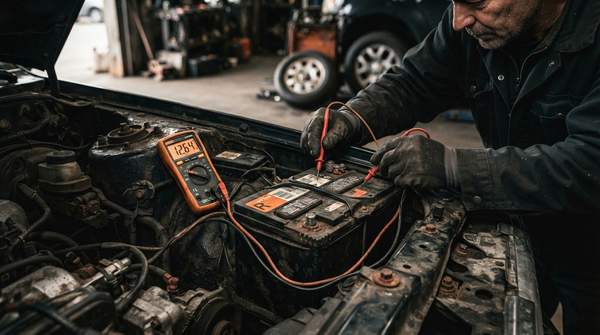
Close-up of a modern car's engine bay, showcasing complex electrical wiring, electronic control units (ECUs), and diagnostic equipment, symbolizing advanced automotive technology.

A vehicle that refuses to start is a common and frustrating experience. While many immediately suspect a dead battery, the reality is that understanding how modern car electrical systems work reveals a complex network of interdependent components. From the initial spark that cranks the engine to the sophisticated computers managing fuel injection and climate control, every function relies on a precisely controlled flow of electricity. This system has evolved far beyond a simple battery-and-wire circuit; it is now the vehicle's central nervous system, integrating advanced electronics, high-voltage circuits, and intelligent management systems that require a deep understanding for accurate diagnosis and repair.

What Is a Modern Vehicle Electrical System?

A modern vehicle's electrical system is a closed-circuit network responsible for generating, storing, and distributing electrical energy to power all of a vehicle's electronic components. At its core, the system includes the battery, which provides initial power; the starter, which cranks the engine; and the alternator, which generates electricity while the engine is running to power the vehicle and recharge the battery. However, contemporary systems are far more complex. They integrate numerous Electronic Control Units (ECUs) to monitor and manage everything from engine performance to safety features. According to industry analysis from Powering the Future: Advancements in Automotive Electrical Systems, these systems are also beginning to shift towards higher voltages, such as 48-volt architectures, to support the increasing power demands of modern features and hybrid technologies.

How a Car's Electrical System Functions: Step by Step

To effectively diagnose and service these systems, you must first understand the fundamental sequence of operations. Each component plays a critical role in a chain of events that begins the moment you turn the key or press the start button. Follow this step-by-step breakdown of the electrical power flow in a typical internal combustion engine vehicle.

  1. Step 1: Storing Energy in the Battery

    The entire process begins with the battery. Most modern cars use a 12-volt lead-acid battery, which acts as the system's reservoir of electrical energy. Its primary job is to provide the high-amperage current needed by the starter motor to crank the engine. It also powers the vehicle's electronics when the engine is off. A battery's capacity is measured in amp-hours (Ah). As explained by How a Car Works, a 56 Ah battery should theoretically be able to supply a current of one amp for 56 hours, or two amps for 28 hours. Before any other component can function, the battery must hold a sufficient charge (typically 12.4 to 12.6 volts at rest) to initiate the starting sequence.

  2. Step 2: Engaging the Starter Motor

    When you turn the ignition key or press the start button, you close a low-current circuit that activates a relay or solenoid. This, in turn, closes a high-current circuit, allowing a massive flow of electricity—often 100 to 200 amps or more—to travel directly from the battery to the starter motor. The starter is a powerful electric motor designed for short, intense bursts of work. It engages with the engine's flywheel (or flexplate), rotating the crankshaft and initiating the combustion cycle. Once the engine starts and runs on its own power, the starter motor disengages, and its role is complete until the next startup.

  3. Step 3: Generating Power with the Alternator

    With the engine running, the responsibility for powering the vehicle shifts from the battery to the alternator. Driven by the engine's serpentine belt, the alternator is an electrical generator. It converts the mechanical energy of the rotating belt into alternating current (AC), which is then rectified into direct current (DC) suitable for the vehicle's systems. A voltage regulator within the alternator maintains the output at a steady level, typically between 13.5 and 14.5 volts. This voltage is higher than the battery's resting voltage, which allows the alternator to both power all the vehicle's electrical needs (lights, radio, ECUs, etc.) and simultaneously recharge the battery, replenishing the energy used during starting.

  4. Step 4: Distributing Current Through Circuits

    Electricity from the alternator (or battery, when the engine is off) is distributed throughout the vehicle via a network of wiring harnesses. These harnesses connect to fuse boxes, which serve as central distribution hubs. A key principle of automotive wiring is the use of the vehicle's metal chassis as a common ground return path. Current flows from the battery's positive terminal, through a fuse, along a single wire to a component (like a headlight), and then returns to the battery's negative terminal through the car's metal body. This design simplifies wiring significantly. Each ancillary circuit—for lights, wipers, infotainment, and so on—is protected by a fuse or circuit breaker rated for a specific amperage. If a short circuit or overload occurs, the fuse will blow, breaking the circuit and preventing damage to the component or a potential fire.

  5. Step 5: Monitoring and Control with ECUs

    Modern vehicles are managed by a network of Electronic Control Units (ECUs), which are small, dedicated computers. The main ECU, often called the Engine Control Module (ECM) or Powertrain Control Module (PCM), oversees engine functions. However, there are dozens of other ECUs controlling the transmission, anti-lock brakes (ABS), airbags, climate control, and more. These units receive input from sensors throughout the vehicle (e.g., oxygen sensors, wheel speed sensors, temperature sensors) and use that data to make real-time adjustments to actuators (e.g., fuel injectors, ignition coils, throttle body). This constant monitoring and control optimizes performance, fuel efficiency, and safety. The integration of ECUs is a defining feature of modern automotive electrical systems.

Diagnosing Common Vehicle Electrical Problems: Pitfalls to Avoid

When faced with an electrical issue, a systematic approach is crucial. Technicians often fall into common traps that lead to misdiagnosis and unnecessary parts replacement. Avoiding these pitfalls will increase your diagnostic accuracy and efficiency.

  • Mistake: Assuming the Battery is Good Based on Voltage Alone. A multimeter may show 12.6 volts on a battery, but this reading only indicates surface charge. It does not reveal the battery's ability to deliver current under load. A battery with a bad cell can show good voltage but fail completely when the high-amperage draw of the starter is applied. Correction: Always perform a proper load test. A professional battery tester simulates the load of the starter motor and measures the voltage drop, providing a true assessment of the battery's health and its cold-cranking amps (CCA) capability.
  • Mistake: Ignoring the Ground Connections. Many elusive electrical gremlins are caused by a poor ground. Since the vehicle's chassis is the return path for most circuits, a loose, corroded, or broken ground strap can cause a wide range of symptoms, from flickering lights to no-start conditions. The resistance at a bad ground point can be enough to prevent a high-current component like a starter from working, while still allowing low-current accessories to function. Correction: Perform a voltage drop test on the ground side of the circuit. With the circuit operating, measure the voltage between the negative battery terminal and the component's ground point on the chassis. A reading of more than 0.2-0.3 volts indicates excessive resistance that must be addressed by cleaning and tightening the connection.
  • Mistake: Replacing the Alternator for a Charging System Warning Light. A battery light on the dashboard indicates a fault in the charging system, but it does not automatically mean the alternator has failed. The issue could be a worn or slipping serpentine belt, a faulty connection at the alternator or battery, a blown fuse in the alternator's field circuit, or even a failing battery that can no longer accept a charge. Correction: Conduct a full charging system analysis. Check belt tension and condition. Verify battery health with a load test. Measure the alternator's output voltage and amperage under load to confirm it meets manufacturer specifications before condemning the unit.
  • Mistake: Misinterpreting Diagnostic Trouble Codes (DTCs). An OBD-II scanner is an essential tool, but a DTC is a starting point, not a final diagnosis. For example, a code for an oxygen sensor circuit low voltage (e.g., P0131) does not definitively mean the sensor is bad. It could be caused by a wiring issue, an exhaust leak, or a problem with the sensor's heater circuit. Correction: Use the DTC to guide your diagnostic path. Consult the vehicle's service manual for the specific code's diagnostic procedure. This will involve testing the circuit's wiring, connectors, and related components to isolate the true root cause of the fault.

Understanding Modern Car Battery Management and Advanced Systems

As vehicles become more electrified, the electrical system's complexity grows exponentially. Technicians must be familiar with emerging technologies and advanced concepts to remain proficient. These systems go far beyond the traditional 12-volt architecture and introduce new layers of control and power management.

First, the industry is seeing a significant shift towards higher-voltage systems. The adoption of 48-volt mild-hybrid systems is becoming more common. This architecture runs in parallel with the traditional 12-volt system and is used to power high-load components like electric superchargers, active suspension systems, and powerful start-stop systems. The higher voltage allows for more power delivery with smaller, lighter wiring, improving overall vehicle efficiency.

Furthermore, in the realm of electric vehicles (EVs) and hybrids, the systems are even more advanced. According to the book Modern Automotive Electrical Systems, new innovations include sophisticated power electronics for managing both low and high-voltage circuits, electrified propulsion systems, and intelligent energy management methods. The book notes that some systems even employ applied artificial intelligence techniques for fault detection and to optimize the flow of energy between the battery, motors, and regenerative braking systems. This level of intelligence requires a deep understanding of both hardware and software for proper servicing.

Central to these advanced systems is the Battery Management System (BMS). The BMS is a critical ECU that acts as the guardian of the high-voltage battery pack in an EV or hybrid. It continuously monitors parameters like individual cell voltage, temperature, state of charge, and current flow. Its functions include protecting the battery from overcharging or over-discharging, balancing the charge across all cells to maximize lifespan, and calculating the vehicle's remaining range. Diagnosing issues in these vehicles often means interfacing with the BMS to retrieve data and pinpoint faults within the high-voltage battery assembly.

Frequently Asked Questions

How do you test a car's alternator?

First, ensure the battery is fully charged and in good condition. Start the engine and let it idle. Set a multimeter to DC volts and connect the probes to the battery terminals (red to positive, black to negative). The reading should be between 13.5 and 14.5 volts. Next, turn on high-load accessories like the headlights, blower motor, and rear defroster. The voltage should remain stable within that range. If it drops below 13 volts, the alternator is likely failing to produce enough current to meet the vehicle's demands.

What are the signs of a bad starter?

The most common sign is a single, loud click when you try to start the car, indicating the starter solenoid is engaging but the motor isn't turning. Other symptoms include a slow, labored engine crank, a grinding noise during startup (indicating a problem with the starter gear or flywheel), or no sound at all. Sometimes, you may experience intermittent starting issues where the car starts fine on some attempts but not others.

Can a bad alternator drain a battery when the car is off?

Yes, it can. The alternator contains a set of diodes that convert AC to DC power. If one or more of these diodes fail, they can create a short circuit, allowing current to leak from the battery back through the alternator when the car is turned off. This is a type of parasitic drain that can leave you with a dead battery overnight. You can test for this by performing a parasitic draw test and then disconnecting the alternator's main power cable to see if the draw disappears.

The Bottom Line

Complex control modules, advanced battery management systems, and emerging high-voltage architectures now govern the core principles of the battery, starter, and alternator in modern vehicle electrical systems. This integrated network forms the foundation of nearly every vehicle function. Consequently, professional technicians must adopt continuous learning and a disciplined, systematic diagnostic approach to service current and future vehicles.