At a Hong Kong construction site, AI doesn't just monitor hazards in real-time; it is being framed as a collaborator. Despite these advanced capabilities, many workers still avoid wearing essential smart safety technology designed for their protection. This disconnect between technological intent and practical adoption presents a significant challenge for the industry aiming to reduce construction injury impact by 2026.
Smart safety technologies offer powerful real-time hazard monitoring and predictive analytics, but their impact is limited by the difficulty in changing worker behaviors and ensuring consistent adoption. This tension creates a dangerous illusion of safety, with workers potentially undermining the very systems designed to protect them.
Companies investing in smart safety must equally prioritize human-centered design and robust training programs. Otherwise, their technological advancements risk failing to deliver on their promise of a safer workplace, leaving workers vulnerable to continued injury risks.
The Digital Transformation of Site Safety
AI enables real-time monitoring, identifying and addressing risks proactively, and enhancing preventive measures through predictive analytics, according to pmc. This capability shifts safety management from reactive incident response to proactive hazard prevention. Such systems offer continuous vigilance, potentially reducing accident frequency and severity by alerting personnel to immediate dangers before incidents occur. The Centre for Future Construction at HKIC integrates advanced technologies like a Digital Twin Hub, AI Hub, and Robotic Hub into government and private projects, states the South China Morning Post. Virtual-reality safety training also provides immersive experiences for hazard recognition. These applications represent a comprehensive overhaul of traditional construction safety, moving beyond simple automation to integrated digital ecosystems. These systems provide a holistic view of site operations, identifying potential risks across multiple dimensions simultaneously.
Real-Time Eyes and Robotic Muscle
- Computer vision — uses existing CCTV cameras to monitor safe working practices and alert workers to hazards, according to safetyandhealthmagazine (2026).
- Robotic exoskeletons — help prevent musculoskeletal injuries among workers doing heavy labor, according to safetyandhealthmagazine (2026).
These technologies offer granular, real-time insights and physical assistance, directly targeting common injury types and improving overall site awareness through constant vigilance. Such tools provide immediate feedback and physical support, mitigating risks previously managed through manual observation. These systems offer a layer of constant oversight human supervisors cannot replicate across large or complex sites.
From Manual Oversight to Collaborative Tech
| Safety Aspect | Traditional Approach | AI/Robotics Integrated Approach (2026) |
|---|---|---|
| Hazard Monitoring | Manual inspections, supervisor oversight | Real-time computer vision, sensor networks |
| Worker Assistance | Manual lifting, physical exertion | Robotic exoskeletons, automated material handling |
| Training | Classroom lectures, on-site demonstrations | VR simulations, AI-driven personalized modules |
| Role of AI/Robotics | Limited to automation of specific tasks | Collaborator, assisting workers in complex operations |
The Hong Kong Construction Industry Council (HKIC) frames AI and robotics as collaborators, according to the South China Morning Post.
HKIC, established by the Construction Industry Council (CIC), drives this technological shift, framing AI and robotics as collaborators that assist workers, according to the South China Morning Post. HKIC’s curriculum includes robotics programs and safety training for remote-operated tower cranes, making smart technology accessible to frontline workers. The industry shifts from a manual safety paradigm to one where AI and robotics are integral partners in risk mitigation. This requires new skills and mindsets from the workforce, moving beyond simple task execution to active engagement with intelligent systems.
The Human Element: Adoption Challenges
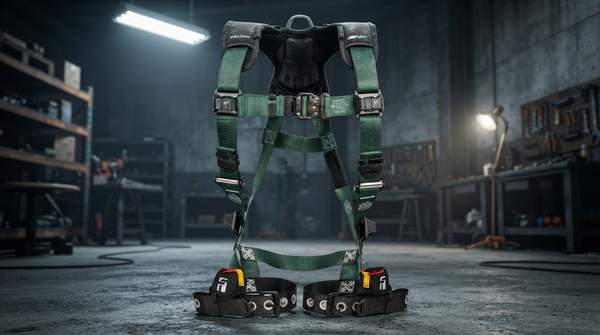
Changing worker behaviors based solely on smart construction safety technologies (SCSTs) is difficult; their effects are insignificant without worker cooperation, according to pmc. Both installation and attachment types of SCSTs were effective, but workers avoided wearing certain attachment types. This resistance shows that technology's potential hinges on overcoming human resistance and ensuring practical, user-friendly implementation. The narrative of collaboration and accessibility, promoted by HKIC, isn't translating into consistent adoption. This creates a dangerous gap between technological capability and actual safety outcomes, demanding a re-evaluation of human-centric implementation strategies.
Training the Workforce for a Smarter Future
Workforce training must evolve to match technological advancements.
- HKIC has invested in training programs that equip students with skills in data reading, operating AI agents, and integrating digital workflows, according to the South China Morning Post.
Future construction safety relies heavily on a workforce trained to effectively utilize and integrate advanced digital and robotic tools. This proactive skill development is essential for maximizing smart safety benefits and preparing workers for new site management methods. Without targeted training, AI-driven safety systems may remain unrealized, leading to underutilized assets and persistent safety gaps.
The Path Forward for Proactive Safety
- Generative AI is the primary form of AI currently used in the workplace for tasks like writing health and safety plans, according to safetyandhealthmagazine.
- Smart helmets can monitor vital signs and working conditions, according to safetyandhealthmagazine.
The widespread adoption of AI for planning and wearable tech for real-time monitoring signals a fundamental shift towards data-driven, proactive safety management. However, this shift requires robust human engagement strategies to ensure technologies are not only available but also consistently used. Without addressing worker behavior and fostering acceptance, even advanced systems will fail to achieve their full safety potential. Companies must integrate technology with effective change management to succeed.
By Q4 2026, construction firms neglecting worker-centric design for safety technology will likely see injury rates remain elevated, despite significant investment in AI solutions.