The smartest way to invest in battery-powered outdoor equipment is not to chase a single "best" brand. It is to pick one brand's battery platform whose strongest tools match the jobs you actually do most — mowing, trimming, blowing — and then buy into that ecosystem. Independent testers at Consumer Reports, who have rated hundreds of outdoor products, recommend exactly this: start with the tools you use most often, then commit to one brand's system so a single battery powers multiple tools. Here is how to turn that advice into a working decision process.
Why Choose a Battery Tool Platform?
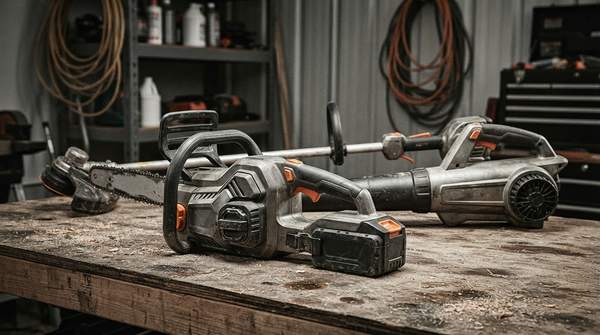
A battery platform is a brand's standardized family of batteries and chargers that interchange across its tools. New York State's energy research authority, NYSERDA, explains the payoff: companies standardize batteries and chargers so they can be swapped between equipment types, which "can translate to considerable cost savings, as you can buy a second and third piece of equipment without having to buy yet another battery and charger." Fewer batteries and chargers also mean less storage clutter.
The performance case is equally strong. Consumer Reports' testing has found that many battery-powered models now perform as well as — or better than — gas versions, while being quieter, easier to maintain, and instant-starting. NYSERDA notes that battery mowers typically run 30 to 70 minutes per charge depending on the model and grass length, and most batteries recharge in one to two hours. If run time is tight, a second battery from the same platform — one you can also share with your trimmer or blower — solves the problem without duplicating chargers.
One caution from This Old House's testing team: even tools from the same brand may require different voltage batteries, so compatibility is typically limited to tools within the same brand and voltage system. Verify the specific battery line before you buy.
Your Personalized Platform Selection Framework
Consumer Reports scores platforms by averaging the test results of a brand's highest-performing string trimmer, leaf blower, chainsaw, hedge trimmer, and lawn mower — measuring performance, handling, and noise at ear level. But that average is exactly what a buyer should not rely on alone: not every brand offers every tool type, so the score reflects only the tools a brand does offer. The framework below flips the method so it works for you, weighting each category by how often you use it.
Battery Tool Platform Decision Framework
Work through these five steps in order. Steps 1 and 2 establish your priorities; steps 3 through 5 score each candidate platform against them.
| Step | What to Do | How It Drives the Decision |
|---|---|---|
| 1. Identify must-have tools | List every outdoor job you do in a season: mowing, trimming, blowing, pruning, hedge shaping. | A platform that lacks a strong version of a must-have tool is eliminated before anything else matters. |
| 2. Rank by frequency | Order the list by hours of use per season — mowing might be weekly, a chainsaw occasional. | Weekly-use tools get the heaviest weight in scoring; occasional tools should influence range, not ranking. |
| 3. Research performance in top categories | Look up tested performance, handling, and noise for each brand's best trimmer, blower, or mower — the same factors Consumer Reports measures. | Score each brand only on your top two or three tools; ignore its overall score where it differs. |
| 4. Check the catalog and compatibility | Confirm the brand offers your secondary tools (hedge trimmer, chainsaw) on the same battery and voltage system. | Interchangeability is what delivers the cost savings — but only within the same brand and voltage line. |
| 5. Compare total system cost | Price the full kit: your top tools plus the batteries and chargers they share, and whether capacity (amp-hours) covers your run time. | Higher voltage generally means more power and higher amp-hours mean longer run time — but both add weight and cost, so buy capacity matched to your yard. |
Because this matrix weights brands by your own usage, two readers can legitimately reach different conclusions from identical test data. The output is a personalized ranking, not a universal winner — and the strategy works only if the brand you choose offers a genuinely strong version of the tools you use most.
Key Outdoor Tool Categories and What to Look For
Lawn mowers. NYSERDA describes battery mowers as quiet, emission-free, and lower-maintenance than gas, running 30 to 70 minutes per charge. This Old House's Roger Cook found a 20-inch battery mower suitable for city lots — a cue that deck size and battery capacity should match your yard, and that performance varies with grass conditions. Choose self-propelled or hand-push based on your terrain, and consider a second battery if your mowing time runs close to the limit.
String trimmers. These are lightweight and maneuverable, ideal for lawn edges and hard-to-reach areas. For larger or tougher jobs, This Old House advises weighing power and cutting width rather than assuming every model is equal.
Leaf blowers. Electric blowers deliver efficient cleanup without gas noise and fumes. When comparing models, blowing power matters — compare airflow ratings such as CFM (cubic feet per minute) between candidates.
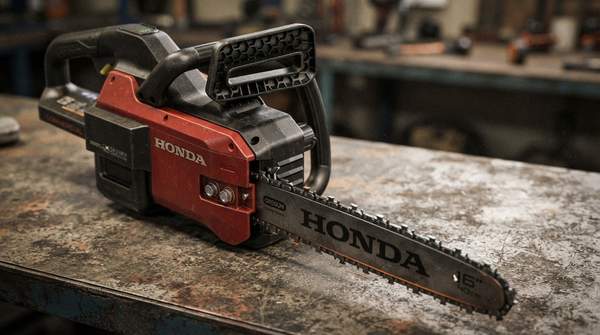
Chainsaws and hedge trimmers. Battery chainsaws now come in 12-, 14-, and 16-inch bar lengths for different cutting requirements, per This Old House. Electric hedge trimmers offer precise shaping without the weight and noise of gas models. Since these are often secondary tools, treat them as a step-4 catalog check: confirm they exist on the same battery line, but let your primary tools drive the brand choice.
Maximizing Battery Lifespan and Performance
The battery is the expensive heart of the system, so protecting it protects your investment. Consumer Reports' care guidance is specific: don't leave batteries in the charger after they're fully charged, store them in a cool, dry place away from direct sunlight, and use only batteries designed for your tool.
On third-party batteries, the warning is blunt. Consumer Reports cautions that counterfeit or off-brand packs "may perform poorly, damage your tool or charger, void the warranty, or even overheat and catch fire." Any savings on a cheap battery are small against the cost of replacing a tool — or worse. NYSERDA adds that manufacturer recommendations should always be consulted for specific charging and storage guidance, since each system has its own requirements.
The practical routine for a working yard: charge before use, remove promptly when full, and store batteries indoors rather than in a shed through temperature extremes. Treated this way, the same batteries keep serving every tool on the platform for years.
Making Your Smart Investment in Battery Power
The decision, distilled: invest in a battery tool platform from a single brand that demonstrates strong performance in the specific outdoor tools you use most frequently — and verify battery compatibility across that brand's voltage system before you commit, not after.
You will know the choice was right by a measurable indicator: the chosen platform consistently meets performance expectations for your primary landscaping tasks, and battery interchangeability provides convenience and cost savings. Concretely, that means your mower finishes the yard on one or two shared batteries, your trimmer and blower run on the same packs, and you never buy a duplicate charger for a tool that should have shared one. If a platform fails those checks — a weak trimmer, a mismatched voltage line — run the five-step matrix again before adding any more tools to it.