Choose a self-adjusting (automatic) wire stripper if you strip many wires quickly and want consistent results with less effort; choose a manual gauged or adjustable stripper if you need precise control over varied, less repetitive work and want to spend less. That single trade-off—speed and convenience versus control and cost—drives nearly every other decision. This guide covers handheld strippers for residential and light commercial work, not industrial machines or fiber-optic tools, and it evaluates categories rather than specific brands or models.
Understanding Wire Stripper Types: Manual vs. Self-Adjusting
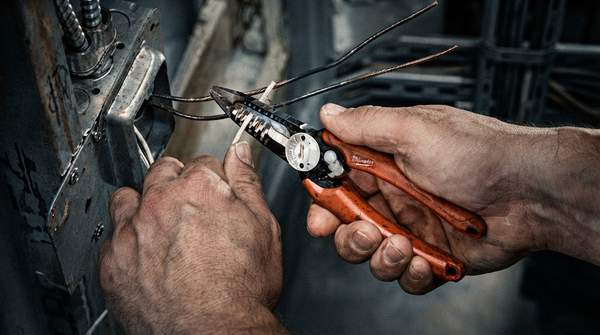
Every wire stripper does the same basic job: it removes the insulation around an electrical wire without harming the inner conductor. As VEVOR's tool guide explains, most strippers use precision blades or size-matched notches that fit different wire gauges—you place the wire in the right notch, squeeze, and pull to expose the clean metal core.
The two main handheld categories differ in how you match the tool to the wire. Manual strippers require you to select the correct gauge hole or adjust the jaw setting yourself. Self-adjusting strippers, which VCELINK's primer calls an improved and usually more expensive version of the typical tool, detect the wire size automatically and often include a setting that controls strip length.